

AI CERTS
1 hour ago
Agentic Security: How Daybreak Automates Vulnerability Defense
Readers will gain actionable insight for procurement, governance, and technical evaluation. Moreover, we align findings with current analyst guidance and ecosystem feedback. Finally, professionals exploring Agentic Security certifications will discover relevant next steps. Google Threat Intelligence recently confirmed adversarial AI use for exploit development. Therefore, Daybreak arrives amid real pressure to harden codebases quickly. Its agent and model suite claims to shrink remediation cycles from hours to minutes. In contrast, traditional scanners still struggle with noisy alerts and slow patch validation.
Rising AI Exploit Threats
Attackers now pair generative models with public exploit kits to accelerate discovery efforts. Meanwhile, Google Threat Intelligence observed AI assisted zero day prototypes in May 2026. Consequently, defenders require tooling that reasons across code history, dependency graphs, and runtime context. Traditional static analyzers flag many false positives, overwhelming small teams. In contrast, agent frameworks can filter noise by testing proofs in isolated sandboxes.
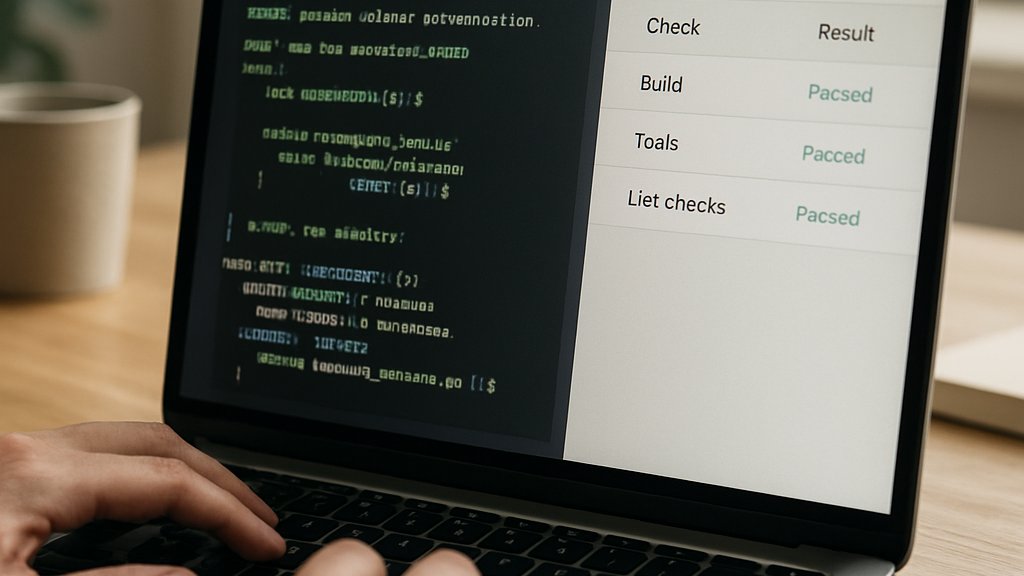
Such precision becomes critical when thousands of critical Vulnerabilities emerge weekly across open source supply chains. Furthermore, policy makers warn that Cyber incidents tied to insecure software cost billions annually. These trends frame the urgency driving Daybreak’s release timeline. The scale of risk explains why Agentic Security has moved from concept to enterprise roadmap.
Rapid exploit automation reshapes threat calculus for every development team. However, architectural advances promise sharper defensive speed. The next section dissects Daybreak’s technical foundation.
Inside Daybreak System Design
Daybreak combines GPT-5.5 variants with Codex Security inside a controlled orchestration layer. Moreover, the layer mounts repositories, builds threat models, and executes candidate patches in sandboxes. Each sandbox operates under strict egress controls, limiting unapproved network calls. Therefore, outputs include validated vulnerability proofs plus rollback ready remediation scripts.
OpenAI states the tooling fixed over 3,000 critical and high Vulnerabilities during beta. Cloudflare, Cisco, and CrowdStrike feed telemetry that enriches model context for exploit scoring. Additionally, the agentic harness can chain tasks, shifting from detection to test generation automatically. Consequently, Daybreak shortens feedback loops within continuous integration pipelines.
Autonomous loops create the core speed advantage. Next, we examine how Agentic Security workflows actually run.
Agentic Security Workflow Basics
The workflow begins when a developer pushes code to a monitored branch. Subsequently, Codex Security spawns an agent that maps call graphs and dependency manifests. The agent scores discovered Vulnerabilities using CVSS enriched heuristics. Moreover, GPT-5.5 proposes patches aligned with project language conventions.
Another agent compiles and runs unit tests to verify functional parity. In contrast, many legacy scanners stop at advisory generation. Therefore, the chain can open a pull request containing evidence, metrics, and rollback scripts. Approved fixes trigger integration hooks that cascade into staging and production gates.
This closed loop embodies Agentic Security by pairing reasoning with autonomous action. Deployment design choices further refine control. We now detail tiered access safeguards.
Deployment Tiers And Controls
OpenAI implements three model tiers to balance capability with governance. Firstly, standard GPT-5.5 serves general scanning under default policies. Secondly, GPT-5.5 with Trusted Access activates deeper Cyber tooling after KYC checks. Finally, GPT-5.5-Cyber offers the most permissive features for specialized, vetted teams.
Moreover, each tier embeds rate limits, audit logging, and isolation boundaries. Gartner urges CISOs to match tier selection with internal approval workflows. Nevertheless, pilot participants report strong alignment with existing CI/CD gates. OpenAI also funds a $10M grant program to broaden defender access.
Tiered governance exemplifies proactive risk management. However, real value emerges from broad partner integration. The following section maps ecosystem momentum.
Ecosystem Partners And Impact
Daybreak launches with integrations across leading network, endpoint, and cloud platforms. Furthermore, Cloudflare pipes firewall telemetry into scoring pipelines, enriching exploit likelihood estimates. Cisco and Palo Alto Networks similarly share threat feeds through API bridges. Consequently, Agentic Security insights surface directly inside existing security dashboards.
- 3,000 critical or high fixes credited to Codex Security beta.
- 1,000+ open source projects scanned via Daybreak pipelines.
- $10M grant pool earmarked for vetted Cyber defenders.
Moreover, analysts expect partner libraries to expand as APIs stabilize. The federated pattern mirrors Anthropic Mythos alignment strategies.
Expanding partnerships accelerate Daybreak’s learning loops. Next, we contrast promised benefits with ongoing challenges.
Benefits Countering Code Vulnerabilities
Measured results suggest several compelling returns. Firstly, remediation time drops from hours to minutes on supported stacks. Additionally, validated fixes reduce noisy reopens, boosting developer trust. In pilot reports, false positive rates fell by forty percent compared with legacy scanners.
- Continuous scanning embeds security early, shifting risk left.
- Automated patches carry unit tests, simplifying acceptance.
- Evidence bundles aid audit and compliance documentation.
Consequently, Agentic Security helps teams focus scarce human effort on design level hardening. Nevertheless, adoption exposes new operational considerations.
Benefits appear tangible but not automatic. Therefore, buyers must examine residual risk, covered next.
Remaining Risks And Gaps
Dual use remains the foremost concern among observers. Attackers could misuse similar models to weaponize freshly discovered Vulnerabilities faster. OpenAI mitigates risk through TAC verification and throttle controls, yet loopholes may persist. Moreover, automated patch commits can still introduce regressions without robust staging checks.
Gartner advises demanding metrics on false positives, recall, and safe mode failure rates. In contrast, independent benchmarks comparing the platform and Mythos remain scarce. Additionally, automated rollbacks require careful orchestration within distributed microservices.
Risks underscore the need for layered governance. Consequently, professionals must pair Agentic Security tools with strong process discipline. We close with strategic guidance and certification resources.
Modern exploit velocity demands equally rapid defense automation. The vendor’s agent suite, despite open questions, marks a significant advance. Consequently, Agentic Security principles will likely shape next generation development pipelines. However, teams must verify tier alignment, benchmark performance, and enforce staged deployment safeguards. Independent metrics and community transparency remain essential before full scale rollout.
Meanwhile, skill development ensures organizations can govern these novel workflows effectively. Professionals can enhance expertise with the AI Security Specialist™ certification. Embracing Agentic Security with disciplined practice positions defenders for the impending AI arms race. Ultimately, sustainable resilience hinges on integrating Agentic Security culture across people, processes, and platforms.
Disclaimer: Some content may be AI-generated or assisted and is provided ‘as is’ for informational purposes only, without warranties of accuracy or completeness, and does not imply endorsement or affiliation.


