

AI CERTs
5 months ago
Meta’s $135B AI Bet: CapEx, Risks, Skills
Silicon Valley's newest spending record may arrive in 2026. On 28 January, Meta told investors it expects to deploy up to $135 billion on artificial intelligence infrastructure. The guidance dwarfs every prior technology budget. Consequently, analysts view the figure as both bold and risky. Meanwhile, management frames the outlay as essential for delivering personal superintelligence to billions of users. This article unpacks the spending plan, funding sources, partnerships, investor reactions, and skills professionals need next. However, we first examine the factors pushing the budget far beyond prior forecasts.
Massive Spending Surge Context
Quarter four results set the stage for the unprecedented allocation. Moreover, revenue reached $59.89 billion, while operating income touched $24.7 billion. Those numbers armed Meta with the cash flow required for aggressive scaling. CapEx hit $72.22 billion in 2025, yet guidance now implies up to an 87% jump. Furthermore, total 2026 expenses could reach $169 billion, largely fueled by data center construction. Capital Expenditure therefore becomes the primary lever in the artificial intelligence race. The headline numbers demonstrate unprecedented scale and urgency. Consequently, understanding the revenue engine is vital before evaluating sustainability.
Advertising Funding Engine Strength
Advertising still contributes the overwhelming majority of company cash. During 2025, ad revenue expanded 24%, outpacing most large peers. Moreover, WhatsApp paid messaging reached a $2 billion annual run rate. Higher engagement from generative media tools improved click-through and conversion metrics across formats. Consequently, analysts believe core advertising can bankroll early AI experiments without external dilution. Nevertheless, Meta must maintain growth momentum to avoid squeezing margins as infrastructure depreciation accelerates. These revenue trends clarify financing capacity. However, capital deployment specifics reveal how the budget will be absorbed.
Meta Infrastructure Build Details
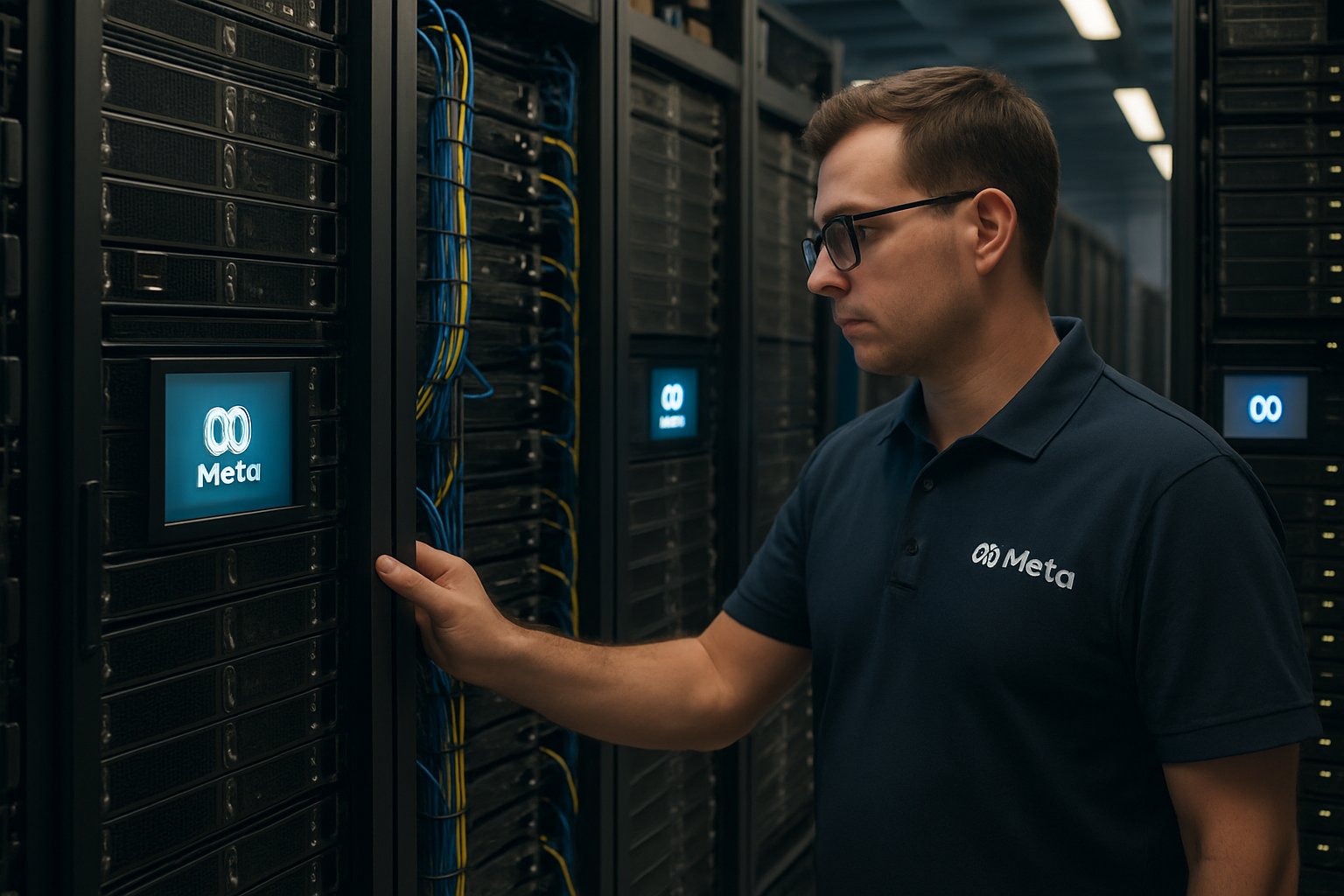
Infrastructure spend covers data centers, network fabrics, and GPUs. Furthermore, management admitted continuing capacity constraints despite 2025 hardware deliveries. To bridge the gap, third-party neocloud agreements with CoreWeave and Nebius remain critical. Capital Expenditure will also finance on-premises supercomputers powering the personal assistant roadmap. Key 2026 budget components include:
- $40-$45 billion for next-generation data centers and power upgrades.
- $30-$35 billion for Nvidia H100 and Blackwell accelerator purchases.
- $15-$20 billion reserved for neocloud capacity commitments and networking gear.
- $10-$12 billion dedicated to Manus agent integration across products.
Meta expects depreciation schedules to stretch beyond five years, smoothing future earnings impact. These allocations underscore a hardware-first approach to superintelligence. Subsequently, partnership activity reveals how complementary assets are secured.
Strategic Partnerships Expand Rapidly
Scale AI became a pivotal ally after the June 2025 equity deal. Moreover, Scale CEO Alexandr Wang now co-leads model training programs in-house. The December purchase of Manus supplied advanced agentic technology for multi-step task execution. Consequently, product teams can embed assistants across Messenger, Workplace, and commerce offerings. Capital Expenditure commitments with CoreWeave guarantee flexible capacity until internal builds catch up. Nevertheless, Meta still pursues proprietary data center expansion to reduce reliance on external vendors long-term. Strong alliances de-risk supply and talent shortages. However, investors remain divided on timing and payoff.
Investor Risk Debate Intensifies
Shares climbed after the earnings beat, signaling confidence in management's vision. However, some analysts caution that monetization may lag infrastructure depreciation, compressing near-term returns. In contrast, bullish voices highlight measurable ad-performance lifts already attributable to machine-learning upgrades. Moreover, management projects operating income to grow despite the spending wave. Skeptics ask whether such Capital Expenditure will remain sustainable if advertising growth slows. Consequently, Meta faces a credibility test each quarter as cash conversion metrics arrive. Investor sentiment hinges on early product revenue signals. Meanwhile, the external landscape grows more competitive every month.
Competitive Market Outlook Intense
Alphabet, Microsoft, OpenAI, and Anthropic also plan multibillion-dollar model upgrades in 2026. Moreover, Amazon recently deepened partnerships with Nvidia and Anthropic to secure GPU supply. Consequently, accelerator scarcity could persist, keeping prices elevated and timelines unpredictable. In contrast, specialized cloud providers are scaling capacity fourfold, seeking to capture enterprise demand. Nevertheless, Meta believes vertical integration across hardware, models, and distribution will differentiate personal assistants. Competitive pressure may accelerate innovation and cost efficiencies. Therefore, professionals should sharpen skills aligned with trustworthy AI deployment.
Skills And Certifications Roadmap
Enterprise demand for secure, reliable AI systems is rising alongside budget announcements. Furthermore, regulators increasingly scrutinize model safety and data governance. Professionals can enhance their expertise with the AI Security Level 2 certification. Moreover, the program covers threat modeling, red-teaming, and compliance frameworks for large language models. In addition, Meta expansion highlights why such specialized knowledge will command premium salaries across industries. Skill development therefore parallels hardware investment urgency. Consequently, an informed workforce positions organizations to exploit forthcoming AI platforms.
2026 promises to test the limits of corporate risk tolerance in technology. Moreover, the $135 billion ceiling exemplifies unprecedented faith in AI scale economics. Capital Expenditure commitments, supply constraints, and competitive intensity will shape the ultimate payoff. Meta now stands at the center of that experiment, balancing ambition against investor patience. Nevertheless, early traction in advertising efficiency offers encouraging signals. Therefore, technology leaders should monitor infrastructure milestones while upgrading their own security and governance expertise. Explore the cited certification and prepare your teams for the superintelligent era.
Disclaimer: Some content may be AI-generated or assisted and is provided ‘as is’ for informational purposes only, without warranties of accuracy or completeness, and does not imply endorsement or affiliation.


