

AI CERTS
2 months ago
L’Oréal’s 2026 Push: AI Marketing Meets Beauty Tech
Beauty Tech Momentum
The beauty tech wave has progressed from pilot to platform inside L’Oréal. Moreover, the firm now operates 22 research centers and employs 8,000 digital talents. Vismay Sharma calls SAPMENA a “Silicon Valley for Beauty Tech,” underscoring regional importance. The 2026 Big Bang program spans 35 markets and funds startups working on AI for merchandising, personalization, and circular packaging. Consequently, earlier winners—Without, Heatseeker, Halo AI—already run commercial pilots. These examples show how corporate-startup collaboration can derisk innovation at scale.
Key momentum indicators include:
- €44.05 billion in 2025 sales support continued R&D scale.
- €100 million L’AcceleratOR budget targets sustainable packaging.
- Approximately 100x faster formulation discovery claimed through predictive models.
These figures highlight unprecedented resources. Nevertheless, execution demands disciplined governance. In contrast, smaller rivals may pivot faster; thus L’Oréal must keep velocity high. The next section explores how creator partnerships extend that velocity.
Creator Economy Synergy
The creator economy now influences every purchase funnel. Therefore, L’Oréal aligns AI Marketing engines with influencer discovery platforms like Halo AI. Additionally, Heatseeker supplies real-time customer intelligence, feeding dynamic briefings to content partners. Consequently, the loop from insight to creative asset shortens dramatically.
L’Oréal’s Big Bang call-for-entries stresses transparency, ethical data, and monetization for micro-creators. In contrast to traditional endorsement deals, algorithms recommend niche voices whose audiences trust skin-tone-specific advice. Moreover, predictive compensation models reduce negotiation friction.
Professionals can validate skills with the AI Marketing Strategist™ certification, ensuring talent keeps pace with these platform shifts.
This synergy unlocks direct-to-consumer scale without massive media spending. However, it raises privacy questions discussed later. First, we examine how retail AI completes the data flywheel.
Retail AI Acceleration
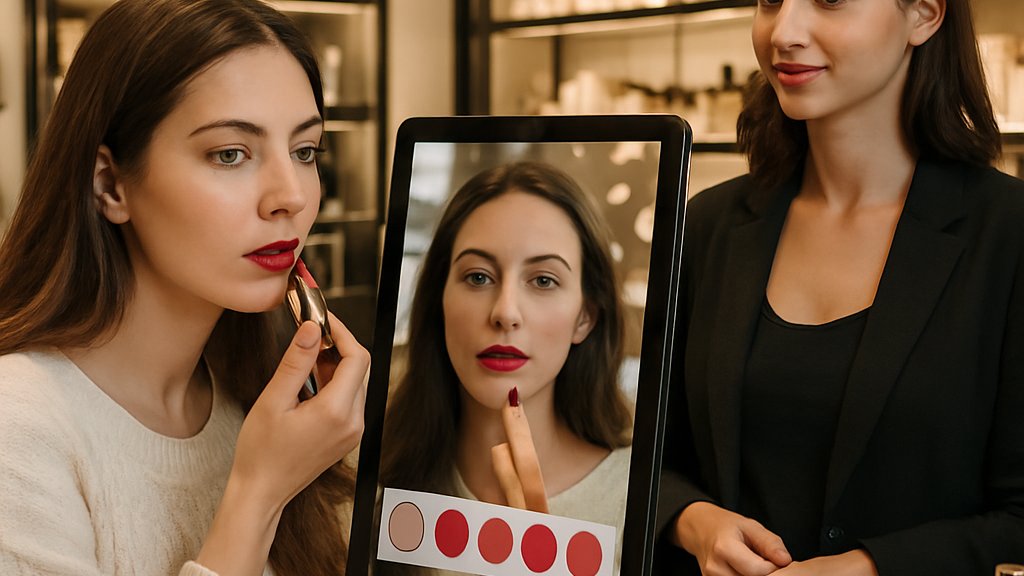
Physical stores remain vital, yet retail AI now personalizes every shelf. Smart mirrors scan skin and propose SKUs while guiding shoppers to relevant aisles. Meanwhile, computer vision tools monitor stock, reducing out-of-stock gaps that drain loyalty. Moreover, dynamic planograms adjust in seconds based on local weather and social chatter.
L’Oréal pilots such systems across SAPMENA flagships. Early metrics suggest double-digit conversion lifts and shorter queue times. Consequently, data feeds customer profiles that power upstream AI Marketing campaigns, closing the attribution loop.
Nevertheless, biometric regulations vary widely. Therefore, L’Oréal’s governance board reviews jurisdictional constraints before rollout. The following section shows how predictive chemistry shortens formulation cycles underpinning this commercial speed.
Predictive R&D Leap
On 17 March 2026, L’Oréal integrated NVIDIA Alchemi into its labs. Consequently, researchers simulate molecular interactions at atomic resolution. Barbara Lavernos states predictive discovery can run “orders of magnitude faster” than wet-lab trials. Additionally, early projects target photoprotection and inclusive shade matching, both growth arenas.
Speed matters because trends born on TikTok vanish quickly. Therefore, 100x faster formulation offers first-mover advantage in both beauty tech devices and classic creams. Moreover, simulation reduces waste, aligning with L’AcceleratOR sustainability goals.
Key science benefits include:
- Rapid rejection of unstable actives before lab synthesis.
- Quantitative safety predictions improving compliance filings.
- Automated texture optimization enhancing sensorial appeal.
These capabilities move R&D toward software-defined pipelines. Nevertheless, external validation remains pending, a point regulators may scrutinize. Meanwhile, hardware also advances, as the next section explains.
Device Roadmap Signals
At CES 2026, L’Oréal unveiled two near-infrared devices: Light Straight + Multi-styler and an LED Face Mask. Moreover, both received CES Innovation honors. Guive Balooch argues the styler “moves hairstyling beyond correction into prevention.” Additionally, FDA 510(k) filings may classify the mask as a medical device within the United States.
The global beauty devices market approached USD 64.6 billion in 2025, with strong CAGR forecasts. Consequently, L’Oréal positions itself early in at-home treatment demand, powered by retail AI data and AI Marketing outreach.
Development timelines target 2027 launches, subject to clearances. Therefore, supply-chain coordination with sustainability teams will be critical. These timelines underline why risk management deserves closer inspection next.
Risks And Oversight
Despite momentum, multiple risks persist. Data privacy tops the list because skin analysis involves sensitive biometric data. Moreover, algorithmic bias could misclassify diverse tones, harming brand equity. Consequently, watchdogs track deployments closely.
Regulatory flux complicates hardware strategy. The EU AI Act remains in flux; meanwhile FDA requirements may evolve for light therapy devices. Furthermore, hype cycles tempt executives to overpromise ROI before pilots mature.
Nevertheless, proactive governance can mitigate issues. L’Oréal’s ethics board, diverse training datasets, and phased rollouts provide guardrails. These measures set the stage for final strategic takeaways.
Strategic Takeaways Ahead
L’Oréal’s 2026 roadmap fuses AI Marketing, creator economy engagement, retail AI experiences, and predictive beauty tech R&D. Moreover, each pillar reinforces the others through shared data. Consequently, the company builds defensible moats that rivals may struggle to replicate.
However, success hinges on transparent metrics and regulatory navigation. Therefore, external validation of NVIDIA Alchemi claims and device efficacy remains essential. Nevertheless, L’Oréal has allocated capital, talent, and partnerships at historic scale, suggesting continued leadership.
Industry professionals should monitor pilot KPIs, emerging compliance mandates, and certification pathways. The integrated strategy described above signals where the broader consumer packaged goods sector will head next.
In conclusion, L’Oréal is redefining product creation, distribution, and storytelling through synchronized technology investments. Furthermore, predictive chemistry and retail AI close the gap between insight and delivery, while AI Marketing amplifies reach across the creator economy. Consequently, the beauty giant appears ready for a data-driven decade. Professionals eager to stay competitive should explore the AI Marketing Strategist™ credential and follow forthcoming pilot results.
Disclaimer: Some content may be AI-generated or assisted and is provided ‘as is’ for informational purposes only, without warranties of accuracy or completeness, and does not imply endorsement or affiliation.


