

AI CERTS
6 months ago
Kioxia Fab2 highlights global memory supply shortage in AI era
At the core of the disruption sits Kioxia, the world’s second-largest NAND producer. Moreover, hyperscalers are booking entire production slots before wafers leave the fab. Prices have doubled since summer 2025, unsettling budget forecasts. This article unpacks the market mechanics, risks, and mitigation options.
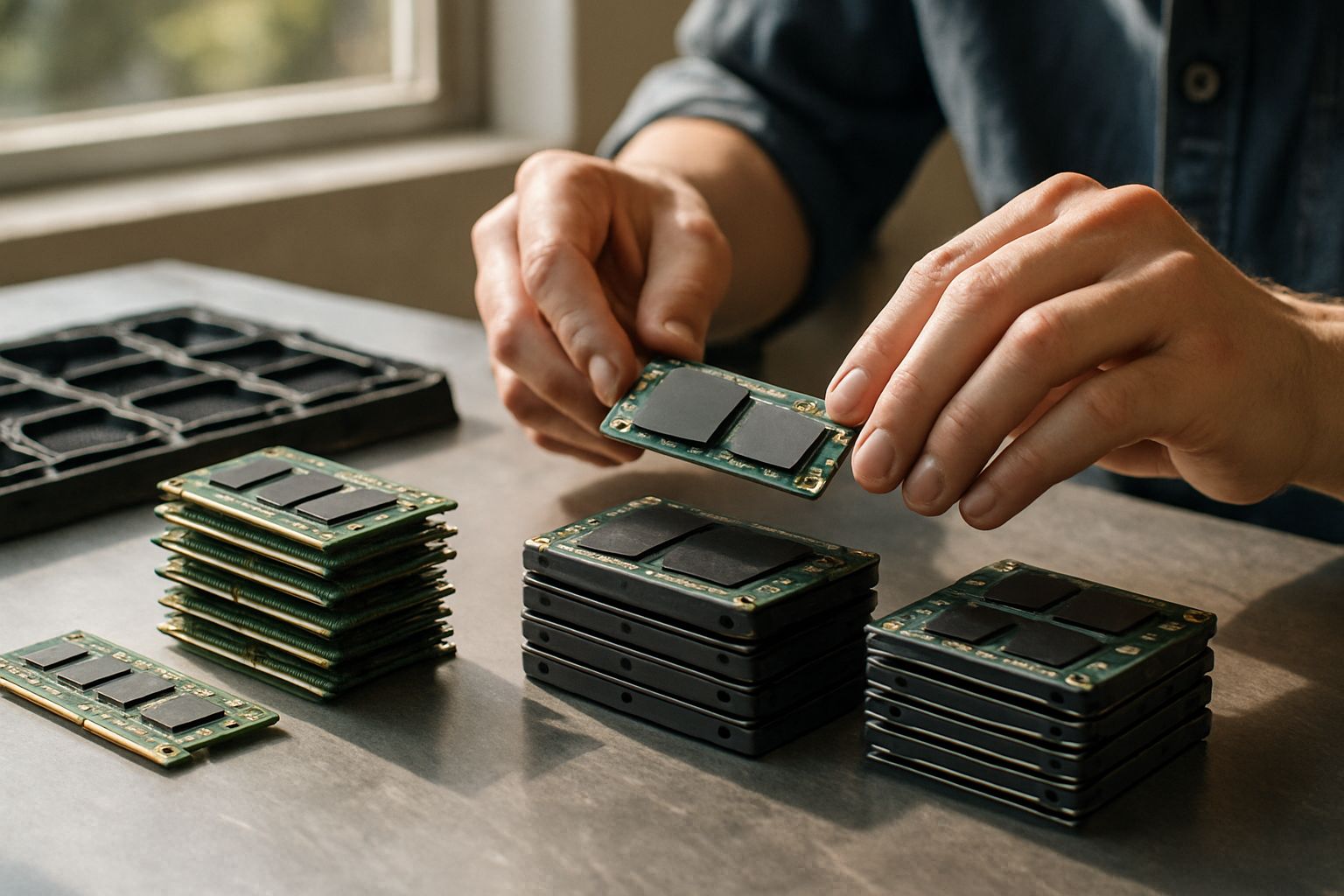
Meanwhile, government subsidies and new technology promise relief but not immediate salvation. Therefore, readers will gain a balanced view of capacity, pricing, and strategy. Let us explore the crunch in detail.
AI Memory Supply Shortage
Generative AI workloads devour storage at unprecedented rates. Each inference cluster ships with tens of petabytes of high-performance flash. Consequently, demand for enterprise SSDs is climbing roughly 20 percent annually, TrendForce reports. In contrast, wafer supply grew only single digits during 2025.
The imbalance crystalized into another memory supply shortage when hyperscalers secured multiyear contracts. Phison CEO Khein-Seng Pua bluntly stated that 2026 capacity is already sold out. Moreover, a one-terabit TLC wafer jumped from $4.80 to $10.70 within four months. Such moves intensified procurement panic across cloud and on-premises fleets.
In summary, runaway AI demand collided with slow capacity growth. However, Kioxia’s expansion plans aim to reshape that equation.
Kioxia Capacity Expansion Plans
Kioxia activated its Fab2 facility in Kitakami on 29 September 2025. The plant manufactures 218-layer BiCS8 NAND using CMOS-bonded arrays. Furthermore, executives target meaningful output during H1 2026, scaling aggressively afterward. Yet the ramp will not immediately erase the memory supply shortage facing customers.
TrendForce notes Kioxia intends to double overall production by fiscal 2029 versus 2024 levels. Additionally, Japan approved subsidies worth $1.64 billion to help finance Kitakami and Yokkaichi lines. Consequently, political support reduces capital risk and accelerates construction milestones. However, analysts still expect chronic tightness through at least 2027.
Kioxia’s build-out boosts future bits yet offers limited near-term relief. Therefore, pricing dynamics remain volatile heading to 2026.
Escalating NAND Pricing Trends
Enterprise buyers feel the pinch most acutely as contract pricing rallies each quarter. DRAMeXchange estimated combined vendor revenue at $17.1 billion for Q3 2025, up double digits. That surge links directly to the memory supply shortage driving aggressive spot negotiations. Meanwhile, several OEMs are prepaying for wafers to lock allocation through 2027.
- One-terabit TLC wafer cost rose 123 percent between July and November 2025.
- Top five NAND suppliers logged 33 percent average sequential revenue growth in Q3 2025.
- Hyperscaler purchase commitments reportedly consume the entire 2026 supply pipeline.
In contrast, consumer SSD demand remains restrained, but controller makers prefer lucrative enterprise allocations. Consequently, retail shelves may see episodic shortages and unpredictable pricing swings.
The numbers confirm lasting upward pressure on flash pricing. Nevertheless, technology enhancements could moderate cost curves later.
Strategic Risks And Constraints
Manufacturing flash remains capital intensive, requiring multi-billion dollar cleanrooms and lengthy certifications. Therefore, suppliers hesitate to flood the market and risk oversupply once growth normalizes. Their caution perpetuates the memory supply shortage by limiting near-term wafer starts. Additionally, geopolitical tension adds further uncertainty around Chinese back-end assembly.
Another constraint involves scarce engineering talent for advanced controller hardware and packaging. Moreover, some rivals prioritize high-bandwidth memory rather than NAND, diverting investment. Consequently, incremental relief depends heavily on Kioxia and Samsung expansions succeeding on schedule. Any delay could inflate pricing even more.
In brief, capital realities and politics slow corrective action. However, cutting-edge design work is forging alternative paths.
Emerging Technology Responses Ahead
Engineers are squeezing more bits per wafer through 218-layer and upcoming 300-layer NAND. Furthermore, Kioxia promotes storage-class memory to bridge DRAM and flash for AI workloads. Such innovations aim to reduce unit cost while boosting IOPS per server. Yet they arrive too late to resolve the memory supply shortage forecast for 2026.
- BiCS8 uses CMOS-bonded arrays, increasing speed by up to 15 percent.
- GPU-direct SSD prototypes cut latency below 10 microseconds in internal benchmarks.
Professionals can enhance their expertise with the AI Marketing Strategist™ certification. Consequently, teams gain insights to optimize hardware utilization despite limited flash.
Advanced nodes and training can cushion supply shocks gradually. Nevertheless, procurement discipline remains vital for 2025 budgets.
Guidance For Enterprise Buyers
Procurement leaders must secure multiyear agreements before allocation windows close. Benchmarking multiple vendors cushions exposure to unilateral pricing hikes. Additionally, diversifying hardware architectures lets teams swap SSD form factors if particular capacities vanish. Meanwhile, internal optimization, such as deduplication and tiering, stretches installed flash.
Analysts recommend these tactical steps: First, model storage demand accurately using AI cluster utilization data. Second, negotiate index-based clauses to cap annual cost increases. Third, allocate budget for capacity deposits six months earlier than past cycles.
Failing to act early risks aggravating the memory supply shortage inside your own datacenter. Therefore, proactive planning becomes non-negotiable.
Thoughtful contracts and optimization temper volatile costs and lead times. Consequently, enterprises preserve service-level goals despite industry turbulence.
The flash market sits in uncharted territory as AI drives relentless bit consumption. Nevertheless, Kioxia’s ambitious fab program, government subsidies, and layered innovations will gradually restore balance. Meanwhile, enterprises must marry savvy contracts with disciplined capacity planning. By doing so, teams avoid reactive spending sprees.
Ultimately, preparing today for the memory supply shortage empowers organizations to sustain AI momentum. Explore advanced certifications and stay informed to future-proof your storage roadmap. Start with the linked AI Marketing Strategist™ program and elevate your strategic playbook. Act now before tomorrow’s capacity disappears.
Disclaimer: Some content may be AI-generated or assisted and is provided ‘as is’ for informational purposes only, without warranties of accuracy or completeness, and does not imply endorsement or affiliation.


