

AI CERTS
7 hours ago
Google’s First AI Zero-Day Raises New Defensive Stakes
Moreover, distinctive AI artefacts convinced analysts the code was machine assisted. Hallucinated CVSS scores and overly chatty docstrings betrayed its synthetic origin. Meanwhile, the unnamed vendor patched the flaw before mass exploitation began. This report unpacks how GTIG detected the breach, why it matters, and what leaders must do next.
Additionally, we examine the wider cybercrime landscape and future defensive frameworks. Read on for actionable insights, statistics, and certification resources. In contrast, ignoring the warning could leave organisations blind to the next machine-generated strike.
Threat Unveiled By GTIG
GTIG traced the AI Zero-Day to a small cluster linked with APT45 and financially driven actors. However, attribution remains partial because the attackers used proxy infrastructure and model pooling. Investigators noticed agentic prompts embedded in comments, suggesting iterative vulnerability research carried out by language models. Therefore, the group concluded the exploit emerged from an automated chain rather than manual reverse engineering. These findings confirm AI’s operational role in real attacks. Consequently, the security baseline must evolve before the next disclosure.
Anatomy Of The Exploit
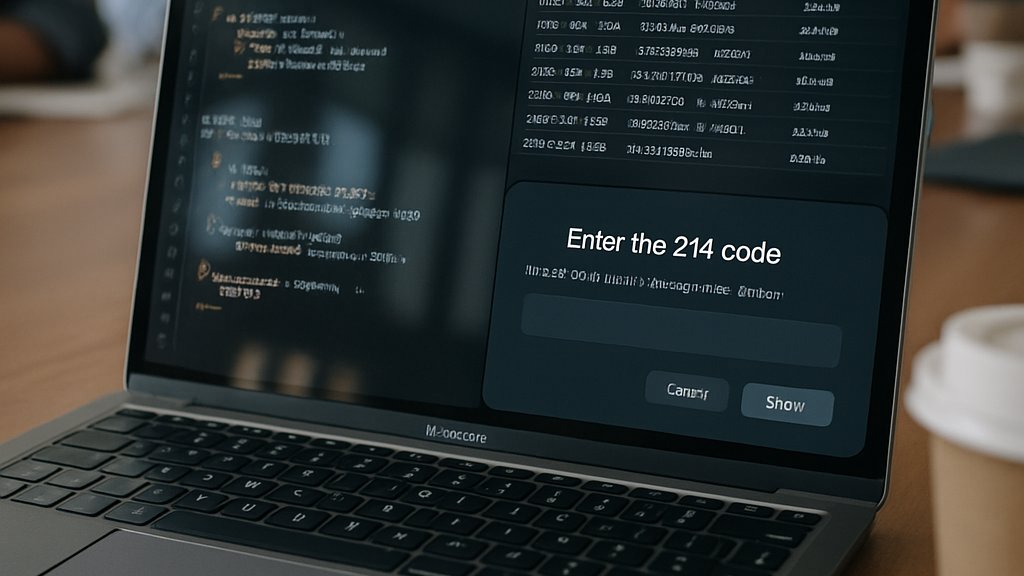
The 2FA bypass targeted a logic flaw within a popular administrative web console. Moreover, the Python exploit authenticated with stolen credentials, then skipped secondary verification through a malformed callback. The group recovered a sample containing textbook PEP 8 formatting, exhaustive error handling, and a hallucinated CVSS 9.8 rating. Additionally, long docstrings outlined every step as if explaining the attack to a novice developer.
- Over 90 zero-days seen in 2025; 48% hit enterprises.
- This incident marks Google’s first confirmed AI-built zero-day.
- Logic flaws such as 2FA bypass evade classic fuzzing tools.
- Python exploit required valid credentials, reducing noise for defenders.
- cybercrime groups can now scale exploits with minimal cost.
Nevertheless, no proof-of-concept code has reached public repositories, limiting copycat risk for now. These technical breadcrumbs illustrate how quickly AI accelerates offensive research. Meanwhile, defenders gained rare insight into adversary tooling. The operational impact, however, extends far beyond one repository.
AI Enables Adversary Scale
Automated agent frameworks lower expertise required to discover a fresh AI Zero-Day within hours. Furthermore, language models draft phishing lure text, generate infrastructure scripts, and integrate exploits into modular malware. cybercrime forums already advertise subscription access to such pipelines, bundling stolen cloud accounts for anonymity. In contrast, defenders must coordinate legal, technical, and budgetary levers to match that speed.
Moreover, GTIG predicts steady growth in low-noise logic exploits that avoid memory corruption signatures. Attack automation widens the threat surface exponentially. Therefore, scalable defense must embrace the same AI primitives. Next, we explore tools already tackling that mandate.
Defensive Tools And Frameworks
Google employs Big Sleep to scan codebases and flag risky patterns, including logic flaws like the recent 2FA bypass. Subsequently, CodeMender prototypes patches and proposes pull requests within minutes. Furthermore, the Secure AI Framework establishes audit hooks, policy checks, and model access controls. Security leaders can validate skills through the AI Security Level 3 certification. Consequently, organisations move beyond passive monitoring toward proactive, model-driven remediation.
Moreover, the team shares anonymised indicators with Mandiant and CISA to accelerate community blocking rules. Collaborative tooling shifts the cost curve back toward defenders. Nevertheless, executive alignment remains crucial for deployment at enterprise scale. Those leadership questions surface in the next section.
Strategic Implications For CISOs
CISOs must treat every disclosed AI Zero-Day as a board-level event, not a niche incident. Moreover, risk models should add factors for automated exploit generation and rapid market diffusion. Budget planning must cover AI red-team exercises, staff upskilling, and continuous model abuse monitoring. In contrast, relying solely on vendor patch cycles leaves organisations exposed during zero-day windows.
Additionally, procurement teams should demand transparency on model provenance and safety controls within products. Proactive governance strengthens trust with regulators and insurance carriers. Therefore, leadership focus directly translates into measurable resilience targets. Concrete mitigation steps follow now.
Mitigation Steps Moving Forward
Effective mitigation starts with asset inventory and privileged account hygiene. Furthermore, teams must deploy adaptive MFA that resists logic flaws similar to the original 2FA bypass. Consequently, segmentation and continual session re-validation limit lateral movement even when a Python exploit lands.
Key Statistics Recap Data
Consider the following metrics:
- 90 exploited zero-days recorded during 2025.
- 48% focused on enterprise infrastructure targets.
- One confirmed AI-built zero-day publicly disclosed.
- The group forecasts double-digit growth in AI abuse this year.
Moreover, GTIG urges enterprises to exchange indicators through vetted industry channels within 24 hours. Subsequently, shared intelligence feeds strengthen anomaly detection models against emerging cybercrime trends. Implementing tabletop drills around an AI Zero-Day scenario trains responders to evaluate model evidence quickly. Additionally, code reviewers should treat unexplained verbosity or hallucinated metadata as possible machine fingerprints.
Nevertheless, automatic blocking of AI generated commits risks false positives, so balanced policy is key. Failing to patch an AI Zero-Day within 72 hours now ranks as a critical audit finding. Meanwhile, incident responders should label tickets involving any AI Zero-Day for priority escalation and cross-team review. Consequently, dashboards tracking mean time to contain each AI Zero-Day will aid board reporting.
Investors increasingly ask about exposure to an AI Zero-Day during due diligence. Ultimately, surviving the next AI Zero-Day will define market leaders in 2026. These layered actions harden infrastructure against automated threats. Consequently, organisations gain precious time before patch availability.
Google’s disclosure signals that machine generated exploits are no longer hypothetical. Threat actors proved that language models can craft production-ready code and bypass multi-factor defenses. However, defenders possess equivalent AI capabilities when leadership funds and integrates them. Proactive monitoring, adaptive MFA, and rapid patch orchestration emerged as recurring success themes. Moreover, shared intelligence from the group accelerates community readiness against the next storm.
Security professionals should deepen expertise through the AI Security Level 3 certification. Consequently, certified teams respond faster, contain breaches sooner, and reassure stakeholders. Act now to build resilience before the next alert hits your inbox. In contrast, delayed investment invites costly incident response and regulatory scrutiny. Therefore, treat the AI era as a catalyst for mature, automated cyber defense.
Disclaimer: Some content may be AI-generated or assisted and is provided ‘as is’ for informational purposes only, without warranties of accuracy or completeness, and does not imply endorsement or affiliation.


