

AI CERTS
2 months ago
Iowa Enacts Chatbot Safety Law Protecting Users
Industry lawyers already describe the move as a pivotal moment for state tech policy. Meanwhile, consumer advocates applaud fresh safeguards for minors interacting with synthetic companions. This article unpacks what the law demands, how enforcement will work, and why compliance planning must start now. Moreover, we situate the measure within a fast-growing national push to tame Conversational AI. Finally, we outline expert recommendations, potential challenges, and training resources for policy teams. Stay tuned for a detailed, practitioner-focused analysis.
Iowa Legislative Timeline Overview
SF 2417 originated as a Technology Committee proposal during the 2025 session. Lawmakers framed the bill as child-protection legislation rather than general tech oversight. Nevertheless, bipartisan momentum accelerated after widely publicized incidents involving erotic chatbot role-play with teens. Both chambers passed the text unanimously in April 2026. Subsequently, Governor Kim Reynolds signed it among 14 other bills on 3 May. The official applicability date stands at 1 July 2027, giving operators fourteen months to comply.
Therefore, the Attorney General must publish implementing rules well before that deadline. Such strict regulation signals a maturing market. The bipartisan legislation drew support from parent groups and tech lobbyists alike. Iowa ultimately delivered the bill to the governor without a single dissenting vote. In short, the timeline offers generous yet fixed preparation time. However, agencies and vendors cannot afford delays. The Chatbot Safety Law therefore becomes a ticking clock for operators. Consequently, enforcement dynamics deserve close examination next.
Key Core Requirements Explained
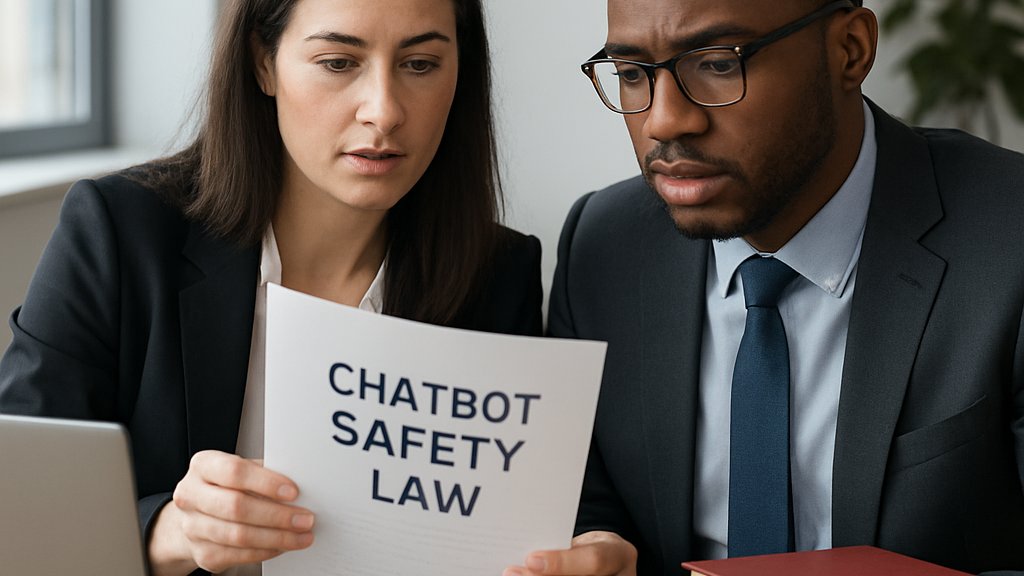
The Chatbot Safety Law defines an 'operator' as any entity offering public Conversational AI. Consequently, both start-ups and tech giants fall under its scope. The statute then layers specific duties, many aimed at under-18 users.
- Clear AI disclosure to minors at session start and every three hours.
- Ban on random engagement rewards intended to keep minors online longer.
- Mandatory filters against sexual content involving minors.
- Protocols directing self-harm prompts to crisis hotlines.
- Prohibition on chatbots posing as licensed therapists.
- Parental controls for accounts held by children under 13.
For adults, visible disclosure remains mandatory whenever a reasonable user might believe the chatbot is human. Operators that ignore any requirement risk injunctive orders and civil penalties up to $500,000. These obligations demand design, policy, and monitoring upgrades across product teams. Moreover, each mandate interlocks, complicating piecemeal compliance. Consequently, we turn to enforcement mechanics next.
Enforcement And Penalties Details
Iowa’s Attorney General Brenna Bird gains exclusive enforcement authority under the statute. Her office will craft rules through the chapter 17A administrative process. Meanwhile, private lawsuits remain barred; only the state may sue. Civil liability equals actual damages or $1,000 per violation, whichever is greater, capped at $500,000. Moreover, model developers escape automatic liability when third parties misuse their tools. Such strict regulation signals caution without crippling innovation.
Under the Chatbot Safety Law, only the AG decides whether violations merit fines. Nevertheless, the AG can seek injunctions forcing operators offline until issues resolve. Observers expect draft rules by early 2027, allowing several months for comment. Enforcement centers on a single, powerful regulator. Therefore, early engagement with the AG can mitigate future surprises. Next, we examine operational hurdles companies must tackle.
Industry Compliance Challenges Ahead
Technical executives already flag age-verification as the hardest puzzle. In contrast, recurring three-hour disclosures require UI redesign but seem manageable. Content filters raise deeper questions about accuracy and speech rights. Furthermore, suicide-prevention workflows need human escalation paths and local hotline databases. Smaller vendors may struggle to finance these features before revenue materializes. Consequently, some could exit the Iowa market rather than retrofit systems.
For start-ups, navigating overlapping regulation requires dedicated counsel. Legal teams also worry about ambiguous definitions like 'primary purpose' or 'reasonable belief'. Academic critics warn that design constraints might stifle open-ended Conversational AI research. Failing the Chatbot Safety Law would jeopardize brand trust nationwide. Real-world deployment will test both technical limits and business patience. However, policy trends suggest national harmonization may follow. Understanding those broader trends is essential.
Broader National Policy Context
Future of Privacy Forum tracks more than thirty active chatbot bills nationwide. Moreover, states like California and New Jersey advanced similar disclosure rules in 2026. Therefore, Iowa joins a growing cohort shaping early standards before federal action emerges. Many measures share three pillars: transparency, minor protection, and crisis response. Conversational AI vendors fear conflicting state regimes could fracture product roadmaps. Each emerging statute mirrors pieces of the Chatbot Safety Law to build momentum.
Future regulation might tighten data retention or biometric use. Pending federal legislation could preempt conflicting state approaches. Regional experiments will inform eventual federal or global baselines. Consequently, proactive adaptation offers competitive advantage. Experts now share guidance for such adaptation.
Expert Perspectives And Outlook
Policy analysts at Dentons recommend immediate gap analyses against SF 2417 requirements. Moreover, they advise appointing an internal child-safety lead to coordinate engineering and legal responses. FPF researchers applaud suicide-referral mandates but caution about implementation accuracy. In contrast, civil-liberties scholars question compelled notices every three hours. Technical experts label that cadence a user-experience risk. Experts call the Chatbot Safety Law the template others will refine.
Kim Reynolds emphasized parental empowerment during private bill-signing remarks, according to staff emails. Nevertheless, she has not released a formal policy statement yet. Global policy trends increasingly mirror the Iowa model. Commentators agree preparation beats litigation. Therefore, organizations must turn advice into concrete action plans. The following roadmap supports that shift.
Preparing For 2027 Deadline
First, build a cross-functional compliance task force this quarter. Additionally, inventory every customer-facing AI endpoint that reaches residents. Next, map each feature against the statutory checklist. Subsequently, prototype age gates, disclosure banners, and crisis-response scripts. After technical sprints, conduct tabletop exercises with counsel observing. Moreover, budget for annual audits once AG rules finalize.
Professionals can strengthen policy skills via the AI Policy Maker™ certification. Finally, document compliance decisions to showcase good-faith efforts during any investigation. Structured planning accelerates rollout and reduces legal exposure. Consequently, teams hit July 2027 ready for scrutiny. The journey now turns to sustained governance.
Conclusion And Next Steps
Iowa's Chatbot Safety Law has set a clear bar for transparent, responsible AI conversation. The Chatbot Safety Law arrives early enough for builders to adapt without halting innovation. However, ignoring the Chatbot Safety Law invites fines, reputational harm, and market exclusion. Consequently, forward-looking teams should embrace the rulebook, engage regulators, and refine user protections. Moreover, continuous training, like the linked certification, can create internal champions for sustained compliance.
Take action now and turn regulatory readiness into competitive advantage. Subsequently, monitor Attorney General rulemaking dockets and submit detailed comments during public consultations. Meanwhile, benchmark incident-response drills against industry peers to validate crisis protocols. Finally, celebrate compliance milestones to reinforce organizational momentum.
Disclaimer: Some content may be AI-generated or assisted and is provided ‘as is’ for informational purposes only, without warranties of accuracy or completeness, and does not imply endorsement or affiliation.


