

AI CERTS
2 hours ago
Intel-Foxconn AI Infrastructure Partnership for Rack-Scale Edge
Strategic Deal Overview Snapshot
Intel executives framed the collaboration as a full-stack endeavor. Lip-Bu Tan stressed that inference and agentic workloads require tightly integrated racks, not standalone chips. Meanwhile, Foxconn chairman Young Liu highlighted global supply-chain muscle and systems-integration expertise. Together, the companies pledged to co-design silicon, boards, racks, cooling, and management software. However, neither party revealed financial terms, customer commitments, or launch timelines. That silence underscores why analysts label the move strategic rather than transactional. The AI Infrastructure Partnership therefore begins with vision, not revenue.
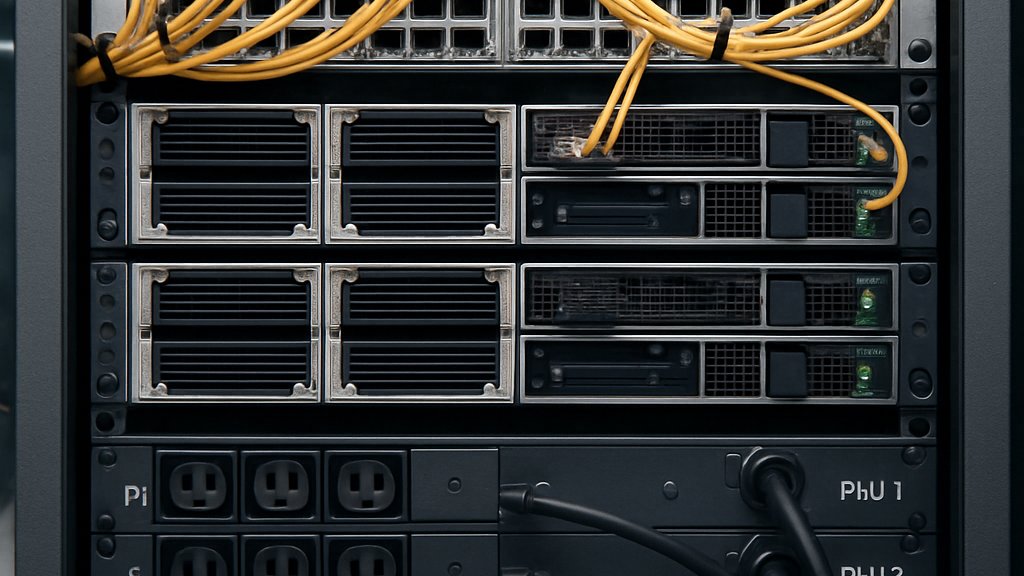
These opening statements set expectations for a long game. Nevertheless, market momentum may force quicker disclosures once pilot systems emerge.
Market Drivers And Context
Several trends push both firms toward deeper cooperation. Firstly, AI workloads now dominate spending inside hyperscale data centers. MarketsandMarkets projects double-digit compound growth through 2030. Secondly, edge and physical AI deployments demand ruggedized yet scalable gear, an area where Foxconn’s manufacturing breadth shines. Thirdly, Intel needs stronger system stories as NVIDIA controls most accelerator share. Consequently, aligning with the world’s largest electronics manufacturer offers leverage.
Recent research highlights key numbers:
- AI data centers could reach $150 billion annual revenue by 2030.
- NVIDIA still holds roughly 80 % of data-center GPU shipments.
- CPU-centric inference may cut total cost of ownership by up to 30 % for some agentic tasks.
These figures clarify why competition intensifies around rack-scale blueprints. The AI Infrastructure Partnership positions Intel to defend Xeon relevance while giving Foxconn differentiated products beyond contract assembly.
Market acceleration leaves little room for execution errors. However, precise sizing helps stakeholders judge potential upside versus risk.
Technical Scope And Goals
Joint engineering spans silicon to edge robots. Xeon 6+ processors anchor compute planes, while optional accelerators complement heavy training nodes. Moreover, reference racks will integrate high-speed interconnects, liquid cooling, and fine-grained telemetry. Those elements collectively target dense data centers and constrained industrial sites.
Edge ambitions include factories, vehicles, and smart-city kiosks. Here, power budgets matter as much as raw performance. Therefore, Foxconn plans modular enclosures that balance thermals with serviceability. Intel will bundle orchestration software to coordinate agentic AI flows across CPUs and accelerators. Professionals eager to design such stacks can strengthen credentials through the AI Engineer™ certification. The credential validates skills in deployment, monitoring, and security.
This technical roadmap looks comprehensive. Nevertheless, execution success depends on component availability and field feedback.
Competitive Landscape Analysis
NVIDIA dominates accelerator markets, yet competitors smell opportunity. AMD has gained share with Instinct MI300 parts. Meanwhile, hyperscalers develop custom silicon for internal clouds. In contrast, the Intel–Foxconn duo emphasizes CPU-driven inference for broad enterprise compute. That angle could appeal to firms unable to secure scarce GPUs or justify premium pricing.
Foxconn already assembles NVIDIA-based racks for several clients. Consequently, analysts wonder how the new AI Infrastructure Partnership coexists with existing lines. Both companies insist the collaboration remains vendor-agnostic where customers demand mixed architectures. Still, brand positioning will require careful messaging.
Competition ensures rapid feature iteration. However, differentiation around supply-chain resilience and lifecycle economics may sway cautious buyers.
Benefits And Open Questions
Potential advantages appear compelling:
- End-to-end validation could shorten deployment cycles.
- Foxconn scale may lower unit costs for enterprise compute.
- Integrated telemetry raises operational visibility inside data centers.
Nevertheless, several gaps remain. No pilot customers have been named. Performance metrics for rack-scale prototypes are absent. Integration depth beyond reference designs is unknown. Consequently, risk-averse buyers may delay commitments until hard numbers surface.
The AI Infrastructure Partnership promises efficiency but also raises supply-chain questions amid shifting geopolitical rules. Execution clarity will decide whether optimism becomes orders.
These uncertainties keep analysts cautious. However, transparent roadmaps could quickly reverse hesitation.
Implications For Enterprises
CIOs juggling budget and innovation face tough choices. GPUs remain scarce and costly. Therefore, CPU-heavy racks designed through this AI Infrastructure Partnership might ease procurement stress. Moreover, Foxconn’s global presence could simplify regional logistics. IT leaders evaluating hybrid strategies should monitor thermal profiles, software stacks, and compatibility with existing orchestration tools.
Training-intensive firms may still favor GPU clusters. In contrast, inference-dominant workloads in retail, banking, and telecom might shift toward Xeon-centric nodes. Additionally, edge deployments requiring rugged form factors could benefit from Foxconn’s manufacturing breadth. Decision makers can benchmark early units once engineering samples appear. Meanwhile, teams can upskill via the earlier-mentioned AI Engineer™ certification to prepare for heterogeneous fleets.
Real-world pilots will offer proof. Until then, scenario planning helps enterprises map adoption timelines.
Conclusion And Next Steps
The Intel–Foxconn AI Infrastructure Partnership enters a crowded yet growing arena. It blends Intel silicon expertise with Foxconn’s manufacturing scale to deliver rack-scale and edge systems. Market growth across data centers and industrial sites justifies the initiative, while fierce competition intensifies pressure. Benefits include validated stacks, potential cost reductions, and broader access to enterprise compute. However, limited disclosures leave execution risks and timeline ambiguity.
Subsequently, stakeholders should watch for customer pilots, performance benchmarks, and detailed product names. Professionals can meanwhile sharpen deployment skills through the linked AI Engineer™ certification. Preparing teams early ensures readiness once commercial systems ship. Stay informed, compare options, and position your organization for the coming wave of integrated AI infrastructure.
Disclaimer: Some content may be AI-generated or assisted and is provided ‘as is’ for informational purposes only, without warranties of accuracy or completeness, and does not imply endorsement or affiliation.


