

AI CERTS
2 months ago
Intel 18A Reclaims Domestic Node Leadership
Furthermore, Fab 52 in Arizona now ships Panther Lake client parts that bring the architecture into consumer laptops. Meanwhile, Clearwater Forest servers will follow, reinforcing supply-chain resilience for data center buyers. This article unpacks the technology, competitive benchmarks, and production status. It also explores business implications for the wider Semiconductor landscape. Moreover, we examine whether recent moves truly restore United States transistor leadership after years of lag. Readers will gain a clear, data-driven picture of where the node stands today.
Historic Leadership Returns Now
Historically, Intel led each shrink through the FinFET era. However, delays at 10 nm and 7 nm ceded the crown to TSMC and Samsung. Consequently, national discussions on supply security intensified across Washington. Intel responded with the ambitious five-nodes-in-four-years roadmap culminating in Intel 18A.
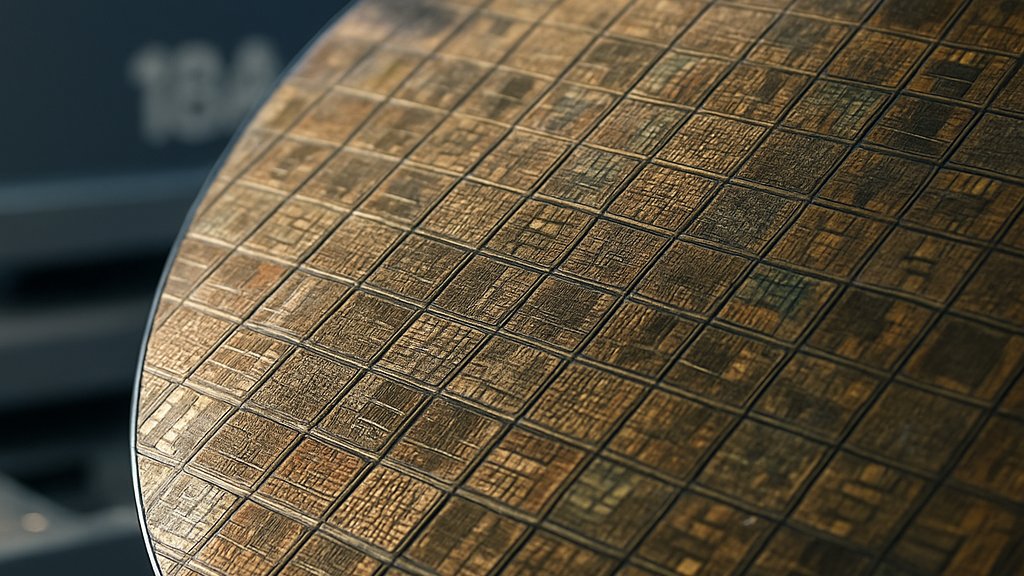
The Biden administration linked chip incentives to advanced domestic capacity. Therefore, Fab 52’s launch delivers tangible progress for US Manufacturing at the leading edge. Moreover, Intel emphasizes that no other sub-2nm facility currently operates on American soil. Such positioning underpins policy goals around national defense and economic competitiveness.
Intel’s return to an advanced node produced locally reshapes geopolitical narratives. Nevertheless, leadership still depends on hard metrics, which our next section examines.
Inside RibbonFET And PowerVia
RibbonFET replaces FinFET by surrounding narrow Silicon channels with a gate on all sides. Consequently, electrostatic control improves, lowering leakage while boosting drive current. Additionally, designers can stack multiple ribbons, tuning performance without enlarging footprint. Independent device papers suggest gate-all-around structures gain roughly 15% efficiency over prior fins.
PowerVia shifts power delivery to the wafer backside using nano TSVs. Therefore, signal layers on the front enjoy more routing room and reduced IR drop. Intel reports cell utilization rises five to ten percent under this scheme. Moreover, the company shows four percent performance improvement at iso power.
- Up to 15% performance per watt against Intel 3, per Intel data.
- Around 30% higher Semiconductor density relative to Intel 3 baseline.
- Cell utilization gains of 5-10% from PowerVia, according to platform brief.
These figures illustrate Intel 18A architectural potency. In contrast, competitiveness still hinges on broader performance comparisons, explored next.
Comparing Density And Performance
TechInsights measured high-density standard cells across leading 2 nm lines. TSMC N2 showed about 313 million transistors per square millimeter. Meanwhile, Intel 18A landed near 238, while Samsung SF2 scored roughly 231. Consequently, TSMC retains a raw density advantage.
However, density alone never tells the system story. Intel’s internal benchmarks display 15% performance per watt over Intel 3, narrowing practical gaps. Furthermore, PowerVia enables tighter voltage drop control, favoring sustained mobile clocks. Analysts therefore predict competitive efficiency in AI inference and low-power servers.
Density trails, yet efficiency gains could tip Semiconductor benchmarks in Intel’s favor. Subsequently, manufacturing scale becomes the decisive differentiator.
Fab 52 Production Impact
Fab 52 in Chandler, Arizona anchors US Manufacturing aspirations for advanced nodes. The facility uses EUV and high numerical aperture scanners supplied by ASML. Moreover, Intel plans capacity for both internal products and selective Foundry customers. State and federal grants subsidize tooling under the CHIPS and Science Act.
At launch, Panther Lake notebooks began sampling to OEMs across hundreds of configurations. Additionally, Clearwater Forest Xeon 6+ qualification wafers target data center pilots this quarter. Intel 18A ramp curves remain undisclosed, but executives cite improving yields monthly. Nevertheless, external confirmation of bin-split distributions is still pending.
Early shipments validate process readiness, yet sustained volume must follow. Therefore, partner trials gain importance, as examined next.
Foundry Ambitions And Trials
Intel Foundry Services positions Intel 18A as a premium platform for external innovators. Nvidia, Broadcom, and several defense contractors have taped out test chips on multiproject wafers. However, Reuters reported some commitments shrank amid uncertain yield statistics. Consequently, CFO David Zinsner acknowledged internal debate over wider customer access.
In contrast, TSMC secures multiyear Apple and Qualcomm contracts before mass production starts. Foundry credibility often rests on upfront volume guarantees tied to yield thresholds. Therefore, Intel must translate technical promise into commercial agreements during 2026.
- Nvidia: continuing validation; volume decision pending.
- Broadcom: prototype feedback positive; timetable under review.
- Government: RAMP-C secure silicon pilots advancing.
Customer caution reflects business risk rather than pure technology skepticism. Subsequently, financial viability links back to process economics and yields, discussed below.
Risks Temper Market Optimism
Advanced nodes demand soaring capital and engineering costs. Additionally, backside power introduces new metrology steps that could stress throughput. Analysts estimate wafer prices will exceed current 3 nm rates by double-digit percentages. In contrast, TSMC benefits from massive scale, diluting overhead faster.
Moreover, Intel still lags TSMC in raw density, potentially raising die area for equal logic. Consequently, cost per function could remain higher until yields mature. Nevertheless, on-shore incentives and security requirements may offset some price sensitivity for US Manufacturing clients. Professionals can enhance their expertise with the AI Engineer™ certification.
Risks remain tangible across cost, density, and throughput. However, strategic incentives and architectural strengths could counterbalance those headwinds.
Strategic Takeaways And Path
Intel 18A currently delivers the first sub-2nm Silicon production inside the United States. RibbonFET and PowerVia drive measurable performance per watt benefits despite a density gap. Furthermore, early Panther Lake laptops and Clearwater Forest servers validate functional silicon. Yet, broad market leadership will hinge on Foundry traction, sustained yields, and competitive pricing.
Independent benchmarks and cost models will emerge over the next four quarters. Consequently, analysts should monitor shipment volumes, yield disclosures, and new design-win announcements. US Manufacturing advantage offers political leverage, but commercial dominance demands customer confidence. Moreover, Intel must deliver successive 14A steps to cement momentum.
The race remains open, with Intel 18A providing a credible starting gun. Subsequently, execution and economics will determine the final podium order.
Intel 18A signals significant progress toward reclaiming advanced transistor ground for America. However, engineers, investors, and policymakers should track yield trends and customer contracts before declaring victory. Meanwhile, product designers must weigh density tradeoffs against efficiency gains when selecting a process. Consequently, staying informed and upskilled becomes critical for navigating the fast-moving Semiconductor sector. Professionals can therefore validate modern skills through the AI Engineer™ certification and related programs. Engage now, deepen expertise, and watch how Intel 18A reshapes the global Silicon map.
Disclaimer: Some content may be AI-generated or assisted and is provided ‘as is’ for informational purposes only, without warranties of accuracy or completeness, and does not imply endorsement or affiliation.


