

AI CERTS
3 days ago
India Deepfake Regulation: 3-Hour Takedown Rule Explained
However, the policy does far more than shorten deadlines. It defines Synthetically Generated Information, mandates watermarks, and threatens safe-harbour immunity. Professionals managing content, risk, or policy must grasp the fine print immediately. This article unpacks the rule text, stakeholder reactions, and operational playbooks. Readers will leave with clear steps for compliance and strategic leverage.
Three-Hour Takedown Rule Overview
MeitY notified the IT Rules 2026 amendment through Gazette G.S.R.120(E) on 10 February 2026. The update brands deepfake or voice-cloned media as Synthetically Generated Information, or SGI. Consequently, any court or government notice covering SGI now triggers a three-hour removal deadline. Rapid removal aims to curb deepfake misinformation before it dominates feeds. Non-consensual intimate imagery and impersonation demands an even tighter two-hour window. Failure suspends the intermediary’s Section 79 safe-harbour.
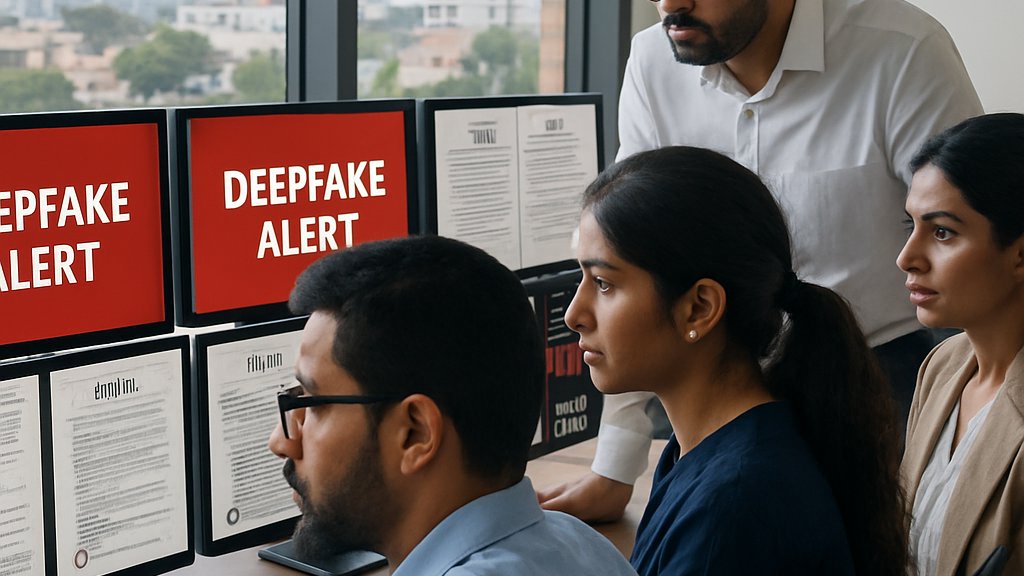
In contrast, earlier versions allowed twenty-four hours for similar orders. Therefore, the India Deepfake Regulation marks one of the world’s shortest statutory timelines. MeitY argues speed limits viral harm before deception scales. Platforms counter that meaningful human review becomes nearly impossible at this pace. These arguments frame the compliance stakes. The compressed clocks redefine operational norms for every intermediary. Still, definitions matter as much as time.
Expanded SGI Definition Impact
Rule text explicitly folds SGI into the category of unlawful information. Moreover, it describes SGI as audio, visual, or audiovisual content algorithmically altered to appear real. That language captures deepfakes, voice clones, face swaps, and AI-generated news anchors. Consequently, producers must append visible watermarks and provenance metadata. Platforms must verify user declarations when offering creation tools.
Regulators expect technical detection systems to backstop those attestations. Additionally, periodic user advisories must now appear every quarter, not annually. Such reminders keep the India Deepfake Regulation alive in everyday user experience. The India Deepfake Regulation therefore intertwines content generation with disclosure obligations. These detailed definitions close loopholes evident in prior drafts. However, heavier definitions also widen potential overreach.
SGI now enjoys clarity but also strict scrutiny. Operational burdens emerge next for compliance teams.
Compliance Burden For Platforms
Large Platforms already field thousands of daily notices across languages. Subsequently, the three-hour takedown stopwatch forces 24/7 escalation rosters. Meta reported the window as “really challenging” during an industry summit. Google trust teams voiced similar concerns in media briefings. Smaller startups lack comparable staffing or automated triage.
Meanwhile, MeitY insists failure risks loss of safe-harbour immunity. Consequently, every intermediary races to deploy AI detectors, watermark scanners, and rapid legal workflows. The India Deepfake Regulation forces that acceleration despite hiring freezes elsewhere. Key operational priorities include:
- Round-the-clock legal on-call teams
- Automated SGI pattern recognition tuned for Indian languages
- Two-hour red button for intimate imagery removal
- Quarterly user advisories on deepfake risks
Collectively, these steps raise cost bases and legal exposure. Therefore, compliance strategy must integrate policy, engineering, and forensics. The resourcing puzzle dominates board agendas this quarter. Yet, external voices warn about civil liberties.
Civil Society Free-Speech Concerns
Internet Freedom Foundation labelled the timelines impossibly short. Critics argue the India Deepfake Regulation risks becoming a censorship shortcut. Moreover, activists say automated filters will over-block satire, parody, or investigative journalism. Editors’ Guild and CPJ echoed similar alarms, citing Article 19 precedent. Consequently, petitions challenging constitutionality are already drafted for higher courts.
MeitY counters that quick removal prevents viral misinformation during elections or crises. Nevertheless, critics question whether authorised officers enjoy sufficient oversight. Litigation risks could delay enforcement or force revisions. India Deepfake Regulation may therefore evolve through courtroom dialogue.
Civil-society debate injects uncertainty into implementation roadmaps. Operational teams still need concrete playbooks despite that haze.
Operational Challenges And Solutions
Rapid detection remains the hardest technical obstacle. The India Deepfake Regulation makes detection a board-level key performance indicator. Therefore, many Providers integrate hash-matching, phoneme analysis, and GAN fingerprinting. However, Indian dialect diversity complicates training data acquisition. Subsequently, false positives spike on vernacular memes. False negatives, however, let misinformation clips spread unchecked. Risk teams now monitor accuracy dashboards hourly.
Professionals can enhance strategy with the AI Policy Maker™ certification. Additionally, the credential deepens understanding of legislative trends across jurisdictions. Another pragmatic step involves pre-approved response templates for government notices. Those templates must mirror language found in the IT Rules 2026 schedules. Consequently, legal latency shrinks and audit trails stay clean.
Technical and policy toolkits together tame most compliance pain. Yet, strategic foresight remains vital for the quarters ahead.
Strategic Actions Moving Forward
Boards must treat the regulation as a cross-functional mandate. Firstly, map every content workflow against the three-hour clock. Secondly, embed automated alerts that escalate based on content class. Thirdly, rehearse crisis simulations involving viral misinformation during festival seasons. Finally, publish quarterly transparency reports detailing takedown metrics and appeal rates.
The India Deepfake Regulation should appear prominently in enterprise risk registers. Moreover, ongoing dialogue with MeitY can surface interpretative clarifications early. Global policy teams should track possible one-hour revisions under discussion. Consequently, organizations avoid last-minute firefights and protect user trust.
Structured roadmaps convert daunting rules into disciplined execution. The conclusion distills lessons and prompts next moves.
Conclusion And Next Steps
The three-hour mandate signals a decisive turn in India’s digital governance. Consequently, compliance, engineering, and communications teams must cooperate like never before. The India Deepfake Regulation elevates speed, transparency, and traceability as core operating metrics. However, successful programs will also respect speech rights and minimize wrongful removals. Professionals should lock funding for detectors, training, and quarterly audits immediately. Furthermore, earning the AI Policy Maker™ credential can future-proof your leadership profile. Act now, refine processes, and stay ahead of enforcement waves.
Disclaimer: Some content may be AI-generated or assisted and is provided ‘as is’ for informational purposes only, without warranties of accuracy or completeness, and does not imply endorsement or affiliation.


