

AI CERTS
2 months ago
HBM Scarcity: How AI Demand Sparked a Global Memory Price Surge
Moreover, some NAND wafers recorded monthly spikes exceeding sixty percent. Meanwhile, hyperscalers like OpenAI pre-booked entire production lines for its ambitious Stargate supercomputer. Therefore, negotiators scrambled to secure allocation before competitors closed the door. These forces combined to create the most acute memory crunch since 2018. Yet the story extends beyond technology. Inflation worries and broader macroeconomic tremors now shadow smartphone and laptop makers. This article unpacks the origins, trajectory, and strategic responses surrounding the current crisis.
AI Spurs Memory Demand
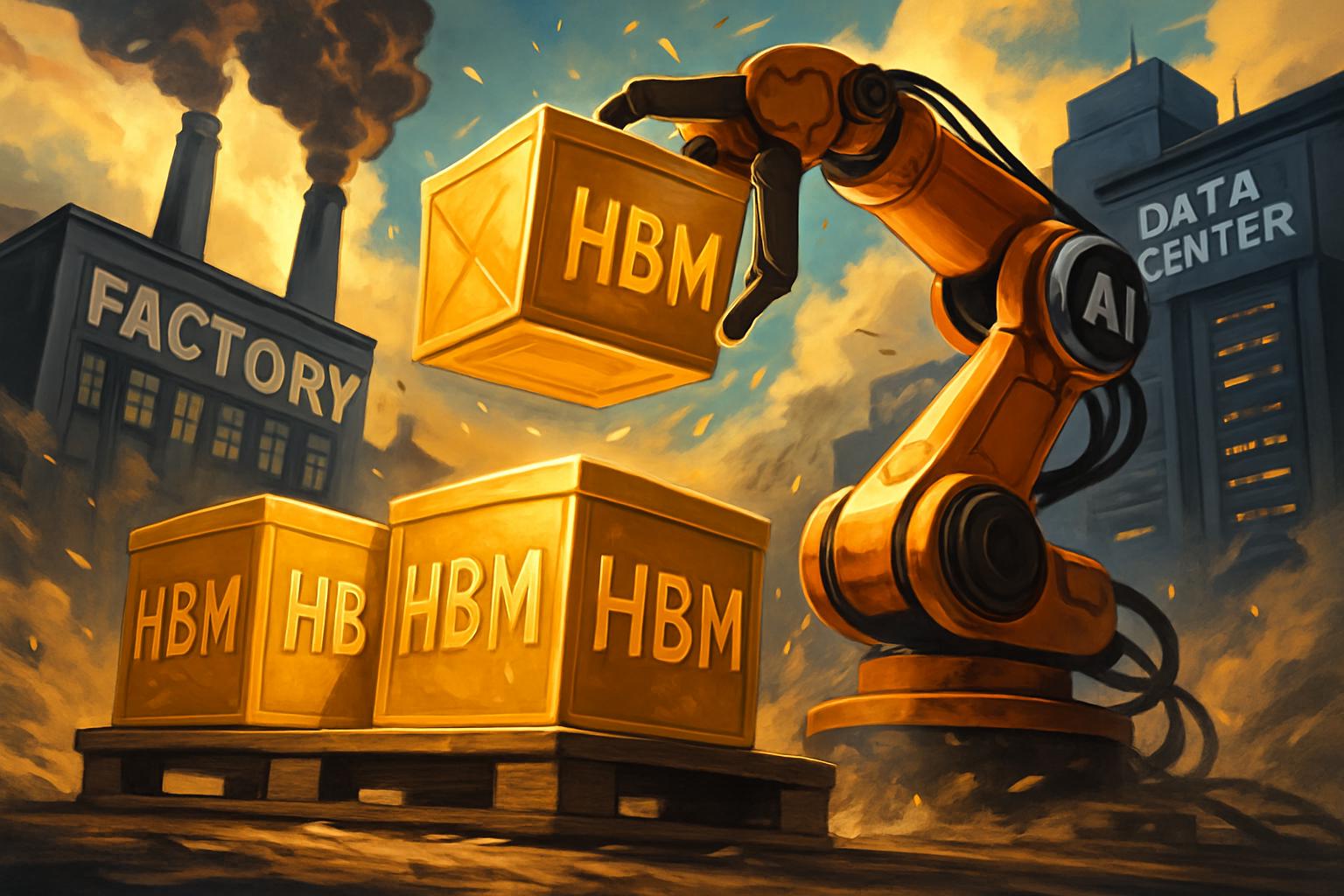
AI model sizes doubled in under eighteen months. Consequently, each accelerator node now requires larger HBM stacks and server DRAM pools. TrendForce estimates that AI workloads consumed nearly forty percent of total premium memory output during Q3 2025. Moreover, OpenAI’s Stargate initiative alone targets up to 900,000 wafers per month over its lifespan. That aspirational number equals a double-digit share of current global DRAM capacity. In contrast, smartphone shipments grew modestly, providing little relief because wafer conversion times exceed two years. Therefore, the Supply Chain shifted focus to maximize throughput for data centers. The resulting HBM Scarcity quickly spilled into adjacent segments, pushing commodity module prices upward. Analysts agree that even conservative scenarios show elevated Demand persisting through 2026. Nevertheless, some foresee episodic corrections if cloud utilisation plateaus. These dynamics underscore how a single application domain can reshape Semiconductors overnight.
Suppliers Shift Chip Production
Memory manufacturers responded with strategic reallocations. Moreover, Samsung, SK Hynix, and Micron funneled clean-room space to high-margin HBM lines. Consequently, wafer starts for consumer DDR5 and TLC NAND dropped sharply. TrendForce recorded November contract prices for mainstream NAND wafers rising between twenty and sixty percent month on month. Meanwhile, Micron announced it would exit its Crucial retail brand to serve datacenter clients exclusively. In contrast, smaller module assemblers struggled to obtain even legacy node dies. Therefore, the Supply Chain felt immediate turbulence, especially in Asia-Pacific distribution hubs. Chey Tae-won, chair of SK Group, warned that customers risk halting business if deliveries slip. These remarks amplified investor focus on HBM Scarcity and reinforced bullish pricing forecasts. Additionally, analysts highlighted that wafer tooling for HBM requires through-silicon via processes unavailable in many older fabs. Consequently, capacity conversion will not happen overnight.
The realignment produced several rapid changes:
- Server DRAM contract prices gained 13-18% quarter over quarter during Q4 2025.
- NAND wafer contracts spiked up to 60% in November alone.
- Global DRAM revenue rose 30.9% sequentially in Q3 2025.
- Lead times for new advanced lines exceed 24 months, extending HBM Scarcity.
These figures illustrate how production choices reverberate through pricing tiers. Moreover, they show why downstream buyers face escalating costs. The section confirms that structural bottlenecks, not mere speculation, underpin current levels. Consequently, attention shifts to end-market impact.
Price Impact Across Segments
Price shocks rarely stay isolated within wholesale contracts. Consequently, retailers began rationing SSD and RAM kit sales by late October. Tom’s Hardware reported select desktop DIMMs costing twice their summer levels. Furthermore, small PC builders warned clients about weekly quotation validity. Smartphone makers signalled possible 10-30% increases on flagship devices for early 2026. Consumers already wrestling with tech Inflation may face another budgeting dilemma. Meanwhile, enterprise procurement teams hastily renegotiated multi-year frameworks to hedge against further hikes. In contrast, hyperscalers can absorb higher bills because AI revenue offsets component costs. Nevertheless, CFOs track every invoice, fearing that persistent HBM Scarcity will compress gross margins. Supply Chain specialists also monitor grey-market activity, where price gouging historically flourishes during shortages. Therefore, policymakers debate whether new reporting rules are needed to discourage hoarding.
The cascading effects stretch beyond hardware. Moreover, software release plans now adapt to memory availability, delaying certain feature sets. Macroeconomic forecasters note that Semiconductors hold a growing share of the consumer price index basket. Consequently, memory volatility could tick headline Inflation upward, complicating central-bank decisions. Demand elasticity studies suggest that a 10% component cost rise can shave comparable volume from lower-end device tiers. However, premium devices appear less sensitive, at least short-term. These contrasts show how price transmission differs across income segments.
Overall, acute pricing stress burdens businesses and households simultaneously. However, understanding the strategic roots of HBM Scarcity helps leaders craft proportionate responses.
Macroeconomic And Consumer Risks
Central bankers already battle service-sector Inflation. Additionally, volatile chip prices threaten to worsen expectations. The IMF warns that a prolonged semiconductor rally could add 0.2 percentage points to global headline Inflation next year. Furthermore, economies reliant on electronics exports face dual pressures. Rising component costs lift revenues, yet HBM Scarcity constrains shipment volumes. Consequently, trade balances may swing unpredictably. Supply Chain concentration amplifies these Macroeconomic swings because only three firms hold most advanced memory capacity. In contrast, diversified economies may absorb shocks more easily. Nevertheless, analysts caution that second-round effects, such as consumer confidence erosion, might appear with delay.
Several fiscal authorities weigh incentives for new fabs to reduce geographic exposure. Moreover, proposed subsidies mirror earlier CHIPS Act frameworks but focus specifically on HBM and server DRAM lines. Critics argue that oversupply risks emerge once Demand normalizes. However, supporters note that 24-month lead times justify early action. Therefore, decision makers must balance short-term Inflation control against long-term strategic resilience.
Macroeconomic analysis reveals that memory markets now influence broader growth trajectories. Consequently, policy responses require nuanced cost-benefit evaluation before capital is allocated.
Longer Term Capacity Outlook
Any relief must flow from new capacity. However, building an advanced memory fab costs billions and requires specialist equipment. Industry norms place cycle time near 24 months, excluding permit delays. Moreover, through-silicon via and high-density stacking add further complexity. SK Hynix expects tangible capacity growth only by late 2027. Consequently, HBM Scarcity may persist another two years. Demand projections from hyperscalers continue climbing as AI models grow. Therefore, suppliers hesitate to serve consumer segments aggressively, fearing opportunity cost. Semiconductors investors applaud the discipline because higher average selling prices lift margins. Nevertheless, prolonged shortfalls could invite government intervention or fresh entrants.
Samsung and Micron both announced incremental debottlenecking projects. Additionally, they explore joint ventures to share capital risk. Meanwhile, EU and US incentive packages provide tax credits and grants, yet labour shortages threaten schedules. Logistics experts warn that localized fabs still depend on global photolithography tool chains. In contrast, some analysts argue chiplet architectures may temper Demand by increasing memory utilization efficiency. However, the consensus view remains that only additional wafers will balance the market.
The capacity timeline suggests strategic planning must extend beyond quarterly earnings. Therefore, stakeholders need flexible hedging tactics, discussed next.
Actionable Strategies For Stakeholders
Boards cannot eliminate shortages, yet they can mitigate exposure. Moreover, multi-year procurement contracts provide price visibility during turbulence. Consequently, enterprise buyers should collaborate directly with tier-one suppliers where possible. Supply Chain consolidation also suggests nurturing secondary vendors for redundancy. Additionally, engineers can redesign products to accept multiple memory densities, protecting launch schedules. Strong cross-functional teams that include finance, legal, and logistics will accelerate decisions. Professionals can enhance their expertise with the AI Foundation™ certification, gaining data-driven negotiation skills.
Investors should monitor fab equipment orders as leading indicators. Furthermore, diversified Semiconductors portfolios may hedge volatility better than single-name positions. Analysts recommend tracking quarterly Demand signals from hyperscalers and retail inventory simultaneously. Meanwhile, policymakers assessing industrial incentives must link grants to measurable capacity milestones. Without accountability, subsidies risk creating overhang once HBM Scarcity eases.
Key proactive steps include:
- Secure rolling forecasts and align them with supplier wafer starts.
- Lock optional volume bands to flex with Demand swings.
- Audit Supply Chain ethics to prevent grey-market leakage.
- Invest in R&D improving memory bandwidth utilization.
Well-timed actions can cushion margins during turbulence. In contrast, passive strategies leave firms vulnerable to persistent price shocks.
Conclusion And Outlook Forward
The 2025 memory crunch demonstrates how AI innovation can strain physical infrastructure. Furthermore, overlapping production shifts, geopolitical uncertainty, and relentless Demand created intense HBM Scarcity. Suppliers enjoy record margins, yet consumer markets face higher prices and potential Inflation spillovers. Macroeconomic planners must weigh fab subsidies against fiscal discipline. Meanwhile, corporate buyers should adopt flexible contracts and invest in skill building. Consequently, understanding capacity timelines remains essential.
Nevertheless, history shows that coordinated investment eventually balances Semiconductors markets. Therefore, readers should track wafer announcements, policy developments, and Demand forecasts closely. Professionals seeking deeper insight can pursue the AI Foundation™ certification to strengthen strategic planning. Acting now positions organizations to thrive once supply normalizes.


