

AI CERTS
2 months ago
Genesis Hand Signals Next Wave for Humanoid Robots
This article unpacks the technology, market context, benefits, and unresolved questions. Subsequently, readers gain balanced insights and next actions.
Genesis Unveils Adaptable Hand
Genesis presented a direct-drive, 20-degree-of-freedom hand matching human scale. Meanwhile, the team showed video clips of tomato slicing, piano playing, and Rubik’s Cube solving. Additionally, a sensor glove recorded egocentric motion, mapping 1:1 to the robotic fingers. In contrast, most factory grippers offer two or three rigid digits. Therefore, Genesis aims to narrow the notorious “embodiment gap.”
Zhou Xian stated, “The brain and hand are the two most valuable and complex pieces of Robotics.” Nevertheless, real-world durability remains untested. These debut demonstrations highlight raw capability. However, industrial proof still awaits.
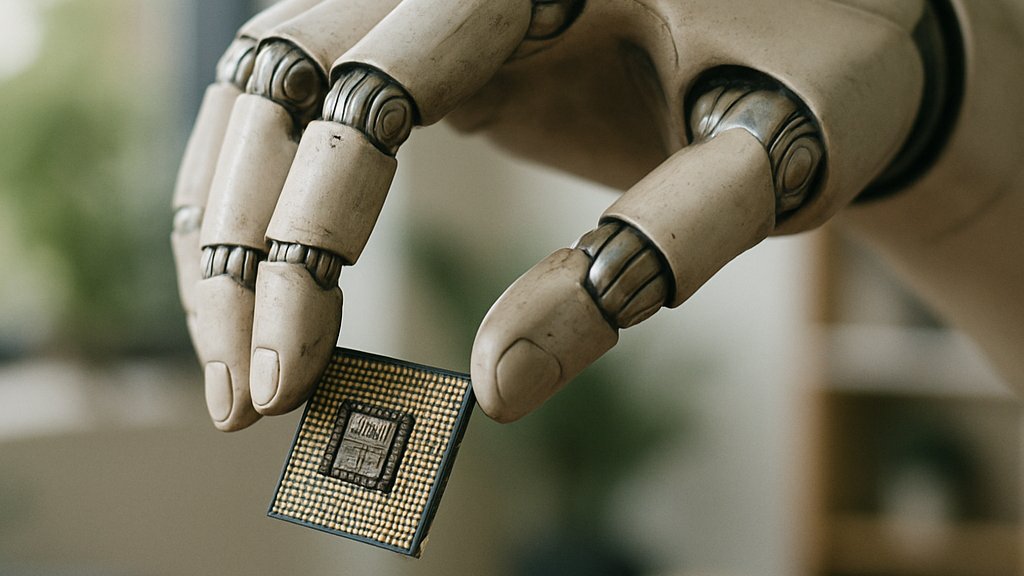
The model behind the hand is a so-called robotic foundation model. Consequently, GENE-26.5 intends to run across diverse platforms, from articulated arms to full Humanoid Robots. That cross-compatibility could accelerate deployment speed. Nevertheless, training such a model demands immense multimodal data. Genesis plans to scale collection through worker-worn gloves. The approach sounds practical yet raises privacy debates.
These launch details set the narrative. However, understanding the technical stack reveals deeper implications.
Technology Inside Genesis Hand
The Genesis Hand 1.0 uses direct-drive actuators for compliant motion. Moreover, soft silicone skins cover palm and fingers, protecting parts and people. Electromagnetic finger tracking in the glove feeds tactile signals into GENE-26.5. Consequently, the system controls each joint with millimeter precision. Independent analysts praised the 20 active DoF, calling it near biometric fidelity. In contrast, earlier humanoid hands often relied on underactuated designs.
The Engineering team couples real hardware with high-fidelity simulation. Subsequently, improvements move from virtual to physical within hours. Furthermore, Genesis claims the same control policy operated different wrists during lab tests. If validated, that finding would confirm the “train once, deploy many” promise for Humanoid Robots. Yet, public benchmarks remain absent.
Key hardware specifications at a glance:
- 20 active, back-drivable degrees of freedom
- Soft contact surfaces for safe grasping
- 1:1:1 mapping between glove, human hand, robotic hand
- High-rate tactile arrays across fingertips
- Direct-drive motors enabling fine force control
These numbers excite research circles. Nevertheless, manufacturing such precision at scale introduces new hurdles. The next section examines market timing.
Market Need And Timing
The International Federation of Robotics counts about 4.28 million operational factory robots. However, most perform repetitive pick-and-place jobs lacking Dexterity. Consequently, industries like electronics assembly, pharmaceuticals, and food handling still depend on human finesse. Market studies valued industrial Robotics near $22 billion in 2025, with strong CAGR projections.
Furthermore, niche reports peg the dexterous-hand segment in the low billions. Therefore, even modest penetration could unlock significant revenue. Genesis positions itself as a complete stack vendor, similar to recent Humanoid Robots startups. In contrast, competitors like Linkerbot focus narrowly on hardware scale. Moreover, venture capital shows appetite; Genesis secured funds from Eclipse, Khosla, and Bpifrance within one year of founding.
These numbers reveal appetite for flexible automation. Nevertheless, customers still need cycle-time and cost assurances. The following benefits section explores practical upside.
Benefits For Industrial Lines
Diverse manufacturing lines could gain measurable advantages:
- Reduced changeover time between SKUs due to high Dexterity.
- Lower injury risk through compliant gripping and force sensing.
- Faster ramp-up of new tasks via glove demonstrations.
- Potential labor cost savings in tight markets.
- Greater product consistency in laboratory pipetting or wiring.
Furthermore, cross-platform deployment means one software brain may steer many form factors. Consequently, factories avoid fragmented toolchains. Additionally, the human-scale design may simplify CE or ISO safety certification. Professionals can enhance their expertise with the AI Robotics™ certification. Nevertheless, every benefit hinges on robust field data.
These prospective gains entice procurement teams. However, several obstacles temper enthusiasm.
Challenges And Open Questions
First, staged demos rarely expose long-tail failures. Moreover, industrial uptime targets often exceed 98%. Achieving that reliability with novel hands is tough. Secondly, glove-based data collection raises worker consent issues. TechCrunch noted uncertainty around compensation models. In contrast, Genesis argues the practice empowers skilled operators.
Third, scaling direct-drive actuators may inflate bill of materials. Consequently, cost parity with classic grippers could take years. Additionally, regulatory pathways for medical or food contact tasks remain undefined. Nevertheless, early engagement with standards bodies could mitigate delays.
These hurdles underscore the maturity gap. However, momentum behind Humanoid Robots continues to build.
Outlook For Humanoid Robots
Analysts predict a convergence between dexterous hands and bipedal platforms. Consequently, modular brains like GENE-26.5 might control full Humanoid Robots that walk, see, and manipulate. Moreover, several French Startup founders envision labor-starved Europe as a launchpad. Engineering advances in battery density, lightweight materials, and sensor fusion support that vision.
Nevertheless, commercial traction requires transparent benchmarks. Therefore, upcoming pilot programs in France, Germany, and Italy will be critical. Furthermore, independent labs should validate task generalization across settings. Meanwhile, investors watch unit economics closely.
The road ahead mixes promise and prudence. However, Genesis has injected fresh energy into the race.
Adaptable hands push Humanoid Robots closer to everyday industry. Consequently, collaboration among engineers, operators, and regulators will decide the ultimate impact.
Disclaimer: Some content may be AI-generated or assisted and is provided ‘as is’ for informational purposes only, without warranties of accuracy or completeness, and does not imply endorsement or affiliation.


