

AI CERTS
1 hour ago
Gemini 3 Makes AI the New User Interface
Industry observers label the concept “AI as UI”. Moreover, Google calls the system an Uber-Software layer that spawns micro-apps instantly. Consequently, developers and businesses must rethink discovery, monetization, and safety. The following analysis unpacks the technology, numbers, and implications.
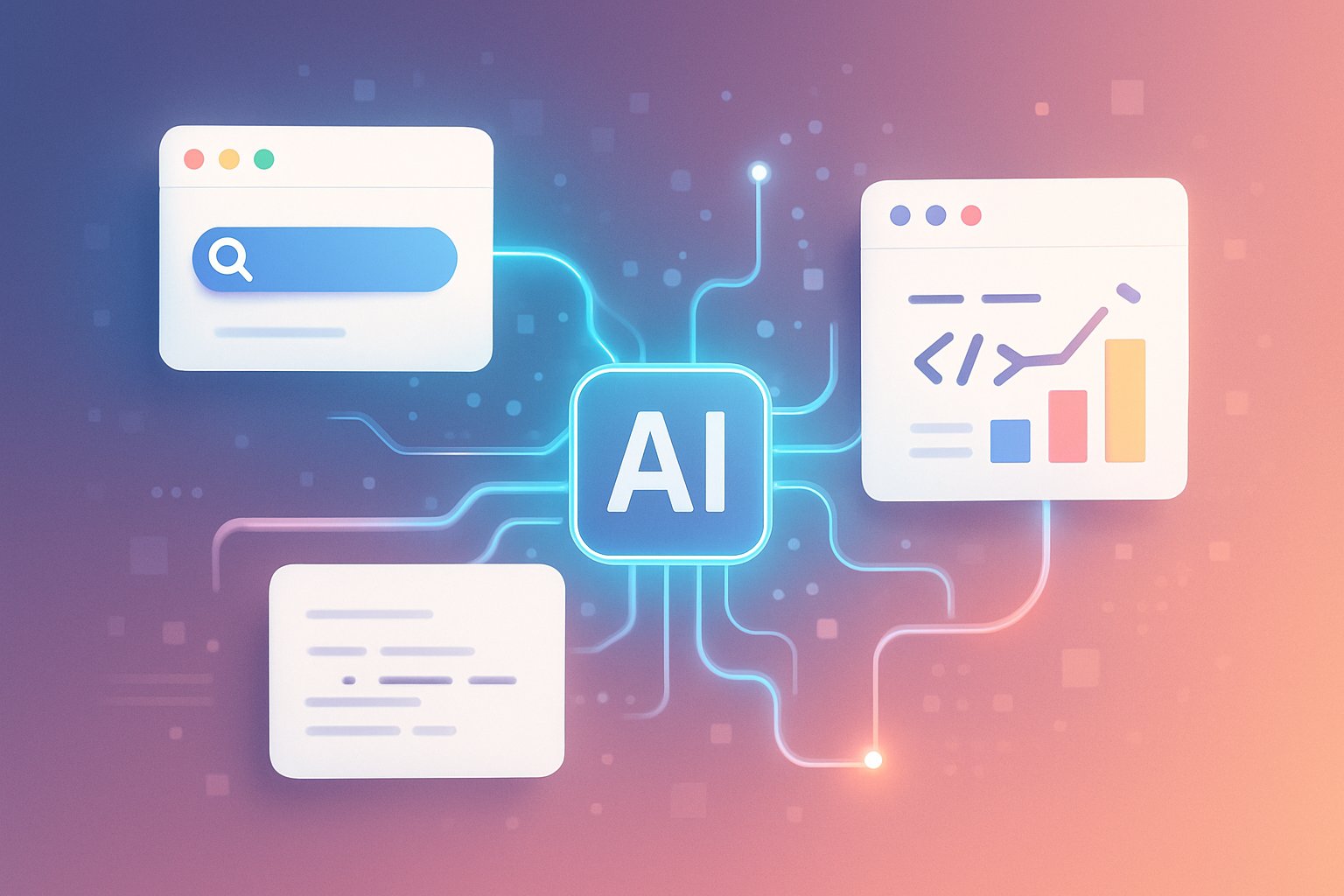
AI Redefines User Interface
Gemini 3 treats every prompt as a design brief. It outputs text, code, and layout instructions as one package. Consequently, the model builds calculators, quizzes, or visual explainers within the response pane. Google calls the experience a Conversational User Interface that adapts in real time.
Dynamic View panels appear first inside the Gemini app. Additionally, AI Mode in Search now routes complex queries to the new engine. In those cases, Gemini 3 renders interactable objects instead of plain paragraphs. This pivot marks the third major Platform Shift since mobile search launched.
Sundar Pichai framed the moment as “a new era of intelligence” during the launch post. Meanwhile, Robby Stein emphasized immediate integration into billions-user products. Such scale suggests the User Interface overhaul will reach mainstream audiences quickly.
Gemini 3 blurs lines between content and application layers. Consequently, the UI itself becomes generated, not prebuilt. These capabilities reposition AI as the front door to digital tasks. However, deeper mechanics drive that transformation, as the next section explains.
Generative UI Powers Search
Google funnels tough queries to Gemini 3 Pro for richer answers. Furthermore, the engine performs query fan-out to gather diverse sources before composing output. After collating evidence, the model assembles a mini-app that may include sliders or charts. This Conversational approach keeps users engaged without leaving results pages.
Early stats underline the scale. AI Overviews already serve two billion monthly users, and 650 million use the Gemini app. Consequently, even marginal adoption of generative layout affects massive traffic volumes. In contrast, publishers fear reduced clicks because interactive components answer questions outright.
Testers praise the intuitive User Interface that emerges without manual coding.
- WebDev Arena score: 1,487 Elo demonstrating top coding reasoning.
- Terminal-Bench 2.0: 54.2% tool-use success rate.
- SWE-bench Verified: 76.2% bug-fix accuracy across repositories.
- Truthfulness benchmark: 72.1% according to Google.
Generative Search shifts expectations from ten blue links to ready solutions. Therefore, Google must balance utility with ecosystem sustainability, a tension explored in upcoming sections.
Agentic Workflows Emerge Fast
Beyond layouts, Gemini 3 introduces Agentic behaviors through Antigravity and Gemini Agent. Moreover, these surfaces let the model plan multi-step tasks like inbox triage or code testing. The shift turns the assistant into operational Uber-Software capable of invoking external services. Consequently, teams can offload repetitive chores while supervising execution.
Google reports 13 million developers have tried its generative tooling so far. Additionally, independent reviewers describe Gemini 3 as feeling “like managing a junior engineer”. In contrast, security researchers warn that expanded permissions create new attack surfaces. Each Agentic step may update the User Interface live, reflecting execution progress.
Antigravity provides explicit scopes, audit logs, and permission prompts. Nevertheless, prompt-injection risks remain, requiring ongoing red-teaming. Therefore, governance will determine whether Agentic systems scale safely.
Agentic automation promises large productivity gains. However, unchecked autonomy could erode trust, leading us to the business debate.
Business Impact And Risks
Generative results may reduce referral traffic for publishers, travel platforms, and e-commerce stores. Search Engine Journal analysts predict measurable click declines once interactive answers dominate. Meanwhile, advertisers question how to attribute conversions inside dynamic components. For advertisers, a branded User Interface embedded in results could improve conversion measurement.
Google asserts that proper citations and outbound links will preserve ecosystem health. However, early SEO experiments show lower outbound engagement when a response already solves the query. Consequently, some outlets diversify toward newsletters and apps outside Google’s funnel.
Regulators also scrutinize the Platform Shift. Common Sense Media rated Gemini youth modes “High Risk” due to minimal child-specific design. Google is staging Deep Think behind safety testers before wider launch. Every Platform Shift disrupts incumbents before new monetization models emerge.
Business models face both disruption and opportunity. Subsequently, developer adoption trends signal possible paths forward.
Developer Tools And Adoption
Gemini 3 arrives in Vertex AI, AI Studio, the Gemini API, and a new CLI. Furthermore, vibe coding converts natural descriptions into functioning interfaces quickly. This workflow cuts prototyping cycles, according to early case studies.
Google highlights 54.2% tool success on Terminal-Bench, illustrating robust command execution. Additionally, the model scored 76.2% on SWE-bench Verified for code repair. Developers call the platform Conversational and surprisingly forgiving when iterating requirements. Vibe coding outputs a ready User Interface scaffold in seconds.
Professionals can upskill via the AI Project Manager™ certification. Moreover, Antigravity demos show end-to-end projects shipping in days instead of weeks.
Developer momentum indicates strong tailwinds for Gemini adoption. Nevertheless, governance challenges remain, informing the future outlook.
Future Outlook And Governance
Google plans to unlock Deep Think for Ultra subscribers after safety validation. Furthermore, expansion to 120 countries positions the model as a global default assistant.
Governments will likely demand transparency for agentic actions and generated User Interface components. Therefore, audit trails, watermarking, and permission dialogs will become standard.
Competitors such as OpenAI and Microsoft race to match generative layout features. In contrast, Google holds distribution advantages inside Search, Android, and Chrome.
Subsequently, the market may consolidate around a few Uber-Software providers. Nevertheless, open-source tooling could keep the Conversational paradigm pluralistic.
The next two years will test safety, monetization, and trust. Consequently, stakeholders must engage now to shape a responsible trajectory.
We are witnessing a rare convergence of model capability, distribution, and design. Gemini 3 shows that AI can double as the User Interface itself, not merely a conversational layer. Moreover, Agentic workflows and Uber-Software patterns promise sweeping productivity gains. However, publisher economics, child safety, and security demand vigilant oversight. Therefore, leaders should pilot the technology while enforcing clear guardrails. Professionals seeking a structured path can upskill through the AI Project Manager certification mentioned earlier. Ultimately, proactive engagement will turn the Platform Shift into a sustainable advantage.


