

AI CERTS
5 days ago
Election Misinformation: AI Deepfakes Rattle Bangladesh Vote
Meanwhile, professionals worldwide watch closely. The South Asian case offers a live test of platform readiness against next-generation propaganda. Therefore, this report dissects the tactics, data, and countermeasures shaping the debate.
AI Preachers Disrupt Campaigns
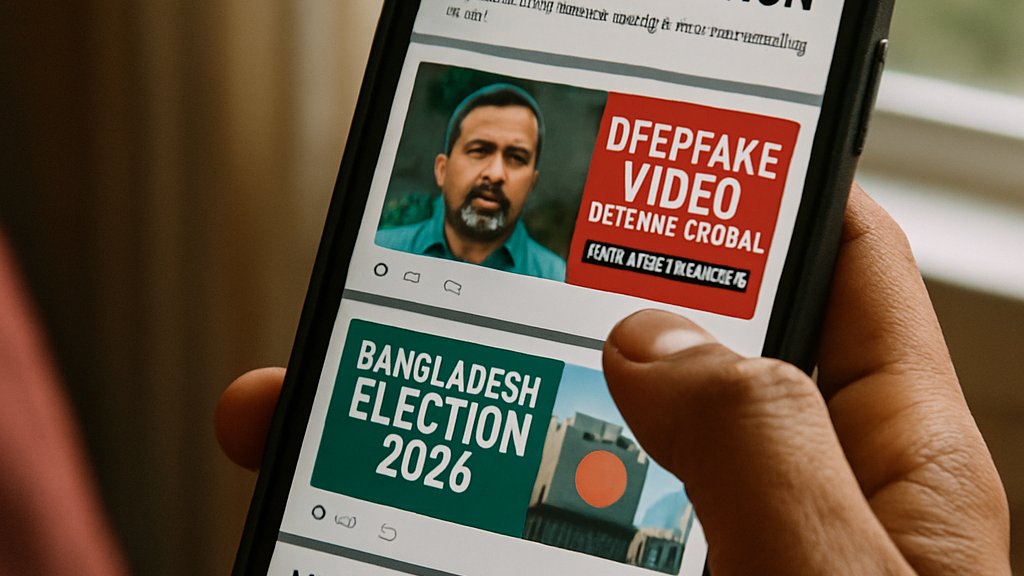
Deepfakes took a religious turn. Furthermore, several clips showed cloned clerics praising or condemning parties. Fact-checkers noticed odd lip-sync and glitching robes. Bangladesh investigators confirmed text-to-video artifacts in many samples. Election Misinformation exploited faith, a potent vote driver in local Politics.
Additionally, synthetic “vox pops” featured ordinary Voters reciting identical talking points. These avatars boosted emotional appeal while masking coordination. In contrast, authentic voices struggled to compete with algorithmic amplification.
Key insights emerged:
- Dismislab logged more than 800 AI videos between 1–15 January 2026.
- Roughly 60% on Facebook carried no AI label, despite platform rules.
- Police arrested suspects for cloning a famous preacher to sell illicit drugs.
These numbers highlight scale and creativity. Nevertheless, the section underlines how religious imagery magnified reach. Consequently, regulators faced pressure to act before election day. Next, we explore the explosive growth curve.
Surge Of Synthetic Clips
Immediately after the election schedule announcement, output spiked. The Daily Star tracked 97 pieces from just 19 entities that drew 1.6 million engagements within 24 hours. Moreover, Dismislab observed 70 convincing “vox pop” videos in June 2025 alone. Election Misinformation intensified as polling loomed.
Secondary keywords appeared frequently. Bangladesh citizens scrolled past looping narratives about turnout fears and phantom violence. Platforms faced a flood of fake urgency. Consequently, engagement-driven algorithms rewarded sensational storylines.
Meanwhile, tool forensics uncovered Google’s Veo fingerprints using SynthID watermark searches. However, many files escaped detection because watermark coverage remains partial. Investigators therefore combined automated scores with manual frame analysis.
The acceleration phase sets context for the next challenge. However, gaps in platform policy enforcement proved equally significant.
Platform Gaps And Detection
Meta, YouTube, and TikTok pledged transparency. Nevertheless, labels missed many desktop views, and some uploads never received any flag. Consequently, users shared content believing it authentic. Election Misinformation thus traveled faster than corrections.
Moreover, reverse image searches exposed recycled footage marketed as breaking news. Softfakes blended real protests with fresh voice-overs. Investigators relied on tools like DeepFake-o-Meter for probabilistic scoring. In contrast, law-enforcement leaned on arrests to deter repeat offenders.
Professionals can enhance their expertise with the AI Marketing Strategist™ certification. The program covers detection workflows and ethical campaign design, valuable for communication teams battling Social Media threats.
Detection remains a moving target. However, shared standards and skilled analysts narrow the gap. The following section examines why urgency matters for democratic stability.
Risks For Electoral Integrity
Election Misinformation risks three core harms. Firstly, false violence reports suppress turnout by instilling fear. Secondly, synthetic testimonials manufacture consent, skewing perceived momentum. Thirdly, communal insults ignite tensions, endangering minorities.
Additionally, platform design amplifies outrage, further tilting civic discourse. Bangladesh therefore represents a cautionary tale for global Politics. Deepfakes weaponize visual credibility, while cheapfakes recycle history to rewrite present narratives.
Key consequences include:
- Reported 86,000 disinformation items flagged by the Election Commission.
- Thirty-six thousand deemed violent or intimidation oriented.
- Ninety-four percent of sampled YouTube clips lacked AI disclosures.
These findings reveal systemic vulnerability. Nevertheless, strategic responses can mitigate harm, as the next section explains.
Robust Countermeasures And Recommendations
Therefore, experts propose multi-layered defenses. Platforms must improve watermark compliance and early-warning dashboards. Moreover, regulators should mandate rapid takedown windows for confirmed deepfakes. Civil society groups can deploy real-time fact threads, as Rumor Scanner demonstrated on election day.
International bodies like IFES advise balanced rules protecting expression while punishing deception. Additionally, election agencies should publish open datasets, enabling independent audits. Corporate communicators should train staff in visual forensics, leveraging certifications to formalize skills.
Subsequently, collaborative research hubs could share model fingerprints, helping trace content origins. These measures tighten the loop between detection and remediation. The final section looks ahead to future contests.
Preparing For Future Contests
Bangladesh offers lessons for any democracy moving online. Furthermore, text-to-video quality keeps improving, meaning tomorrow’s fakes will look flawless. Therefore, proactive investment in media literacy is critical.
Election Misinformation will persist across Social Media channels. However, institutional readiness can blunt its impact. Voters armed with verification habits resist emotional traps. Moreover, transparent campaign disclosures build resilience.
Consequently, policymakers should integrate generative AI risk assessments into standard electoral planning. Industry professionals must stay ahead by updating protocols and pursuing advanced credentials. These steps convert reactive firefighting into sustainable governance.
This forward view concludes our analysis. Yet, continuous monitoring remains essential, because adversaries evolve quickly.
Conclusion
Bangladesh’s 2026 campaign underscored how Deepfakes, synthetic Voters, and platform loopholes converge to magnify Election Misinformation. However, robust detection tools, coordinated fact-checking, and skill development can restore confidence. Moreover, collaborative regulation aligns incentives for safer Social Media ecosystems. Consequently, industry leaders should audit their content pipelines and train teams. Explore specialized programs like the linked certification to stay prepared, protect audiences, and uphold democratic values.
Disclaimer: Some content may be AI-generated or assisted and is provided ‘as is’ for informational purposes only, without warranties of accuracy or completeness, and does not imply endorsement or affiliation.


