

AI CERTS
49 minutes ago
Edge AI Connectivity: Dell and SpaceX Bring Grok On-Prem
Meanwhile, customers in regulated industries gain confidential control without sacrificing performance. This article unpacks the market forces, technical design, and enterprise implications behind the news. Furthermore, it evaluates benefits, risks, and next steps for leaders planning internal rollouts. In contrast to cloud APIs, the joint solution keeps sensitive data inside existing data centers. Therefore, latency drops while token costs become predictable. Nevertheless, capital expenditure and update cadence questions linger.
Market Context And Drivers
Global AI spending will reach $2.52 trillion by 2026, according to Gartner. Moreover, AI-optimized server spending alone is projected to hit $421 billion. Such forecasts explain why Dell Technologies raised its fiscal 2026 AI server revenue target to $20 billion. Subsequently, the vendor linked that goal to high-margin software and model packaging. SpaceX, through its SpaceXAI division, already operates Colossus 1 with over 220,000 NVIDIA GPUs.
Consequently, compute scarcity and power constraints push enterprises toward creative sourcing, including in-house capacity. Therefore, colocation costs keep climbing in competitive metros. Edge AI Connectivity becomes vital when companies must serve large models near data and users. Meanwhile, Starlink satellite broadband broadens last-mile options for remote locations.
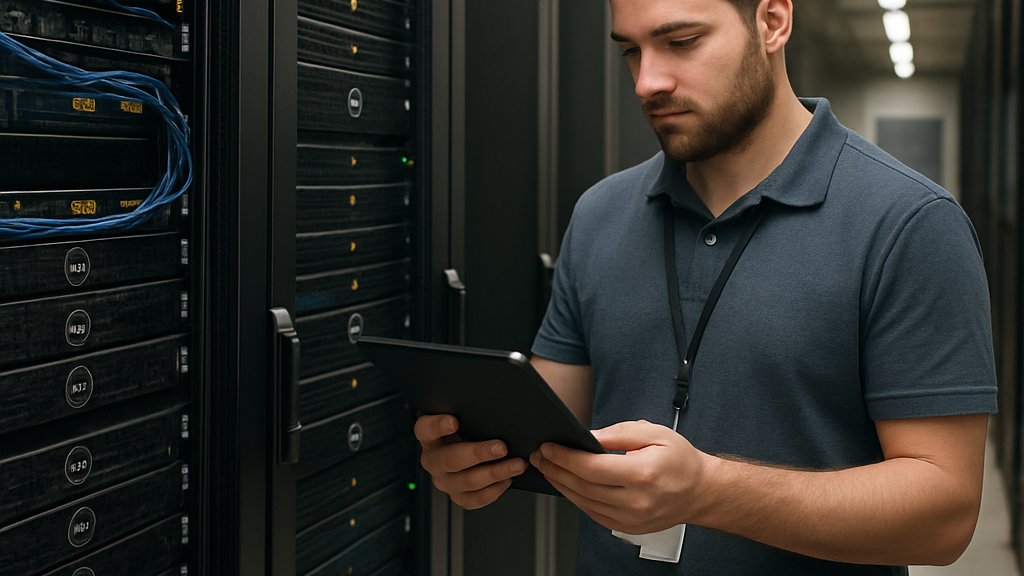
These statistics confirm surging demand for sovereign, performant AI infrastructure. However, understanding the integrated stack remains essential before capital commitments.
Dell Factory Stack Explained
Dell Technologies brands its validated hardware, storage, and orchestration suite as the AI Factory. Furthermore, the stack integrates NVIDIA H100 GPUs, BeeGFS storage, and Kubernetes-based model orchestration. Confidential-compute extensions encrypt workloads in use, therefore satisfying compliance auditors. Administrators manage Internal Networks through Dell OpenManage and Project Helix tools. Moreover, agents can execute across servers at core sites or edge micro-data centers. Edge AI Connectivity threads these locations together, enabling low-latency coordination. Customers already using Dell rack designs avoid lengthy compatibility testing. Professionals can enhance their expertise with the AI+ Network Security™ certification.
Dell’s bundle reduces integration friction and accelerates time to model productivity. Consequently, attention next turns to how Grok lands inside that architecture.
SpaceX Grok Deployment Details
SpaceX grants Dell rights to distribute Grok model weights for on-prem execution. Additionally, enterprises can choose hybrid operation splitting inference across Colossus 1 and regional sites. Weights remain encrypted until loading inside attested GPUs, preserving secrecy. In contrast, cloud API access requires data egress, which many regulators discourage. Edge AI Connectivity lets branches route traffic locally then burst to Colossus when spikes occur. SpaceX and Dell Technologies validated 40-gigabits internal fabrics to prevent node congestion. Meanwhile, Starlink can supply backup links for rural plants needing redundancy. Latency tests show sub-12-millisecond round trips within Internal Networks at pilot sites.
These capabilities blend sovereign control with optional capacity overflow. Nevertheless, business leaders still weigh tangible benefits.
Edge AI Connectivity Impact
Placing compute near data slashes inference wait times from seconds to milliseconds. Consequently, call center agents receive live suggestions without call disruptions. Manufacturing lines also gain microsecond defect detection, avoiding costly rework. Edge AI Connectivity underpins these outcomes by shortening network hops. Moreover, Internal Networks avoid congested public routes, improving reliability. Analysts estimate a two-year total cost reduction of 28% versus cloud token pricing. Server amortization offset by electricity remains the largest variable. However, the vendor quotes a 14-month average payback when workloads exceed 30 million prompts monthly.
- Latency: < 15 ms local inference
- Encryption: End-to-end GPU attestation
- Scalability: 512-GPU pods validated
- Bandwidth: 40-100 GbE node links
Edge AI Connectivity also benefits mobile employees using Starlink enabled vehicles. Consequently, remote clinics can diagnose patients even during terrestrial outages.
Performance, security, and resilience converge at the edge. However, decision makers must assess ROI against inherent challenges.
Benefits For Regulated Enterprises
Banks, pharma firms, and governments face strict data residency laws. Therefore, on-prem Grok eliminates cross-border transfers that trigger legal exposure. Furthermore, confidential computing assures auditors that model code remains tamper resistant. Dell Technologies bundles compliance templates for HIPAA, GDPR, and FedRAMP. Edge AI Connectivity aligns with branch office expansion in these sectors. In contrast, public cloud endpoints often fail latency budgets for trading and imaging. Starlink gives disaster recovery sites an independent last-mile path. Moreover, Internal Networks retain deterministic throughput during market surges.
Compliance and performance benefits strengthen the on-prem argument. Nevertheless, capital and operational hurdles still discourage some buyers.
Challenges And Risk Mitigation
Initial hardware outlay reaches several million dollars for a midsize cluster. Moreover, data-center power and cooling upgrades may delay deployment schedules. SpaceX model updates could lag cloud releases, requiring manual patching. Therefore, enterprises should negotiate update cadence and liability in contracts. Vendor lock-in remains another concern when pairing Dell hardware with proprietary weights. Nevertheless, multi-vendor orchestration layers and open telemetry reduce exit costs. Additionally, professionals can pursue the AI+ Network Security™ certification to master edge threat surfaces. Edge AI Connectivity demands rigorous monitoring to detect packet loss across dispersed nodes.
Upfront expense and lifecycle management pose real hurdles. However, strategic governance can control these risks.
Strategic Outlook And Recommendations
Industry analysts expect more frontier models to follow Grok into customer racks. Consequently, rivals like Google and Anthropic may announce comparable bundles soon. The rocket company already monetizes surplus compute through leases, signaling flexible business models. Meanwhile, Starlink orchestration APIs could integrate with edge clusters for autonomous failover. Enterprises should pilot workloads with defined KPIs covering latency, cost, and compliance. Edge-powered connectivity should appear in network architecture blueprints and capacity plans. In contrast, teams lacking operational maturity should start with managed colocation partners. Finally, boards can mandate periodic audits covering Internal Networks, encryption, and sustainability.
Sovereign AI stacks will dominate regulated sectors within three years. Therefore, early experimentation yields competitive advantage.
Dell and SpaceX have together reframed sovereign AI deployment possibilities. Moreover, integrated Grok access transforms servers into agentic workhorses that respect compliance walls. Performance tests and payback models suggest compelling economics when workloads reach scale. Nevertheless, capital intensity, skill gaps, and patch management remain obstacles. Therefore, leaders should map security controls, negotiate update clauses, and invest in talent. Edge AI Connectivity will anchor future architectures spanning headquarters, plants, and remote sites. Consequently, professionals should reinforce skills through the AI+ Network Security™ certification. Act now to pilot, benchmark, and secure your competitive edge in the coming AI race.
Disclaimer: Some content may be AI-generated or assisted and is provided ‘as is’ for informational purposes only, without warranties of accuracy or completeness, and does not imply endorsement or affiliation.


