

AI CERTs
2 hours ago
Data Centers Drive Energy Demand Toward Nuclear Revival
Generative AI training and cloud growth have ignited an unprecedented surge in Energy Demand across global grids.
Consequently, hyperscale operators now scramble for round-the-clock, low-carbon electricity to safeguard uptime and reputation.
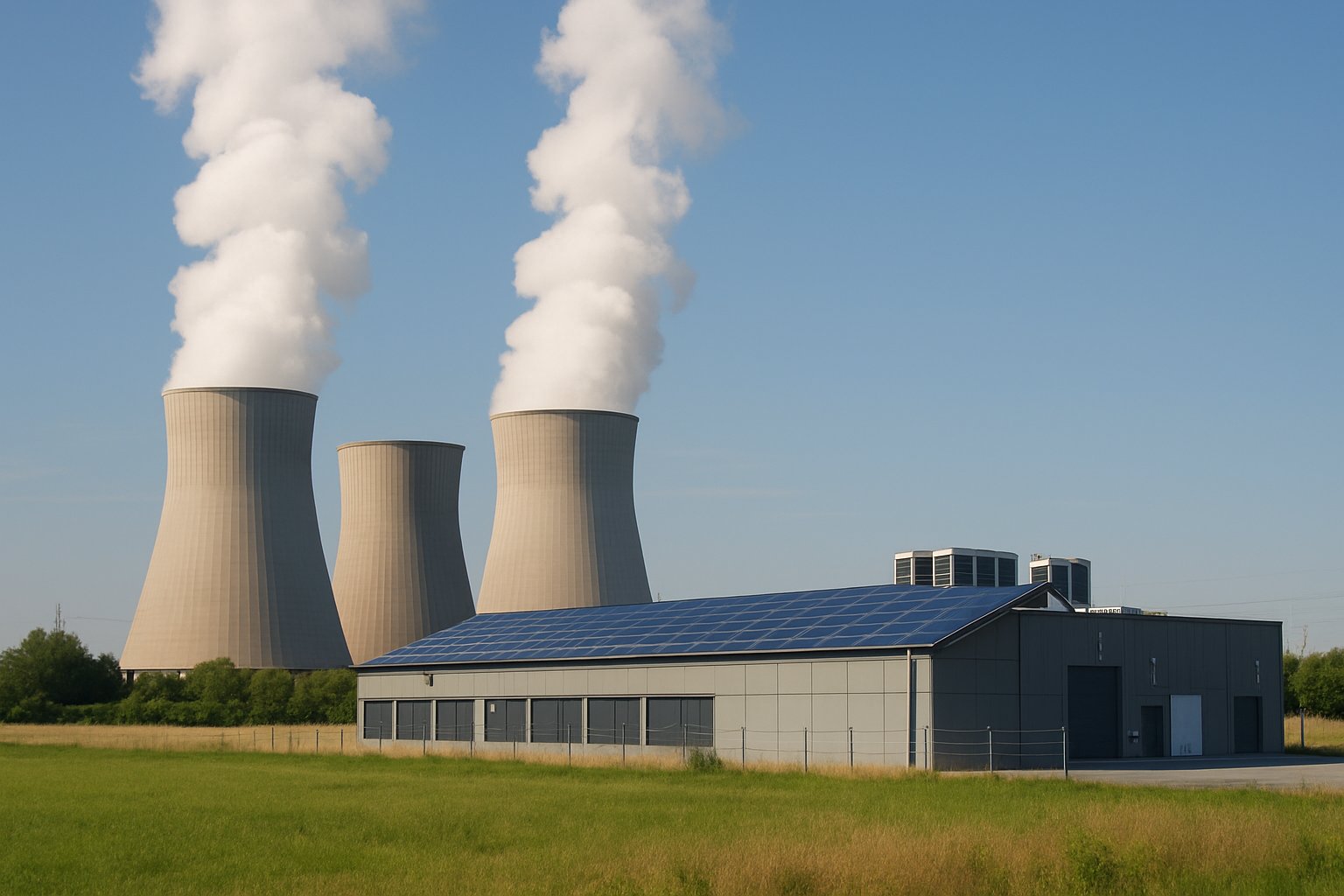
Many executives view revived atomic reactors as the fastest credible option.
However, public memories of past incidents still loom.
Corporate Sustainability commitments intensify procurement pressure.
Meanwhile, government agencies weigh billion-dollar loans to accelerate refurbishments.
This article unpacks why data centers are bankrolling restarts, what risks persist, and how stakeholders should respond.
Moreover, we assess emerging small modular reactor projects targeting future loads.
Every perspective connects back to soaring Energy Demand projections for the decade.
Finally, actionable insights guide utilities, vendors, and policymakers confronting this new reality.
Surging Energy Demand Pressures
IEA data show global data centers consumed about 415 terawatt-hours in 2024, roughly 1.5% of electricity.
In contrast, projections indicate consumption could double to 945 terawatt-hours by 2030.
Therefore, operators stress that incremental wind or solar builds cannot alone satisfy constant compute loads.
Firm generation capable of multi-year price certainty remains essential.
Consequently, Energy Demand forecasts are now embedded in utility resource planning models across PJM, TVA, and ERCOT.
Tech giants also publish internal load curves that surpass historical telecommunication growth rates.
Moreover, rising ambient temperatures add Cooling pressures, compounding electrical intensity per rack.
These converging forces make Energy Demand an executive priority rather than a back-office concern.
Subsequently, capital markets follow suit, valuing reliable power access alongside server chip supply.
Surging Energy Demand is measurable, immediate, and geographically concentrated.
Therefore, stakeholders crave firm, clean megawatts in proximity to hyperscale campuses.
Against that backdrop, reactor restarts are moving from concept to construction.
Nuclear Reactor Restarts Accelerate
Constellation Energy and Microsoft shocked markets by planning to revive Three Mile Island Unit 1.
The 835-megawatt reactor closed in 2019 for economic reasons.
However, a 20-year power purchase agreement now underwrites refueling, safety upgrades, and workforce rehiring.
DOE subsequently approved a $1 billion loan in 2025 to bridge financing gaps.
CEO Joe Dominguez argues the project supports national technological competitiveness while preserving carbon-free baseload.
Similar momentum appears in Iowa, Michigan, and New Jersey where utilities explore additional restarts.
Nevertheless, each restart requires Nuclear Regulatory Commission license amendments plus extensive component inspections.
Delays could erode investor patience if renewed activism resurfaces.
- Three Mile Island Unit 1: 835 MW, targeted online 2026.
- DOE loan commitment: approximately $1 billion, approved 2025.
- Potential additional restarts under study: Duane Arnold, Palisades, Oyster Creek.
Early restarts demonstrate how existing Infrastructure can meet heightened Energy Demand within a shorter timeline.
Yet technical and societal hurdles remain formidable.
Attention now shifts toward compact reactor designs promising even faster deployment.
Small Modular Reactors Advance
Google partnered with Kairos Power and TVA to pilot molten-salt small modular reactors near Oak Ridge.
The initial Hermes-2 unit aims for 50 megawatts and commercial start around 2030.
Moreover, the companies envision scaling toward 500 megawatts as regulatory confidence grows.
Google frames the move as essential for long-term Sustainability goals.
Amazon followed suit by backing X-energy's Xe-100 design alongside Energy Northwest.
Four modules could supply 320 megawatts, supporting AWS clusters in Washington State.
Oklo and Switch signed a master agreement covering as much as 12 gigawatts through 2044.
Consequently, analysts call the deal one of the largest private clean-power procurements ever announced.
Nevertheless, every SMR concept must navigate first-of-a-kind manufacturing challenges and specialized fuel supply.
Still, investors prefer the modular path because capital is distributed over phased milestones.
SMRs promise flexible siting, shorter build cycles, and predictable costs for meeting future Energy Demand.
Therefore, corporate buyers increasingly view them as insurance against grid bottlenecks.
Yet public funding and policy choices shape which projects actually proceed.
Debates On Public Subsidy
Critics question whether taxpayer-backed loans should finance facilities ultimately serving single corporate customers.
Washington Post coverage noted fairness concerns around the Three Mile Island financing package.
Proponents state that public financing accelerates regional Sustainability transitions.
In contrast, supporters argue community jobs, tax revenue, and grid stability justify assistance.
Moreover, many programs mandate profit-sharing or repayment triggers once plants reach cash flow.
Regulators also face Infrastructure cost-allocation dilemmas when massive campuses cluster near substations.
Consequently, local ratepayers worry about hidden upgrades passed through tariffs.
Yet utilities counter that new load allows economies of scale for broader network improvements.
Public subsidy debates will intensify as Energy Demand climbs and funding pools tighten.
Nevertheless, transparent cost-benefit analyses can maintain community trust.
Beyond financing, practical engineering obstacles still require attention.
Cooling And Infrastructure Challenges
High-density AI clusters expel several times more heat than legacy web servers.
Therefore, advanced immersion and rear-door Cooling systems are replacing conventional chillers.
However, these solutions draw additional power for pumps and heat exchangers, reinforcing overall Energy Demand.
In contrast, some sites integrate geothermal loops that dissipate heat into underground aquifers.
Physical Infrastructure such as transmission lines and transformers often requires multi-year permitting.
Consequently, data-center developers coordinate with regional grid operators years before breaking ground.
Logistics teams also secure rail or river access for oversized reactor vessels and turbines.
Thermal management and Infrastructure readiness remain gating factors for timely project execution.
Subsequently, early site due diligence can avert costly redesigns later.
With technical headwinds mapped, strategic implications come into focus.
Strategic Takeaways For Stakeholders
Executives should align procurement timelines with realistic reactor licensing milestones.
Furthermore, portfolio diversification across restarts and SMRs hedges regulatory delays.
Utilities can negotiate shared grid upgrades that distribute costs and enhance resilience.
Meanwhile, policymakers might create transparent subsidy frameworks with community benefit agreements.
Investors should monitor component supply chains, especially enriched high-assay fuel availability.
Moreover, training pipelines for nuclear operators must expand to avoid talent shortages.
Professionals can enhance their expertise with the AI Cloud™ certification.
Consequently, organizations build in-house credibility when managing advanced reactor integrations.
Robust reporting on Sustainability metrics will bolster investor confidence.
Coordinated actions reduce schedule risk and deliver predictable returns.
Therefore, momentum toward cleaner baseload can sustain despite inevitable setbacks.
The industry now watches early projects for proof of concept.
Cloud and AI workloads are rewriting power procurement norms.
Reactor restarts offer rapid, firm capacity by leveraging stranded assets.
Meanwhile, modular designs present a scalable path that aligns with phased data-center expansion.
Nevertheless, financing transparency, social license, and Cooling innovation will determine ultimate success.
Stakeholders who coordinate early across policy, engineering, and workforce development can capture competitive advantage.
Moreover, continuous scenario planning enables agile responses to shifting regulatory outcomes.
Explore the linked certification to deepen technical leadership in this dynamic sector.
The power revolution is underway; proactive engagement will decide market winners.


