

AI CERTS
3 hours ago
Consumer AI Pricing Shifts Offer Lifeline to Founders
Consequently, the spotlight fell on Inworld this month after its headline 50% stack discount. The company framed the move as a lifeline for embattled consumer apps fighting runaway cost pressure. This article unpacks the forces behind the shift, the data founders need, and the strategic responses emerging. Additionally, we examine how novel infrastructure and certifications can fortify startup survival. Let’s explore the numbers, the narratives, and the next moves.
Rising Token Cost Pressures
Token based billing replaced flat subscriptions at every major model vendor this spring. In contrast, founders had priced products assuming generous quotas and hidden subsidies. Consequently, each ChatGPT or Claude agent loop now incurs highly visible, variable cost pressure. Menlo Ventures estimates that only three percent of 1.8 billion consumers convert to paid. Therefore, tiny average revenue per user cannot absorb volatile inference invoices. These dynamics compress already thin model margins for consumer apps. However, one supplier believes pricing cuts can reverse the spiral and deserves a closer look.
Inworld Slashes Stack Prices
On 10 June 2026, Inworld cut prices by over 50% across voice and LLM routing. Moreover, the vendor claimed 95% savings for social video app Wishroll after migration. TalkPal also reported 40% lower text-to-speech bills. CEO Kylan Gibbs said, “The technology works, yet the cost makes growth impossible.” Consequently, the announcement positioned the company as champion of Consumer AI Pricing relief. Founders welcomed the headline discount but needed clear comparisons with current vendor rate cards. Subsequently, attention turned to the broader shift toward metered economics.
Metered Pricing Disrupts Stability
GitHub Copilot switched to usage credits on 1 June 2026, underscoring the trend. Anthropic simultaneously blocked third-party agent frameworks from subscription quotas, citing runaway usage. Additionally, agentic workflows consume many tokens because loops read, write, and reason repeatedly. Therefore, per-token invoices balloon when consumer apps launch always-on study or dating companions. In contrast, enterprise buyers may accept variable bills that align with delivered value.
- Pros: Revenue matches compute, reducing cross-subsidy.
- Cons: Volatile bills threaten startup survival plans.
Consequently, founders explore hybrid or outcome-based billing to shield end users. These shifts place Consumer AI Pricing strategy at the heart of every fundraising deck. Costs now move faster than revenue, squeezing model margins again. Nevertheless, disciplined unit economics can still create defensible businesses, as the next section explains.
Founders Rework Unit Economics
Bessemer’s playbook urges teams to instrument per-outcome costs from day one. Moreover, startups set token budgets, alerts, and throttles to avoid surprise invoices. Others re-architect prompts, cache responses, or route traffic to cheaper specialist models. Meanwhile, Manny Medina launched Paid.ai to monetize agent value instead of seats. Such tools promise predictable bills and healthier model margins. Consequently, founders can focus on product rather than spreadsheet firefighting. Unit economics discipline mitigates cost pressure and reassures wary investors. The following section explores additional market infrastructure accelerating startup survival.
Monetization Tools Gain Traction
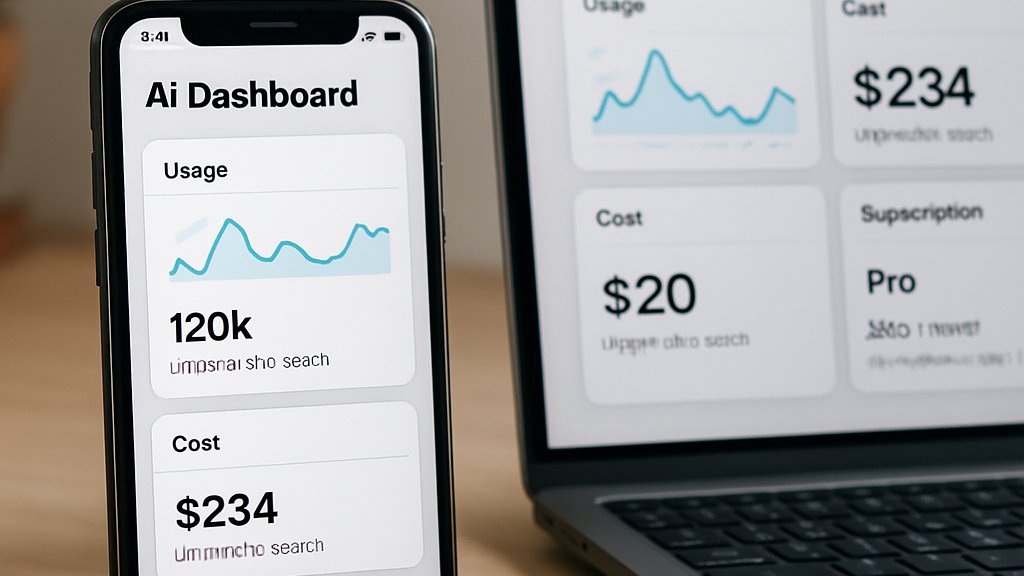
Beyond billing APIs, new analytics dashboards expose token burn by feature and user cohort. Furthermore, some consumer apps now charge premium credits for costly voice features. Others bundle third-party model credits with annual subscriptions, echoing mobile gaming gems. Paid.ai offers outcome-aligned invoicing to balance compute risk between vendor and founder. Professionals can deepen monetization expertise with the AI Customer Service Strategist™ certification.
Consequently, knowledge of Consumer AI Pricing mechanics becomes a career advantage. Robust tooling softens cost pressure and supports sustainable growth. However, tools alone are insufficient without a coherent strategic playbook.
Strategic Playbook For Survival
Experts recommend transparent communication before changing end-user plans. Subsequently, founders test higher prices until buyers hesitate, as Bessemer advises. Additionally, teams introduce usage caps or overage credits to align spend with delivered value. Inworld suggests swapping expensive general models for lean specialist alternatives wherever quality permits. Re-balancing features toward lower-cost modalities protects model margins without harming engagement. Consequently, startup survival depends on parallel product, engineering, and finance collaboration. Below is a quick checklist founders now follow:
- Audit token spend weekly
- Model alternative vendor costs
- Simulate worst-case agent loops
- Iterate pricing experiments rapidly
These steps create resilience against future vendor rate hikes. Meanwhile, Consumer AI Pricing remains a moving target, demanding continuous vigilance. A disciplined playbook translates volatility into manageable risk. Finally, we consider the broader outlook for consumer teams.
Outlook For Consumer Teams
Menlo Ventures projects consumer AI spend reaching $20 billion by 2027 despite uncertainty. Nevertheless, conversion rates may stagnate if unpredictable bills erode trust. Therefore, ecosystems could split between premium power users and lightweight casual tiers. In contrast, successful founders will treat Consumer AI Pricing as a product feature, not mere cost. Investors already favor businesses that publish transparent rate calculators and showcase stable unit economics.
Additionally, partnerships with vendors like Inworld offer negotiated discounts and marketing support. Consequently, cost pressure may evolve into a competitive differentiator for well-run companies. Emerging professionals should study pricing governance to stay employable. They can start by earning the same AI Customer Service Strategist™ credential used earlier. Resilient teams will thrive as the economics mature. Ultimately, responsibility now shifts to leadership to act decisively.
Consumer AI Pricing debates will intensify as token rates fluctuate and agent loops multiply. However, founders now possess clear tactics, sharper telemetry, and supportive vendors such as Inworld. Furthermore, disciplined plans protect model margins while easing investor anxiety. Consequently, mastering Consumer AI Pricing becomes essential for startup survival and user trust. Professionals should deepen skills through the AI Customer Service Strategist™ program and related resources. Review your Consumer AI Pricing dashboard now and convert volatility into competitive strength. Meanwhile, ongoing monitoring of Consumer AI Pricing trends will secure long-term resilience.
Disclaimer: Some content may be AI-generated or assisted and is provided ‘as is’ for informational purposes only, without warranties of accuracy or completeness, and does not imply endorsement or affiliation.


