

AI CERTS
1 hour ago
CLOUDSUFI’s Enterprise AI Factory Debuts in Mexico
Meanwhile, growth expectations remain high after 70 percent sales expansion in 2025. The organization now targets doubling revenue during 2026.
Guadalajara Launch Details Unpacked
The ribbon cut on 7 July 2026. Therefore, CLOUDSUFI formally added a same-time-zone engineering center to its portfolio. The company plans capacity for over 500 AI, data, and software specialists. Furthermore, Rajan Venkat will steer local operations and report directly to Khan. The site joins a network of delivery locations integrated with Google Cloud architectures. However, local GPU footprints remain undisclosed, leaving open questions on onsite training horsepower.
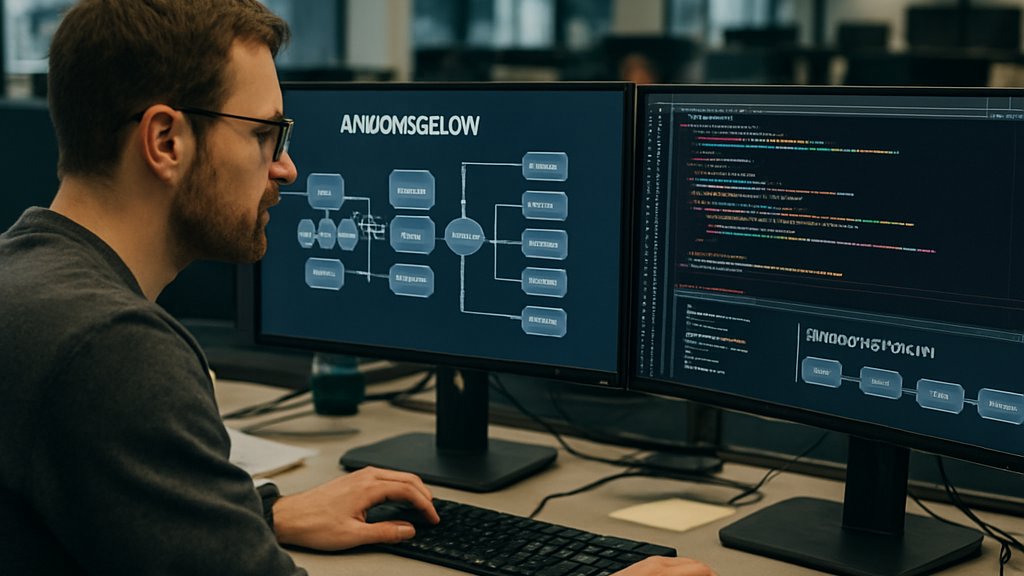
Two immediate benefits stand out. Firstly, Guadalajara sits within convenient flight distance of major U.S. hubs. Secondly, Mexico’s wage differential offers economical scaling without off-hours coordination headaches.
Key details at a glance:
- Opening date: 7 July 2026
- Headcount target: 500+ professionals
- Primary focus: data pipelines, governed agents, model lifecycle
- Leadership: Rajan Venkat, Managing Director – Mexico
These specifics clarify CLOUDSUFI’s intent. Nevertheless, further investment figures remain private. Accordingly, analysts will watch hiring velocity during the next two quarters.
These launch facts establish baseline expectations. Consequently, stakeholders can better gauge forthcoming milestones.
Strategic North America Expansion
Nearshore geography drives this North America expansion. Moreover, executives increasingly demand real-time iteration loops with engineering squads. Mexico’s central time zone satisfies that requirement while preserving cultural affinity. Additionally, Guadalajara’s commercial flights cut transit friction compared with India or Eastern Europe.
Khan argues speed wins enterprise AI races. Therefore, CLOUDSUFI positions the Guadalajara site as a proximity accelerator. The facility complements U.S. client teams and Canadian engagements. In contrast, competitors like Bleeding Edge emphasize high-density compute in Querétaro. CLOUDSUFI instead spotlights process, governance, and curated data.
The strategy aligns with market indicators:
- Mexico graduates roughly 130,000 engineers annually.
- Over 700,000 tech professionals already call the country home.
- Nearshore contracts now average 30-40 percent lower total cost than U.S. equivalents.
These numbers validate Guadalajara’s magnetism. Furthermore, regional governments actively court advanced technology investments.
The expansion narrative highlights competitive positioning. However, success will hinge on execution speed and sustained talent attraction.
Enterprise AI Factory Model
The Enterprise AI Factory model industrializes AI solution delivery. Consequently, CLOUDSUFI bundles repeatable blueprints, reference data pipelines, and agentic guardrails. The concept moves enterprises from proof-of-concept curiosity to production reliability.
Core layers include a Data Factory, Predictive Intelligence, and an Agentic Harness. Moreover, every layer embeds observability, auditability, and rollback options. Khan stresses curated enterprise datasets, rejecting “poison” internet data. Therefore, data engineers focus on cleansing, lineage, and policy enforcement from day one.
Three principles guide the blueprint:
- Trusted data fuels AI transformation.
- Governed agents maintain accountability.
- Reusable frameworks compress delivery cycles.
Professionals can deepen relevant skills through the AI Cloud Professional™ certification. Additionally, certification holders often command project leadership roles during factory deployments.
This modular model accelerates value realization. Nevertheless, enterprises must still invest in high-quality, domain-specific data assets.
These design choices differentiate CLOUDSUFI’s offering. Subsequently, customers should experience reduced risk during scaled rollouts.
Talent And Delivery Hub
Guadalajara will act as the group’s principal delivery hub. Engineers will pair with onshore product owners through agile pods. Consequently, time-zone alignment enables same-day feedback loops. Furthermore, bilingual teams mitigate communication barriers while embracing cultural affinity with U.S. businesses.
However, talent competition intensifies. Major hyperscalers plus regional startups now vie for senior machine-learning engineers. In contrast, entry-level supply remains abundant, keeping early-career wages moderate. Therefore, CLOUDSUFI must craft robust career paths and continuous upskilling programs.
Data innovation thrives when multidisciplinary teams collaborate. Moreover, Guadalajara’s universities partner with industry on applied research. The company plans internship tracks feeding the factory pipeline. Subsequently, this approach supports sustainable workforce growth beyond the initial 500 roles.
Well-structured talent programs underpin velocity. Consequently, delivery quality depends on retaining experienced leads.
Infrastructure Arms Race Mexico
Compute capacity shapes the next competitive frontier in Mexico. Bleeding Edge recently marketed a Blackwell-powered “neocloud” in Querétaro. Meanwhile, telecoms and colocation firms announce fresh GPU clusters monthly. CLOUDSUFI consumes Google Cloud accelerators today. However, observers wonder if local high-density racks will follow.
Moreover, regulatory shifts encourage data sovereignty within national borders. Consequently, enterprises prefer regional inference nodes for latency and compliance. Therefore, installing on-premise accelerators in Guadalajara could strengthen value propositions.
Yet capital intensity complicates the equation. In contrast to software hiring, building Tier III data centers demands multimillion-dollar outlays. Nevertheless, partnerships with cloud providers or specialized colos may bridge the gap quickly.
The infrastructure race adds urgency to decisions. Subsequently, early movers could lock scarce GPU inventory ahead of soaring demand.
Risks And Governance Realities
Every AI transformation carries governance hurdles. Data privacy statutes, cross-border transfer rules, and labor reforms intersect in complex ways. Additionally, Guadalajara’s talent boom fuels wage inflation at senior bands. Consequently, cost advantages may erode unless managed carefully.
Furthermore, compute shortages could delay training cycles despite ample engineering staff. Nevertheless, disciplined project scoping and cloud bursting strategies mitigate exposure. Khan also warns against low-quality data. Therefore, curated pipelines become non-negotiable, adding time and budget pressures.
Clients must weigh these variables:
- Regulatory compliance overheads
- Escalating senior-talent salaries
- GPU supply constraints
- Continuous data governance costs
These risks demand proactive planning. Consequently, stakeholders should institute joint steering committees and measurable guardrails.
Governance disciplines safeguard project outcomes. Moreover, transparent metrics foster long-term trust.
Outlook And Action Items
The market momentum surrounding Enterprise AI Factory rollouts shows no sign of slowing. Analysts project factory-style contracts reaching $10 million on average by 2027. Additionally, North American CIOs increasingly favor nearshore partners for critical workloads. Mexico’s cost-effective talent and improving infrastructure position the country strategically.
Decision makers should monitor several signals. Firstly, track CLOUDSUFI’s hiring cadence against the 500-headcount promise. Secondly, watch for announcements about local accelerator deployments. Thirdly, evaluate how curated data pipelines influence deployment timelines and ROI. Furthermore, organizations planning their own AI transformation can benchmark against CLOUDSUFI practices.
Professionals seeking leadership roles should build expertise in governed agents, lineage tooling, and cross-border compliance. They can sharpen credentials through the previously mentioned AI Cloud Professional™ course. Moreover, mastery of these competencies will remain differentiating as delivery hubs scale.
The future favors adaptable, data-centric teams. Consequently, early investment in talent, infrastructure, and governance will separate winners from laggards.
Market signals suggest enduring demand. Subsequently, continuous assessment ensures strategies stay aligned with evolving realities.
Key Takeaways Recap
The Guadalajara site accelerates enterprise AI delivery. Nearshore proximity strengthens collaboration and talent access. However, compute constraints and governance demands persist. Strategic planning, certifications, and curated data pipelines provide clear mitigation paths.
These insights frame immediate next steps. Therefore, executives should act swiftly to capture emerging advantages.
Conclusion
CLOUDSUFI’s Enterprise AI Factory arrival cements Guadalajara’s status as a pivotal delivery hub. Moreover, the initiative advances North America expansion goals while catalyzing regional data innovation. Nevertheless, success depends on securing talent, GPUs, and rigorous governance. Consequently, organizations must prepare actionable roadmaps that blend nearshore advantages with enterprise controls. Professionals eager to lead forthcoming programs should consider the AI Cloud Professional™ certification for skill validation. Act now to harness the momentum and translate factory models into sustained competitive edge.
Disclaimer: Some content may be AI-generated or assisted and is provided ‘as is’ for informational purposes only, without warranties of accuracy or completeness, and does not imply endorsement or affiliation.


