

AI CERTs
4 months ago
Automated script-to-video production models redefine workflows
Studios once needed large crews and long schedules for short videos. Today, automated script-to-video production models promise radical speed and unprecedented reach. Moreover, new releases from Runway, Google, and OpenAI show weekly progress. Consequently, investors pour hundreds of millions into generative video AI ventures. Marketers also embrace content automation to localize messaging across languages. However, technical limits, legal questions, and safety concerns remain. Nevertheless, early adopters report cost savings and faster iteration cycles. This article examines market momentum, technology stages, risks, and best practices. It draws on 2025 data, expert quotes, and live deployments. Readers will learn how to integrate these tools while maintaining editorial integrity. Meanwhile, regulators and unions debate job displacement and IP policy. The following report unpacks opportunities, challenges, and strategic steps for professionals. Prepare to navigate rapid change with data-driven insight. Ultimately, staying informed ensures teams leverage AI responsibly and competitively. Media procurement teams now negotiate compute quotas alongside camera rentals. Budgets shift accordingly, reallocating spending from location travel to cloud inference.
Market Momentum Drivers Today
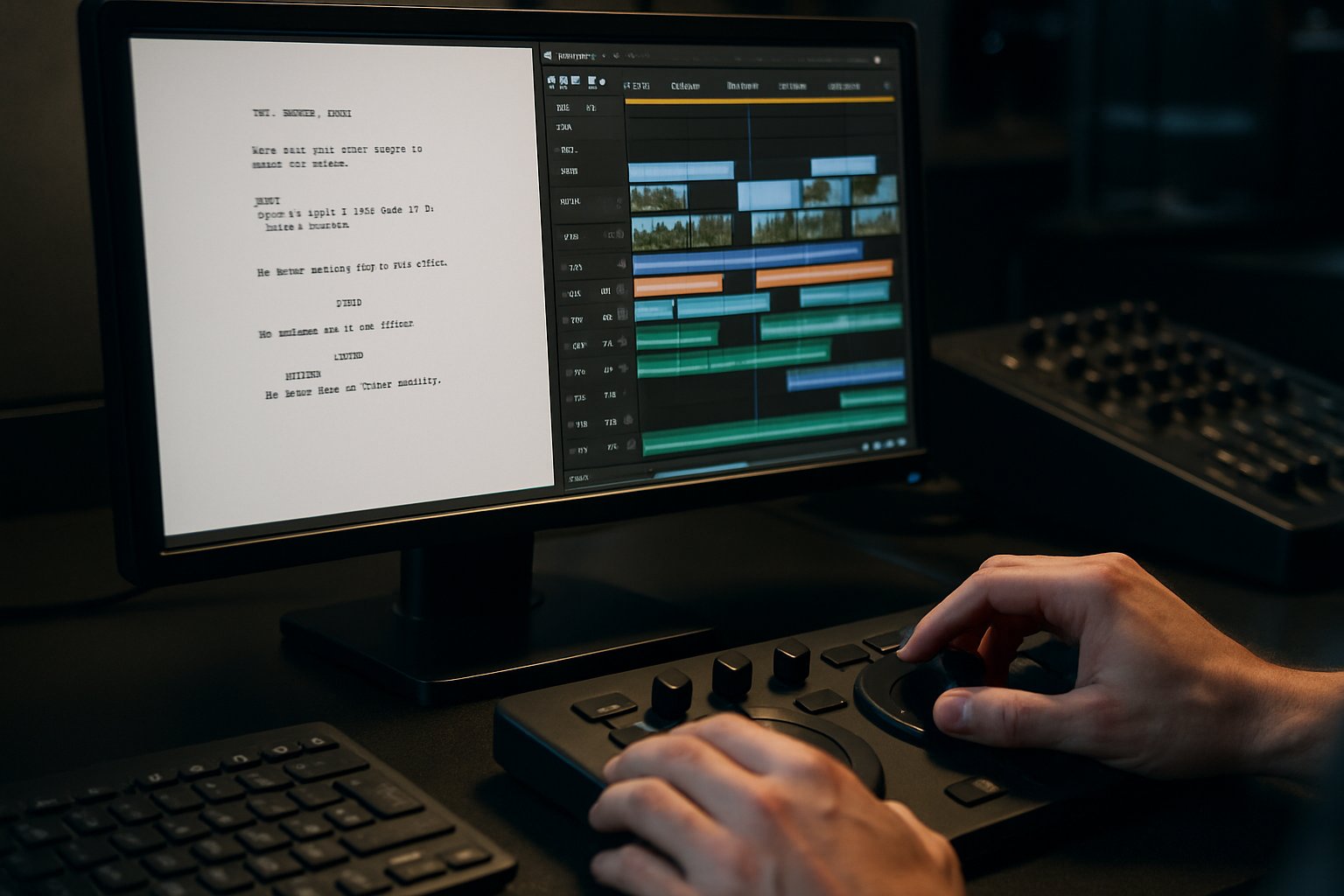
Furthermore, demand for short-form video climbs across social, training, and advertising channels. Consequently, market researchers forecast multi-billion growth for AI video generation by 2033. Automated script-to-video production models sit at the center of this surge. Moreover, decreasing GPU costs lower the entry barrier for startups and media teams.
Key Market Growth Numbers
- Grand View Research predicts USD 3.44B AI generator market by 2033.
- MarketsandMarkets projects 37% CAGR for text-to-video segment through 2027.
- Surveys show 90% marketers plan video, yet only 18% use AI currently.
Investor enthusiasm intensified after Runway closed a USD 300 million round in March. Similar fundraising moves by Luma and Stability signal competitive heat inside the emerging segment. These figures confirm accelerating commercial interest in video automation. Therefore, understanding the technical pipeline becomes essential.
Core Technical Stages Now
Initially, large language models parse the script and output structured scene descriptions. Subsequently, text or image prompts feed generative video AI engines like Sora or Veo. These engines synthesize short clips while attention modules enforce temporal consistency. Audio, lip-sync, and color grade layers follow, completing content automation within minutes. Automated script-to-video production models orchestrate each stage through unified APIs. Memory modules now cache character embeddings, reducing identity drift across multi-shot sequences. Researchers experiment with streaming architectures to extend clips beyond one minute without visible artifacts.
The modular flow mirrors traditional storyboarding yet compresses hours into seconds. In contrast, the next section profiles the companies building these modules.
Leading Model Builders List
Runway’s Gen-4 family emphasizes character consistency across clips and longer shots. Meanwhile, Google DeepMind’s Veo 2 opens developer access through Gemini integrations. OpenAI advances Sora 2 with native audio and cautious safety controls. Other startups, including Luma and Lightricks, contribute research to the generative video AI ecosystem. Automated script-to-video production models from Synthesia or HeyGen integrate these frontier systems into dashboards. Runway markets its stack as a "world simulator," appealing to directors seeking quick previsualization. Google embeds Veo snippets into Photos experiments, allowing consumers to animate still images effortlessly. Investors perceive moat advantages in proprietary datasets and multimodal control features.
Competition accelerates model quality while driving prices downward. Consequently, enterprises now explore concrete use cases.
Enterprise Adoption Use Cases
Global brands produce localized training videos by pasting scripts into Synthesia templates. Moreover, newsrooms deploy HeyGen to convert wire copy into anchor-led segments within minutes. Marketing teams leverage content automation to generate A/B variants at scale. Runway partners with Lionsgate, allowing directors to iterate storyboards using generative video AI before shooting. Automated script-to-video production models cut production cycles from weeks to hours, according to case studies. Retailers pilot personalized promo clips stitched from customer purchase histories and real-time pricing data. Training departments push daily safety updates using avatar hosts and dynamic data overlays. Insurance firms create claims explainer clips that visualize policy scenarios for customers.
Top Reported User Benefits
- Speed gains exceeding 80% for internal training videos.
- Localization across 40 languages with automated dubbing.
- Cost savings of up to 70% versus traditional shoots.
These gains illustrate clear ROI for early adopters. Nevertheless, risk factors still demand attention.
Risks And Current Limitations
IP disputes over training data remain unresolved in several jurisdictions. Moreover, deepfake risks increase as models improve photorealism. OpenAI and Google limit human likeness generation, yet enforcement challenges persist. Quality also suffers when scripts demand complex physics or long narrative arcs. Automated script-to-video production models currently cap clip length, restricting some creative ambitions. Therefore, editors must embed watermarking, legal reviews, and content automation checkpoints. Legal scholars warn that fair-use defenses may falter when wholesale script replication mimics studio franchises. Meanwhile, detection vendors race to watermark every frame, yet adversarial attacks erode signatures. Union negotiations increasingly reference AI clauses that restrict reuse of performer likenesses.
Balancing innovation with safeguards is now mission critical. Subsequently, best practice frameworks have emerged.
Integration Best Practices Key
Firstly, start with low-risk internal videos before moving to public campaigns. Secondly, adopt a hybrid pipeline: LLM planning, shot generation, audio alignment, and human review. Consequently, many teams link Runway or Sora APIs to existing DAM systems. Professionals may validate governance skills via the AI Government Specialist™ certification. Automated script-to-video production models should log provenance metadata and viewer disclosures. Additionally, schedule periodic bias and accuracy audits across content automation workflows. Product managers should document model versions and parameter settings for audit readiness. Regular tabletop exercises help teams rehearse response plans for malicious or erroneous releases.
These steps fortify trust and compliance. Consequently, organizations can innovate without reputational shocks.
Future Outlook Ahead 2025
Researchers focus on longer narratives and real-time generation for live broadcasts. In contrast, regulators draft rules for synthetic media labeling and consent. Industry analysts expect consolidation among automated script-to-video production models providers. Moreover, hardware roadmaps signal cheaper specialized GPUs by 2026. Subsequently, barriers for independent creators will shrink further. Academic projects like StreamingT2V aim for continuous generation that adapts to live sensor input. Funding trends suggest specialized silicon could drop inference costs below one cent per second. Industry conferences dedicate full tracks to ethics, watermarking, and evolving compliance frameworks.
Progress will remain rapid yet uneven across capabilities. Therefore, continuous monitoring is advisable.
Conclusion And Next Steps
Automated script-to-video production models already compress production timelines and budgets for forward-thinking teams. Furthermore, generative video AI quality improves almost weekly. Nevertheless, unresolved IP and safety issues require vigilant governance. Therefore, pairing agile experimentation with strict review workflows is prudent. Teams should include watermarking, consent tracking, and periodic audits. Meanwhile, skills gaps widen as pipelines evolve. Early movers already report double-digit engagement lifts across social platforms. Consequently, professionals should explore credentials like the AI Government Specialist™ certification for policy insight. Embrace automated script-to-video production models now to stay competitive in the next media era.
Disclaimer: Some content may be AI-generated or assisted and is provided ‘as is’ for informational purposes only, without warranties of accuracy or completeness, and does not imply endorsement or affiliation.


