

AI CERTS
2 months ago
ALP’s NVIDIA Blackwell Deployment Goes Live in Canada Datacenter
Located in a Canada datacenter running on hydro power, the ALPHA-01 system houses 504 B200 GPUs. Moreover, Alpha Compute expects three more clusters by September, scaling capacity beyond 1,000 GPUs per site. Such velocity highlights an aggressive roadmap fueled by specialized financing and robust vendor partnerships. Therefore, this report unpacks the financing, technology, and market implications behind Alpha Compute’s launch plan. Readers will gain actionable insight into costs, risks, and training options shaping next-generation GPUaaS offerings.
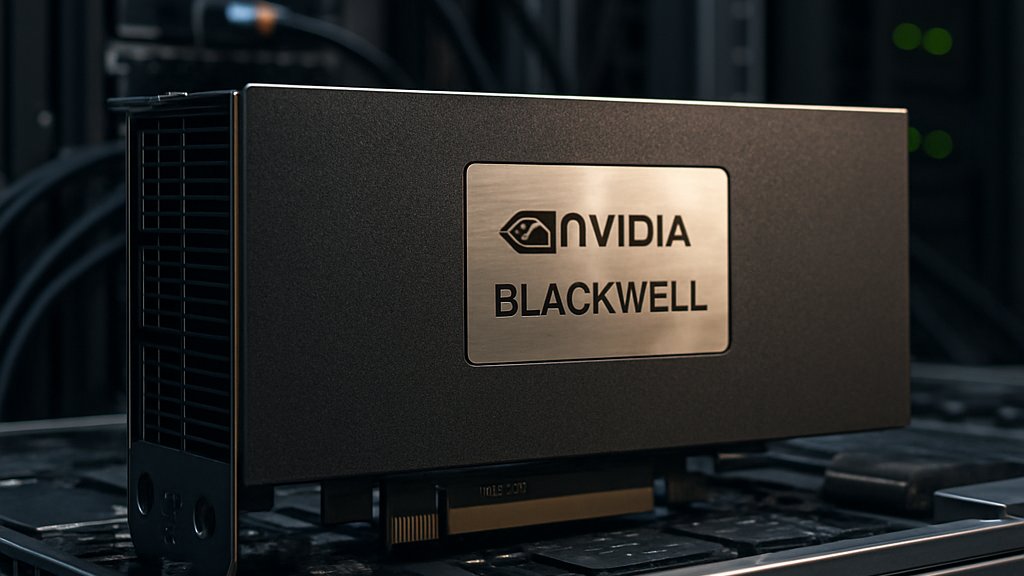
Alpha Compute Key Milestone
Alpha Compute rebranded from AlphaTON Capital in early 2026 to focus purely on enterprise compute. Meanwhile, the company’s ALP ticker reflects that strategic reset. The headline milestone is ALPHA-01, a cluster built around 504 B200 accelerators within the Canada datacenter.
Furthermore, management projects the installation will move from testing to production on May 8. CEO Brittany Kaiser described the date as “the moment our infrastructure business moves from pipeline to production.” Nevertheless, external confirmation remains pending at press time, underscoring a need for follow-up diligence.
Subsequently, Alpha Compute intends to replicate the blueprint in Sweden, expanding capacity with 576 B300 GPUs. ROFR agreements could double each site, taking aggregate capacity well past 2,000 GPUs by September. The timeline demonstrates ambition and urgency. However, scaling speed introduces substantial capital and operational demands discussed next.
Financing And Rapid Expansion
Large rollouts demand capital, and Alpha Compute secured a $31.9 million non-recourse facility on April 22. Consequently, the lender will hold collateral rights over forthcoming NVIDIA B300 shipments. ALP emphasized that hardware-backed debt protects shareholders against dilution while unlocking acceleration budgets.
Additionally, management negotiated Rights-Of-First-Refusal on both the Canada datacenter and the Swedish site. Those ROFR clauses let ALP reserve power, cooling, and floor space ahead of demand spikes. Therefore, each incremental rack can deploy rapidly once GPUs arrive from NVIDIA’s supply chain. Each financing tranche directly accelerates NVIDIA Blackwell Deployment schedules across upcoming pods.
- ALPHA-01: 504 B200 GPUs, go-live May 8, Canada datacenter
- ALPHA-02: 576 B300 GPUs, target June, Sweden
- ALPHA-03/04: Expansion rights >1,000 GPUs per site, Aug-Sep
- Projected revenue run-rate: ~US$72 million annually
These figures clarify the phased expansion path. Next, we examine why the underlying silicon matters.
Blackwell Platform Competitive Edge
NVIDIA’s Blackwell architecture represents the vendor’s most significant datacenter leap since Hopper. Moreover, Jensen Huang cites up to 25× efficiency gains over prior generation GPUs. The ALPHA-01 cluster features the B200 model, delivering higher throughput and reduced energy per token. Meanwhile, ALPHA-02 will adopt the larger B300 variant for additional memory bandwidth.
Consequently, each NVIDIA Blackwell Deployment can host larger language models or serve cheaper inference workloads. NVLink connectivity links hundreds of GPUs into a single addressable pool, enabling multi-node training without CPU bottlenecks. Therefore, Alpha Compute claims it can beat hyperscaler list pricing while preserving confidential boundaries.
Nevertheless, power allocation and cooling density remain practical constraints even inside a green Canada datacenter. Efficiency improvements help, yet real-world gains depend on workload mix and scheduling discipline. Hardware advantages create potential cost leadership. However, software isolation and security complete the value proposition. Early adopters gain priority access to NVIDIA Blackwell Deployment engineering resources.
Confidential Compute Core Strategy
Alpha Compute differentiates through hardware-based Trusted Execution Environments enabled by Intel TDX. In contrast, many cloud providers still rely on virtual private clouds without full memory encryption. Intel’s design isolates workloads, attesting both boot images and firmware to external verifiers.
Subsequently, customers can run proprietary models on shared infrastructure without exposing weights to operators. This approach aligns with enterprise governance and emerging AI safety regulations. Consequently, GPUaaS buyers seeking regulated deployments may appreciate the added assurance.
Furthermore, teams can strengthen security skills via the AI Prompt Engineer™ certification. Accredited staff accelerate deployment approvals and streamline procurement cycles. Confidential compute widens Alpha Compute’s addressable market. Next, we survey competitive pressures affecting that market.
Market Competition Landscape Shift
Global hyperscalers are racing to integrate Blackwell GPUs into their public clouds. For example, AWS, Google, and Microsoft each announced internal NVIDIA Blackwell Deployment programs at GTC. These giants bundle networking, storage, and managed services, creating sticky platform effects.
Nevertheless, independent players like ALP can thrive by targeting niche compliance or latency segments. Low overhead and rapid device turnover let small operators adopt the newest SKUs ahead of slower clouds. Moreover, the hydro-powered Canada datacenter offers a green narrative appealing to sustainability mandates.
In contrast, some analysts worry about margin compression once hyperscalers flood the market with capacity. Alpha Compute counters that argument with confidential compute and earlier delivery dates. Competition remains fierce yet differentiated. Financial viability comes into sharper focus next. Independent providers advertise rapid NVIDIA Blackwell Deployment timelines as a competitive differentiator.
Projected Revenue And Risk
Alpha Compute projects US$72 million in annualized revenue when all four clusters reach full utilization. However, that figure assumes immediate occupancy and steady GPUaaS pricing. Any demand shortfall could stress interest coverage on the $31.9 million loan.
Furthermore, the non-recourse structure protects equity yet exposes lenders to hardware price swings. Secondary markets for B200 or B300 cards remain thin because supply is still constrained. Consequently, lower resale values could tighten future financing terms.
Nevertheless, rapid payback is possible if utilization hits 80 percent within two quarters. ALP can then recycle cash into expansions without issuing new shares. Financial outcomes hinge on demand realism. The final section distills actionable insights.
Practical Takeaways For Buyers
Technical leaders evaluating GPUaaS offerings should monitor three variables before committing capacity. First, verify each NVIDIA Blackwell Deployment has reached production, not just powered-on testing. Request logs, customer attestations, or a public benchmark run.
Second, compare contractual TEE clauses across cloud and colocation vendors. Ensuring verifiable attestation paths guards intellectual property during fine-tuning. Third, scrutinize energy sourcing and cooling efficiencies, especially within hydro-powered facilities.
Moreover, teams should budget for potential price swings as more NVIDIA Blackwell Deployment capacity floods markets. Flexible reservation contracts can mitigate oversubscription risks. Following these steps improves procurement outcomes. The conclusion recaps pivotal discussion points.
Conclusion
Alpha Compute’s first cluster now sits on the brink of commercial traffic. Consequently, the success or delay of this NVIDIA Blackwell Deployment will shape investor sentiment. Hydro power, confidential compute, and hardware-backed financing create a distinct value cocktail. Moreover, GPUaaS buyers stand to benefit from lower latency and stronger data assurances. Nevertheless, hyperscaler expansion could compress margins if demand lags. Therefore, practitioners should monitor utilization figures and secondary market pricing closely. Continuous learning also matters. Professionals can validate emerging skills through the earlier linked AI Prompt Engineer certification and remain deployment-ready.
Disclaimer: Some content may be AI-generated or assisted and is provided ‘as is’ for informational purposes only, without warranties of accuracy or completeness, and does not imply endorsement or affiliation.


