

AI CERTS
6 months ago
Akamai Adds Secure Transaction Protocol to Curb AI Agent Fraud
Moreover, the joint effort offers merchants a fresh defense against surging automated abuse. Secure Transaction Protocol also signals a broader industry shift toward standardized agent verification. However, adoption, privacy, and ecosystem alignment remain works in progress.
Agentic Commerce Threat Landscape
Visa documented a 4,700% spike in AI-driven retail traffic during 2025. Meanwhile, Akamai measured 25 billion AI bot requests in only two summer months. Additionally, its research showed automated traffic rising roughly 300% year over year. These numbers highlight a critical security gap for merchants embracing agentic commerce.
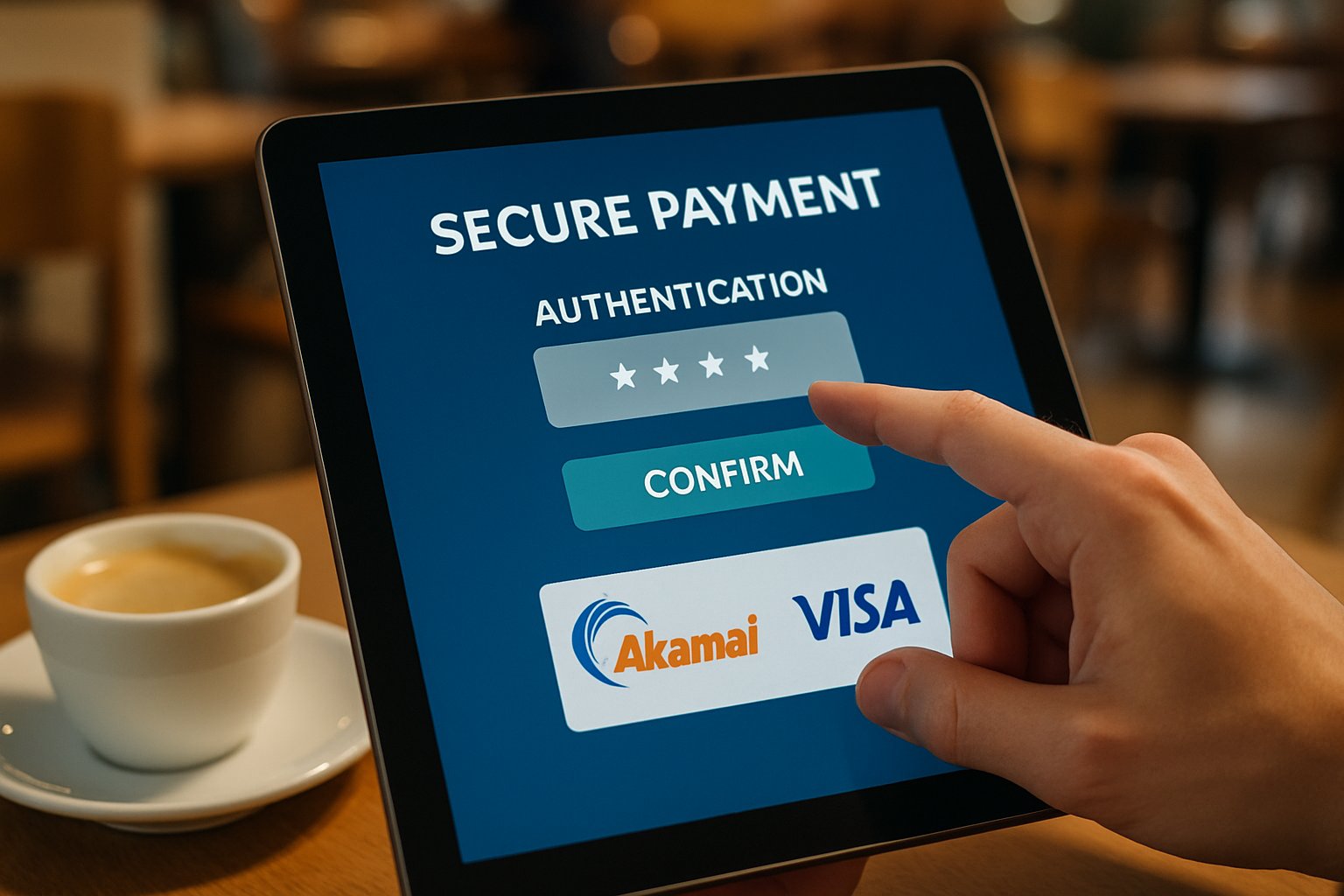
Merchants previously relied on blunt bot filters. However, sweeping blocks risked rejecting legitimate assistants that shoppers authorized. In contrast, malicious bots continued evolving to bypass simple fingerprints. Consequently, visibility into agent identity became a board-level priority. Secure Transaction Protocol emerged as the proposed handshake.
The data proves scale and urgency. Therefore, the industry needed a verifiable handshake between agents and storefronts.
Trusted Agent Integration Path
Visa released TAP on October 14, collaborating with Cloudflare and other partners. Subsequently, Akamai mapped TAP into its edge behavioral intelligence and bot Protection stack. Jack Forestell, Visa’s strategy chief, said the alliance delivers real-time intelligence without new risk. Patrick Sullivan at Akamai added that merchants must verify both agent and customer Identification in one flow. Secure Transaction Protocol now travels through Akamai’s global edge before touching merchant backends.
Akamai notes nine of the top ten retailers already use its delivery services. Consequently, the integration offers near-instant distribution for TAP headers and signatures. Nevertheless, merchants still decide how to process these signals internally.
Edge rollout accelerates reach, yet internal adoption work persists. The technical flow clarifies remaining integration details.
Secure Protocol Mechanics Explained
TAP builds on HTTP Message Signatures, the IETF standard published as RFC 9421. Agents hold private keys registered in an authoritative ledger. Moreover, each request carries a signed JWT containing agent role, consent scope, and payment reference.
Akamai’s edge verifies the signature, evaluates behavioral signals, and forwards trusted traffic accordingly. Secure Transaction Protocol encapsulates this signed envelope, letting merchants avoid direct key management.
Importantly, merchants receive a payment token or PAR rather than sensitive card data. In contrast, legacy flows often exposed raw PANs, increasing breach impact. Additionally, time-limited signatures reduce replay risk and improve Protection against credential stuffing.
- Agent Identification bound to cryptographic keys
- Signed intent fields: browse, pay, or fulfill
- Optional network token for checkout
- Edge validation before application logic
Developers can inspect Visa’s GitHub demo to replicate these steps locally. Furthermore, open code promotes community security testing and rapid iteration. Secure Transaction Protocol therefore formalizes agent trust signals for every hop.
These mechanics deliver layered security while preserving user experience. However, benefits appear only when business risks are balanced carefully.
Merchant Benefits And Risks
Merchants gain precise bot Protection without punishing good agents. Additionally, cryptographic Identification allows richer personalization for agent-driven carts. Secure Transaction Protocol reduces checkout friction by supplying payment context upfront.
Nevertheless, several risks remain. Fragmentation looms as Google, Mastercard, and others craft competing frameworks. Moreover, privacy advocates question how consent travels across multiple domains. Stand-alone Protocol differences could force merchants to juggle many libraries.
Financial exposure also shifts to edge validators, raising liability considerations. Consequently, independent security audits will be vital before large scale rollouts. Merchants must weigh value against integration overhead and governance changes.
Benefits are clear, yet unresolved challenges demand cautious planning. Those challenges intensify as standards bodies jostle for influence.
Ecosystem And Standards Race
Visa intends to align TAP with IETF, EMVCo, and OpenID Foundation efforts. Meanwhile, Cloudflare, Stripe, and Microsoft pledge early interoperability testing. Secure Transaction Protocol competes indirectly with Google’s AP2 proposal and Mastercard initiatives.
Standards overlap breeds confusion for developers chasing universal agent Certification. However, formal convergence could take years if agendas diverge. Trusted branding may suffer if incompatible schemas fragment the market.
Policy regulators have offered limited guidance, leaving merchants uncertain about compliance obligations. Consequently, legal teams are monitoring GDPR and CCPA interpretations closely.
The standards race creates both innovation and uncertainty. Enterprises therefore require clear next steps to stay ahead.
Next Steps For Enterprises
First, pilot TAP in a controlled environment using non-production credentials. Furthermore, monitor bot traffic patterns before and after deployment to quantify impact. Second, establish a governance model for key rotation and agent Identification audits.
- Create cross-functional team: security, payments, and data
- Engage acquirer to confirm payment token routing
- Schedule third-party penetration testing
- Review privacy notices for consent language
Third, explore workforce upskilling to manage emerging agent frameworks. Professionals can deepen expertise with the AI Supply Chain™ certification.
Finally, track industry forums to stay informed about evolving Protocol specifications. Additionally, provide feedback to standards bodies to influence interoperable outcomes.
Strategic pilots paired with governance yield measurable security gains. These pragmatic steps set the stage for concrete results.
Key Takeaways And Action
Akamai’s alignment with Visa delivers the first large-scale deployment of Secure Transaction Protocol. Consequently, merchants can separate helpful agents from abusive bots with cryptographic certainty. Bot Protection improves, false positives drop, and payment experiences stay smooth.
Nevertheless, privacy, standards, and liability questions persist. Trusted adoption hinges on open audits and multi-network cooperation. Enterprises must balance speed with risk to maintain customer trust. Independent audits will validate the Protocol and build cross-network confidence.
Secure Transaction Protocol now represents a tangible path toward safer agentic commerce. Therefore, leaders should test, learn, and share best practices across the ecosystem. Act today to prepare teams, processes, and tooling for autonomous shopping’s next wave.
Ready to deepen your security expertise? Explore advanced certifications and pilot TAP before competitors do.
Disclaimer: Some content may be AI-generated or assisted and is provided ‘as is’ for informational purposes only, without warranties of accuracy or completeness, and does not imply endorsement or affiliation.


