

AI CERTS
1 month ago
AirAsia Bets Big on Aviation Technology for Fuel-Efficient Growth
In contrast, older single-aisle models guzzle fuel and limit network flexibility. AirAsia aims to carry 150 million passengers annually by 2030 through this modernised fleet. Furthermore, the carrier links the move to lower Carbon Emission targets set by regional regulators. Industry watchers view the strategy as a landmark for Aviation Technology adoption among low-cost operators. The following analysis explains the rationale, economics, and risks behind the headline orders. Readers will also learn how advanced Logistics and certification pathways support the transformation.
Rationale Behind Fleet Shift
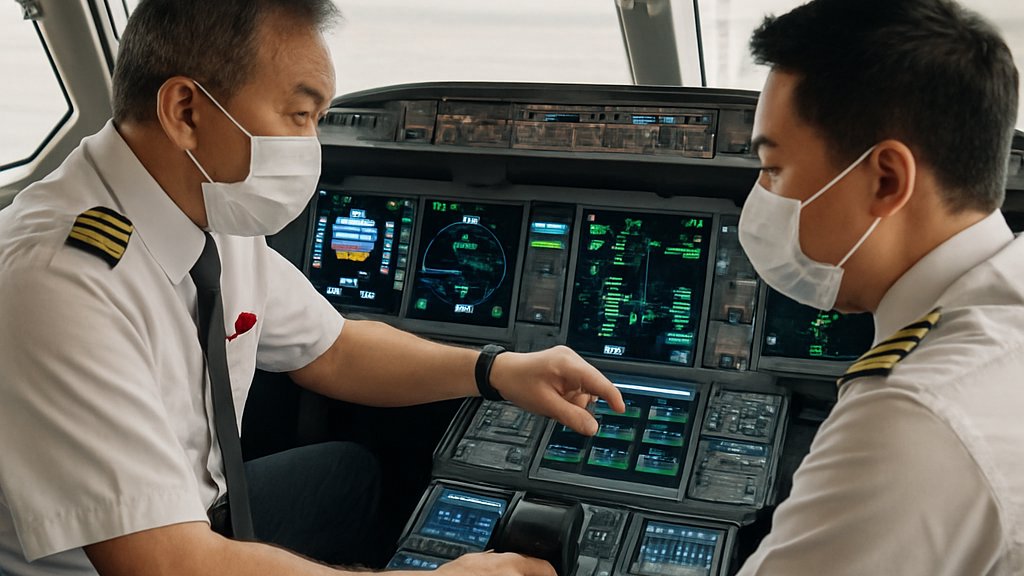
AirAsia operates multiple short-haul affiliates across Southeast Asia. However, traffic growth in secondary cities demands smaller yet efficient jets. Aviation Technology enables granular capacity without sacrificing cost metrics. Therefore, management selected the 160-seat Airbus A220-300 to penetrate thinner routes profitably. Meanwhile, the A321XLR covers distances up to 4,700 nautical miles, unlocking new point-to-point markets. Together, both types share cockpit commonality, simplifying pilot training and spares Logistics.
Moreover, unified procurement delivers stronger bargaining power with Airbus and Pratt & Whitney. These strategic drivers underline the fleet pivot. Consequently, investors gained clarity on long-term cost discipline. Such clarity sets up the economic discussion that follows.
Detailed Aircraft Orders Overview
The past twelve months delivered two headline agreements. Firstly, July 2025 produced a Memorandum for 50 A321XLRs with rights for 20 more. Secondly, May 2026 confirmed a firm purchase of 150 Airbus A220 units, the programme's largest to date. Additionally, AirAsia secured options for another 150 frames, giving unmatched scale. List prices imply commitments near USD 31 billion before customary discounts.
- 150 Airbus A220-300s, deliveries from 2028
- 50 firm A321XLRs, 20 purchase rights
- 12-year Pratt & Whitney EngineWise support
- Up to 20% fuel burn improvement per seat
Moreover, Pratt & Whitney signed a 12-year EngineWise deal to guarantee lifecycle economics. Industry analysts stated that the A220 program surpassed 1,000 orders thanks to the transaction. Consequently, Airbus highlighted the ceremony at Mirabel as proof of global momentum. These figures quantify the scale of AirAsia's commitment. However, operational savings depend on documented fuel efficiency, addressed next.
Key Fuel Efficiency Metrics
Fuel represents over 35 percent of a low-cost carrier's expense base. Therefore, every percentage point matters. Aviation Technology again delivers measurable gains through advanced aerodynamics and geared turbofan engines. Airbus advertises up to 20 percent lower burn per seat for the A220 compared with earlier generation jets. Similarly, the A321XLR consumes about 20 percent less fuel than the already efficient A321neo. Moreover, both platforms accept 50 percent Sustainable Aviation Fuel today and target 100 percent by 2030.
Lower fuel directly cuts Carbon Emission and shields margins from oil volatility. In contrast, retrofitting older fleets cannot deliver comparable improvements at scale. Consequently, AirAsia expects unit costs to fall even after financing charges. These metrics ground the network expansion plan explored below.
Broader Network Expansion Strategy
Route planners intend to exploit unmatched range and economics. Therefore, smaller A220 flights will stitch secondary cities into Kuala Lumpur, Bangkok, and Manila hubs. Meanwhile, the A321XLR opens single-aisle links to Central Asia, Eastern Europe, and Northern Australia. Such flexibility lets schedulers boost frequency or test markets with limited risk. Moreover, high-density cabin layouts maximise revenue per departure. AirAsia forecasts annual passengers rising toward 150 million by decade end. Lower Carbon Emission per seat supports regulatory compliance and marketing narratives. Consequently, the network model shifts from point-to-hub toward dynamic point-to-point grids. These planned routes reshape competitive boundaries ahead of fleet arrival. However, risks around operations deserve equal attention.
Key Operational Risk Factors
Large orders lock capital over a long horizon. However, demand or financing conditions could weaken before first deliveries in 2028. Engine reliability remains a concern after earlier geared turbofan durability events. Nevertheless, Pratt & Whitney's GTF Advantage certification promises material maintenance improvements. Production bottlenecks at Mirabel could shift delivery dates and upset Logistics planning.
Furthermore, integrating new types across multiple affiliates introduces training and spare part complexity. Aviation Technology also evolves quickly, risking future obsolescence. Moreover, Carbon Emission regulation may tighten faster than current SAF capabilities allow. These uncertainties underscore the need for rigorous risk management. Consequently, supply chain capabilities become critical, as the next section explains.
Critical Supply Chain Impacts
Aircraft induction touches every element of the value chain. Therefore, ground handlers, parts depots, and digital tools must scale in sync. Advanced Logistics platforms will coordinate spares and predictive maintenance for hundreds of new parts numbers. Additionally, EngineWise data analytics will feed reliability dashboards across the group. Professionals can enhance their expertise with the AI Supply Chain™ certification. Moreover, certification holders understand how Aviation Technology influences procurement and inventory strategies.
Consequently, AirAsia expects faster aircraft turnaround and fewer ground events. These operational gains reinforce projected cost savings. In contrast, carriers lacking digital depth may struggle to replicate similar benefits. This readiness positions AirAsia for the future outlook now outlined.
Comprehensive Future Outlook Insights
Industry analysts regard the orders as a watershed for Aviation Technology in low-cost sectors. Furthermore, Airbus gains program momentum that encourages further A220 production expansion. Investors will monitor delivery milestones and operating cash flow closely. Nevertheless, the first real test arrives when Aviation Technology meets day-to-day dispatch reliability. If promised savings materialise, AirAsia could redefine regional competition. Moreover, regulators may reward lower Carbon Emission performance with traffic rights or tax incentives.
Consequently, ancillary revenues from freight and Logistics should also grow with improved belly capacity. Aviation Technology will continue evolving, and upgrade paths such as hydrogen or full SAF remain open. Therefore, AirAsia's flexible single-aisle fleet can integrate later propulsion breakthroughs. These projections close the analytical loop before final recommendations.
AirAsia has staked its future on fuel-efficient narrow-bodies and the data-driven practices that support them. Consequently, the airline stands positioned to capture new markets, trim costs, and lower its environmental footprint across the network. Nevertheless, success will hinge on disciplined execution, robust supply chains, and sustained engine reliability. Professionals watching the rollout should deepen skills in Aviation Technology through accredited programs and real-time industry data. Therefore, seize the chance to upskill and lead the next wave of aviation transformation.
Disclaimer: Some content may be AI-generated or assisted and is provided ‘as is’ for informational purposes only, without warranties of accuracy or completeness, and does not imply endorsement or affiliation.


