

AI CERTS
2 hours ago
AI Thermofebrile Therapy: A Contested Medical Breakthrough in ALS
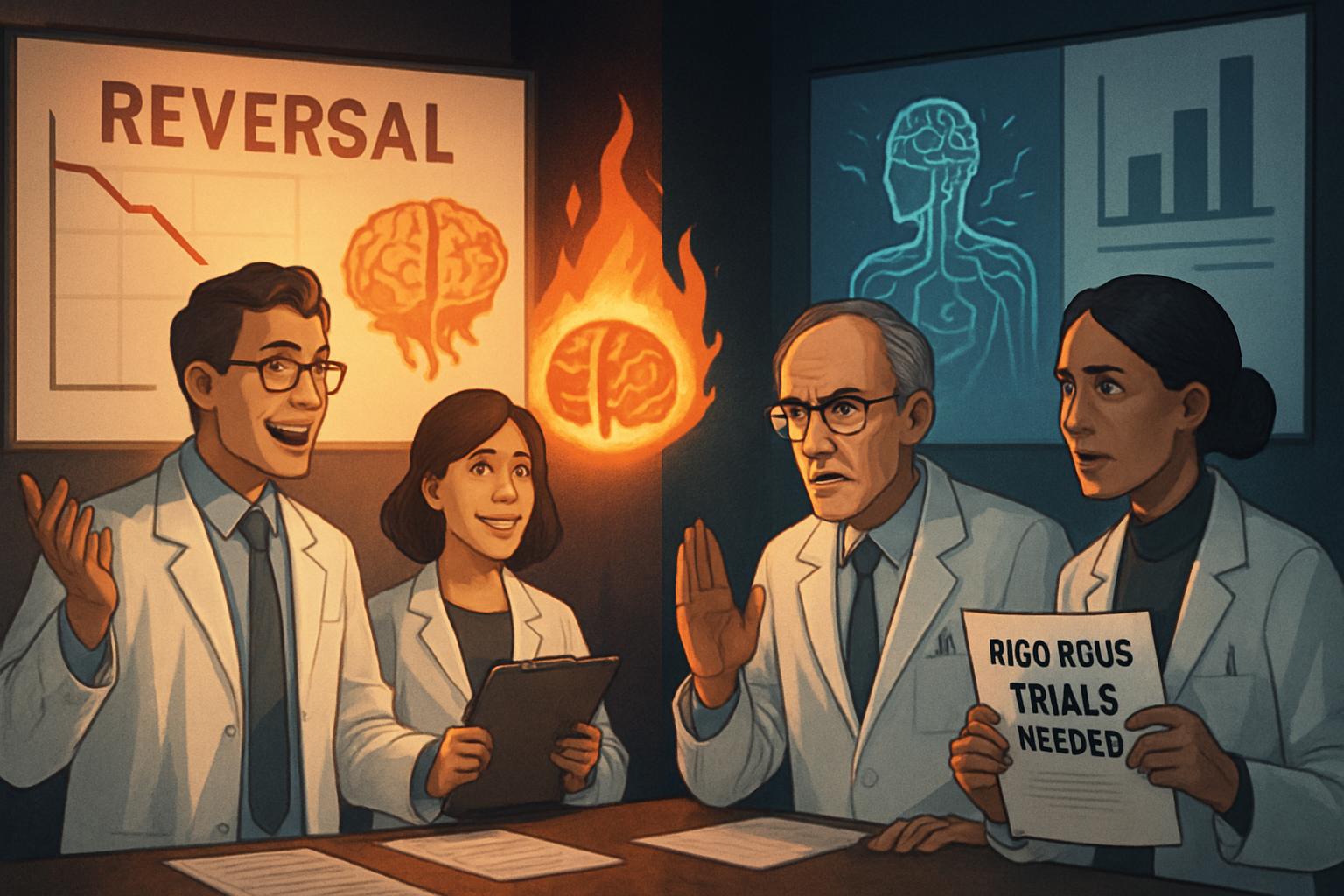
Many observers dub the event a Medical Breakthrough with transformative potential.
However, caution remains essential because the evidence involves only one patient.
The therapy, called CBIT2, uses noninvasive temperature modulation guided by artificial intelligence.
Authors propose that controlled thermal cycles boosted protective heat shock proteins.
Moreover, electrophysiology suggested total reversal of denervation typical for the disease.
Press releases already announce planned trials for early 2026.
This article examines data, mechanism, regulation, expert opinion, and next steps.
Case Report Raises Hopes
The published case centers on Moira Papp, aged 56.
Initially, Mayo Clinic electrodiagnostic tests confirmed ALS progression.
Subsequently, Northwestern specialists verified the diagnosis and supervised standard care.
After decline continued, she tried CBIT2, an AI controlled thermofebrile protocol.
Treatment involved noninvasive sensors plus a computerized heating element positioned near the eyelid.
According to the authors, sessions induced safe, fever-like cycles without pharmacologic agents.
Moreover, follow-up electromyography reportedly showed disappearance of fasciculations and fibrillations.
Therefore, the team claimed a second Medical Breakthrough illustrating possible neuronal restoration.
Key metrics sharpen the narrative:
- Neurofilament light dropped 4.3% across sessions.
- Heat shock protein 70 increased up to 53%.
- Post-treatment EMG labeled "ALS no longer present".
- Function returned for speech, gait, and sports.
Collectively, these datapoints underpin optimism among patients and investors.
Nevertheless, single-patient evidence warrants rigorous scrutiny before broad acceptance.
The report delivers striking objective findings.
However, isolated data cannot establish population-level efficacy.
These findings guide our next analysis.
Heat Shock Response Mechanism
Heat shock proteins guard cells against misfolded aggregates.
In ALS, toxic TDP-43 inclusions drive neuron loss.
Such pathology lacks any established Medical Breakthrough to date.
Consequently, boosting HSP70 may clear pathogenic clumps.
The CBIT2 designers argue their thermofebrile cycles activate HSF1, raising HSP expression.
Animal studies previously linked such activation to extended motor survival.
Moreover, the patient’s serum showed significant HSP70 elevation after therapy.
Nevertheless, the case lacked direct TDP-43 measurements.
Therefore, mechanistic conclusions remain provisional despite the third reported Medical Breakthrough moment.
Future biopsies or CSF assays could confirm protein remodeling.
Mechanistic plausibility strengthens scientific interest.
In contrast, missing direct biomarkers direct attention to regulatory evidence.
Regulatory Status And Gaps
BTT emphasizes its device carries FDA 510(k) clearance K100843.
However, that clearance covers monitoring, not therapeutic delivery, so definitive claims remain premature.
Consequently, CBIT2 remains unapproved for treating ALS.
Planned trials for early 2026 aim to meet Investigational Device standards.
Furthermore, federal regulations will require independent ethics oversight.
The company states informed consent was obtained outside formal research.
Industry observers warn such positioning can confuse desperate patients seeking another Medical Breakthrough.
Fever induction still poses cardiovascular risks, demanding safety audits.
Meanwhile, no registration appears yet on ClinicalTrials.gov.
Regulatory clarity will influence physician confidence.
Subsequently, independent expert opinions offer additional perspective.
Independent Expert Viewpoints Shared
Academic neurologists urge restraint despite intriguing data.
Dr. Alicia Gomez, who studies heat shock signaling, calls the report 'hypothesis generating'.
In contrast, she highlights the absence of blinded electromyography review.
Professor Ivan Lee notes spontaneous ALS remission is almost nonexistent.
Additionally, he states any Medical Breakthrough claim must survive controlled replication.
Critics also question corporate conflicts of interest.
Nevertheless, experts concede heat shock modulation remains biologically plausible.
Consequently, several centers expressed interest in collaborative pilot studies using the protocol.
Thermofebrile patterns would require standardized monitoring across sites.
Expert caution tempers public excitement.
Therefore, structured validation steps now command attention.
Next Steps For Validation
Robust trials must confirm safety and efficacy.
Researchers plan a multi-site, randomized, sham-controlled design to confirm the claimed Medical Breakthrough.
Moreover, endpoints will include blinded EMG, functional scales, and biomarker panels.
Independent statisticians will monitor interim results.
Noninvasive sensors need calibration standards to avoid data drift.
Thermofebrile cycle parameters should be published for peer review.
Meanwhile, patient registries can capture long-term adverse events.
Successful replication could mark another Medical Breakthrough, shifting therapeutic paradigms.
Funding strategies include grants, venture capital, and partnership with advocacy groups.
Transparent design will strengthen community trust.
Consequently, wider implications deserve separate discussion.
Implications For Neurodegenerative Care
Protein misfolding underlies many neurodegenerative conditions beyond motor neuron disease.
Consequently, validated heat shock induction could influence Parkinson’s, Alzheimer’s, and Huntington’s strategies.
Researchers envision modular, noninvasive devices tuned for disease-specific thermal signatures.
Moreover, a successful Medical Breakthrough could transform neurodegenerative medicine and encourage investment in proteostasis platforms.
Healthcare systems could shift resources from palliative to restorative approaches.
Professionals can enhance implementation readiness with the AI Human Resources™ certification.
Nevertheless, overpromising may erode trust if replication fails.
Therefore, balanced communication remains critical.
Protocol teams acknowledge the broader neurodegenerative potential yet prioritize ALS studies first.
Cross-disease prospects appear exciting.
However, rigorous science remains the essential gateway.
Final Takeaways And Outlook
Evidence of total recovery remains limited to a single patient.
Nevertheless, objective EMG and biomarker shifts justify careful exploration.
Regulators, clinicians, and investors now watch forthcoming trials with heightened anticipation.
Successful replication would confirm a landmark Medical Breakthrough and redefine ALS care.
However, failure could intensify skepticism toward AI-driven thermofebrile medicine.
Consequently, transparent data sharing and independent oversight will be essential.
Professionals should monitor registries, peer reviews, and corporate updates.
Meanwhile, career specialists can gain strategic advantage through certifications that prepare teams for disruptive healthcare innovations.


