

AI CERTS
1 hour ago
AI development trends: Prompt Engineering Standardizes Workflows
Moreover, adoption numbers keep climbing. OpenAI reports four million developers on its platform, while Stack Overflow notes that 84 percent of coders already explore AI tools. Nevertheless, 46 percent still distrust output accuracy, underlining the urgent need for disciplined practices.
Earlier improvisation is giving way to templates, testing pipelines, and governance frameworks. Therefore, engineering leaders monitor these AI development trends to balance speed with responsibility. The sections below examine emerging standards, operational tooling, and practical guidance for prompt engineering teams.
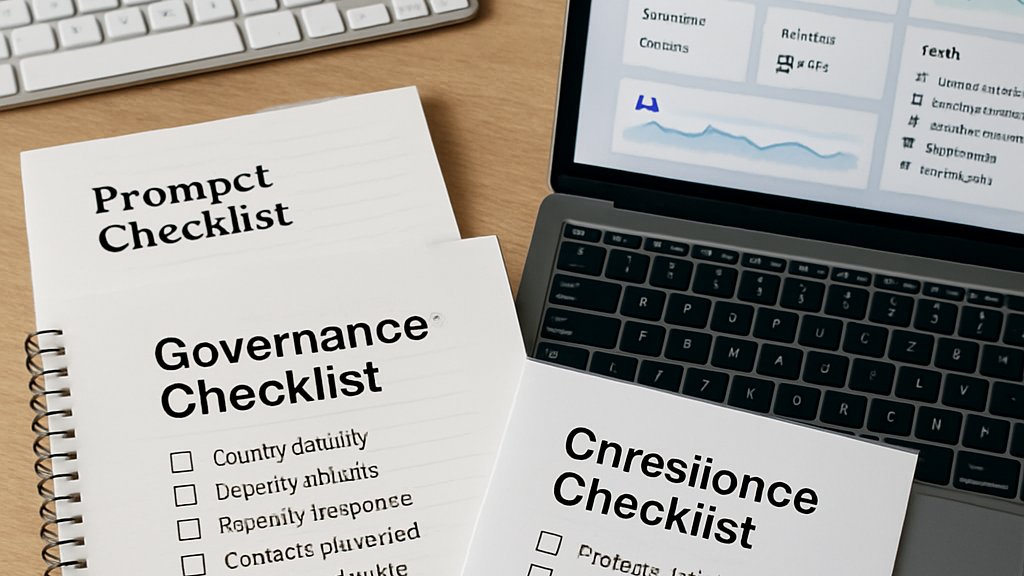
Prompt Standards Take Shape
Vendors now publish formal prompt guidelines. OpenAI refreshed its reasoning playbook several times this year. Meanwhile, AWS released a 20-page defense-focused guide that warns against injection attacks. Microsoft added Prompt Flow examples that integrate prompts with CI pipelines. Moreover, independent papers argue that no single benchmark works across tasks. Consequently, teams collect their own internal metrics to assess prompt quality.
Industry leaders echo the shift. Aparna Chennapragada recently said, “Prompt sets are the new PRDs.” Srinivas Narayanan urged developers to focus on questions, not mechanics. Furthermore, Jensen Huang highlighted the value of better inquiry design. These statements underline why standardized patterns now matter.
Template libraries, reusable system prompts, and salted variables dominate discussion forums. In contrast, ad-hoc phrasing tricks receive less attention. Therefore, emphasis now falls on measurable prompt quality rather than anecdotal success.
Standardizing prompts improves hand-off between teams and supports audits. However, rigidity risks ignoring task nuance. Teams must weigh consistency against flexibility.
The growth of shared playbooks confirms wider standardization. Nevertheless, gaps in universal measurement persist. The next section explores how operations tooling responds.
GenAIOps Hits Pipelines
Operational pipelines, often called GenAIOps, now embed prompts within version control. Microsoft’s documentation shows git branches, pull requests, and automated tests around prompts. Additionally, Hugging Face scripts demonstrate regression checks across model versions. Such pipelines treat prompts like code and enforce quality gates.
Continuous evaluation uses reference datasets plus automatic graders. Consequently, issues emerge early, limiting production incidents. Moreover, teams link prompts to release notes, ensuring traceability when models update. This process complements model tuning efforts by revealing where instruction changes outperform parameter adjustments.
Cloud dashboards also expose token usage, latency, and cost per prompt. Therefore, product managers can run A/B tests on prompt quality with clear business metrics.
These practices boost reliability and developer confidence. However, they require cultural shifts toward testing discipline. Teams that adopt GenAIOps generally report faster iteration and fewer rollbacks.
Operational rigor anchors emerging AI development trends. Yet security concerns still threaten production LLMs. Accordingly, the following section reviews guardrail strategies.
Guardrails Secure Prompting
Security guidance matured rapidly. AWS recommends layered defenses: input sanitization, salted tags, and human-in-the-loop reviews. Furthermore, Microsoft’s Prompt Flow shows policy enforcement nodes that block disallowed content before completion. Consequently, organizations reduce exposure to prompt injection and data leakage.
Context engineering, often branded as RAG, also raises defenses. By retrieving trusted documents at runtime, teams improve factuality and lower hallucination risk. Moreover, a solid context strategy isolates privileged data from public queries.
Guardrails intersect with model tuning. Fine-tuned checkpoints inherit base vulnerabilities unless prompts restrict scope. Therefore, combining tuning with structured prompts delivers safer outputs.
Enterprises additionally log every prompt and completion for audit. These logs support forensic analysis after incidents. Nevertheless, privacy regulations demand careful retention policies.
Security layers protect brand and users. However, measuring their efficacy remains tricky. The next section discusses why metrics and benchmarks still spark debate.
Metrics Challenge One Size
Researchers on arXiv caution against universal benchmarks. Performance swings across domains even with similar prompts. Moreover, factors like temperature, length penalty, and context strategy skew results. Consequently, a single score may mislead teams selecting models.
Organizations therefore craft internal datasets aligned with user goals. Automated scoring tools grade coherence, safety, and business rules. Additionally, human raters validate edge cases to refine prompt quality.
Metrics also inform model tuning. By tracking delta improvements, teams justify spending on custom checkpoints. However, diminishing returns appear once prompts fully exploit contextual knowledge.
Standard metrics improve comparability but risk oversimplification. Nevertheless, iterative evaluation guides smarter prompt revisions. Practical guidance follows in the next section.
Practical Guidance For Teams
Engineering managers can apply four actionable steps today:
- Store prompts with code in version control and require pull-request reviews.
- Automate tests that measure prompt quality, latency, and safety on every change.
- Deploy a robust context strategy using RAG to ground answers in verified data.
- Combine light model tuning with modular prompts to balance cost and performance.
Furthermore, professionals can enhance expertise with the AI Context Engineering™ certification. This credential deepens knowledge of retrieval pipelines, guardrails, and GenAIOps patterns.
Clear processes accelerate delivery and raise stakeholder trust. Consequently, teams align faster with evolving AI development trends. The final section looks ahead to forthcoming standards.
Future Standards Outlook
No ISO-level spec governs prompts yet. However, vendor convergence hints at eventual industry consensus. Moreover, open-source repositories now catalog reusable prompt components. Community governance may emerge similarly to Kubernetes SIGs.
Meanwhile, market analysts expect consolidation among tooling providers. Standard APIs for logging, evaluation, and drift detection will likely appear. Consequently, procurement teams will demand compatibility across clouds.
Academic collaborations continue probing benchmark validity. Additionally, watchdog groups call for transparency on training data and model tuning methods. These pressures push vendors toward clearer disclosure, reinforcing trustworthy context strategy.
Standard bodies may still lag behind rapid innovation. Nevertheless, momentum favors shared schemas and security baselines. Adapting to these AI development trends positions teams ahead of regulatory waves.
Consensus remains unfinished. However, proactive adoption of emerging practices yields immediate benefits, as summarized next.
Conclusion And Next Steps
Prompt engineering now follows structured playbooks, robust pipelines, and layered guardrails. Consequently, developer productivity rises while risk decreases. Metrics still challenge easy comparisons, yet internal benchmarks guide local improvement. Moreover, combining disciplined prompts, a solid context strategy, and targeted model tuning keeps teams competitive. These intertwined forces exemplify current AI development trends.
Professionals should formalize prompt workflows, embrace GenAIOps, and pursue continuous education. Therefore, consider the linked certification to validate skills and lead responsible AI initiatives. Adopt these best practices today and shape the next wave of innovation.
Disclaimer: Some content may be AI-generated or assisted and is provided ‘as is’ for informational purposes only, without warranties of accuracy or completeness, and does not imply endorsement or affiliation.


