

AI CERTS
7 months ago
AI Retail Personalization trends shape 2025 shopping
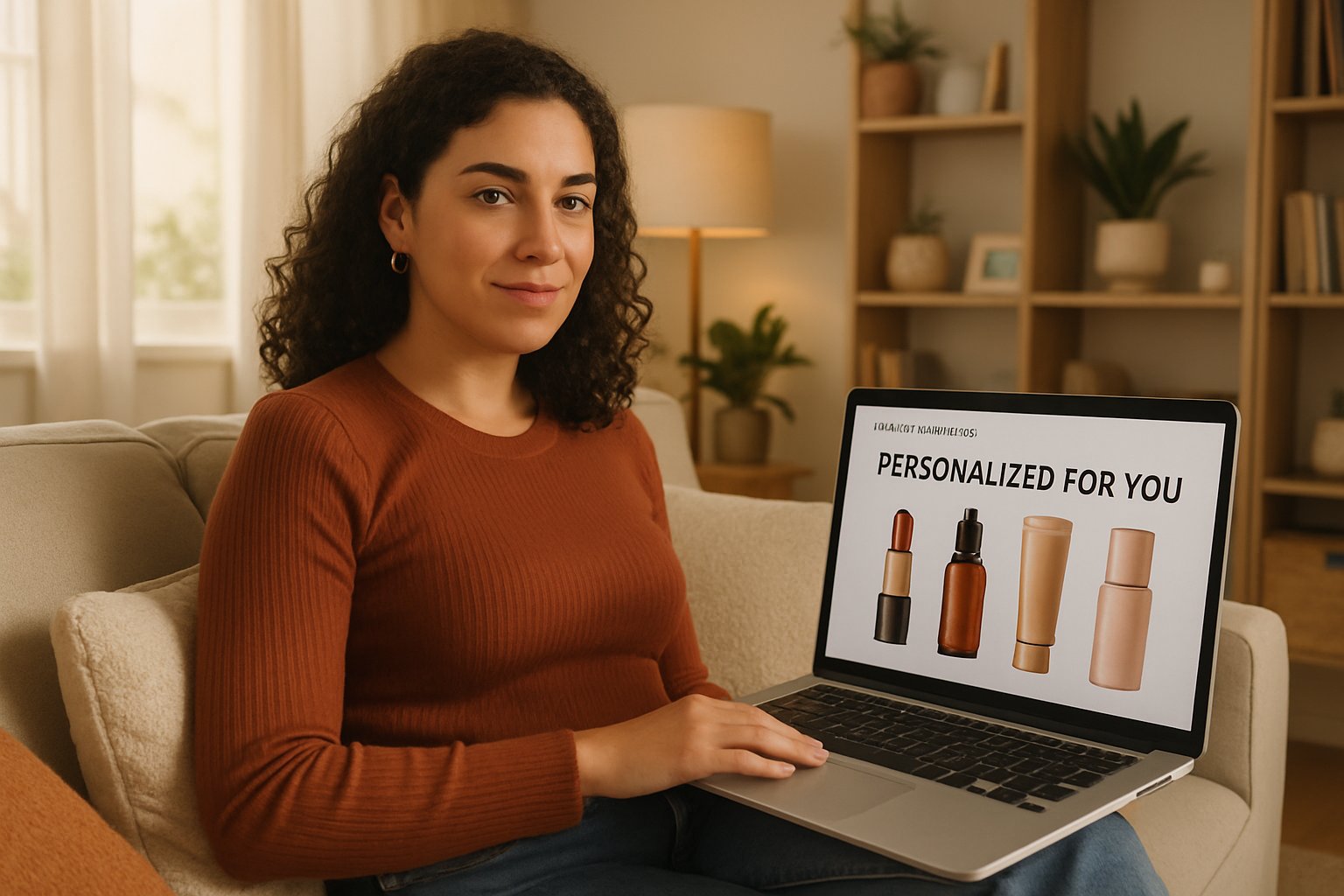
Perfect Corp’s spring report steps into this context with fresh numbers and field insights.
The document highlights five forces accelerating AI Retail Personalization across Beauty and fashion categories.
Moreover, the findings align with wider industry research from McKinsey, Mordor, and ResearchAndMarkets.
Professionals reading the 30-page briefing also gain tactical lessons for in-store and online Shopping operations.
This article unpacks the key data, evaluates the claims, and connects them to broader market signals.
Additionally, it outlines workforce upskilling paths and certification resources for technology decision makers.
Such context prepares leaders to convert hype into measurable value.
Market Forces Driving Growth
Independent analysts project the virtual try-on market will reach nearly USD 19 billion by 2030.
Meanwhile, Mordor Intelligence calculates a compound annual growth rate exceeding 20% for relevant software.
These numbers signal robust investor confidence despite macro uncertainty.
Several structural forces explain the optimistic outlook.
First, smartphone penetration enables instant camera based experiences without special hardware.
Second, social commerce shortens discovery cycles, pushing retailers toward immersive Shopping utilities.
Third, policy pressure around sustainability encourages virtual sampling over physical waste.
In contrast, heightened privacy standards demand transparent data handling.
Perfect Corp positions AI Retail Personalization as a compliant answer to these shifting demands.
Their report distills the macro forces into four measurable benefits.
- Conversion gains between 10–15%, echoing McKinsey personalization studies.
- Return rate reductions up to 40% in cosmetic pilots.
- Content production cost savings through generative models.
- Lower carbon impact by minimizing product samples.
Collectively, these forces validate sustained investment momentum.
Retailers see a clear path to measurable value creation.
The next section examines how Perfect Corp capitalizes on this momentum.
Perfect Corp Strategic Moves
Perfect Corp has executed an aggressive roadmap over the last twelve months.
Notably, it unveiled the GenAI Clothes Try-On service in May 2025.
Furthermore, the company upgraded Skincare Pro with HD scans validated by dermatologists.
December 2024 saw the acquisition of Wannaby, expanding into footwear and handbag visualization.
Consequently, the platform now covers head-to-toe outfits, makeup, and accessories.
These moves support end-to-end AI Retail Personalization for omnichannel journeys.
Awards reinforce credibility beyond marketing copy.
RetailTech Breakthrough named Perfect Corp ‘AI Company of the Year’ in April 2025.
Moreover, Newsweek recognized its customer experience impact during the summer award circuit.
Product launches, acquisitions, and accolades create a formidable competitive moat.
Investors interpret the pattern as a calculated platform play.
With capabilities in place, attention shifts to the specific consumer Trends shaping feature design.
Five AI Retail Trends
The latest briefing details five focal Trends dictating retail roadmaps.
Each Trend links directly to scalable technology already offered by Perfect Corp.
Below is a concise breakdown.
- Conversational Agents: Voice or chat interfaces that suggest products, schedule consultations, and act as a personal Companion.
- Hyper-Realistic Try-On: Generative rendering for clothes, makeup, and accessories with near-photographic accuracy.
- Sustainability Enablement: Reduced samples and returns lessen waste across the Shopping lifecycle.
- Scaled Content Creation: AI generates localized images, videos, and copy in minutes.
- Full Journey Intelligence: Analytics connecting discovery, cart, and post-purchase Routine for continuous AI Retail Personalization optimization.
Perfect Corp claims 93% of surveyed users want such AI capabilities.
Approximately 80% reported satisfaction after trials, indicating tangible consumer pull.
However, price remains the top priority for 44% of respondents, tempering assumptions about limitless spend.
These statistics bolster the case for AI Retail Personalization, yet they originate from company surveys.
Independent validation from retailer partners will strengthen the narrative.
Nevertheless, alignment with external market studies adds directional confidence.
The five Trends illustrate clear consumer enthusiasm and operational upside.
Still, financial impact ultimately surfaces through conversion and return metrics.
Therefore, the next section investigates those metrics.
Impact On Return Rates
Returns erode margins faster than freight surcharges.
McKinsey estimates apparel returns can exceed 30% for some e-commerce players.
Virtual try-on tools, by contrast, reduce mis-size errors before checkout.
Market research aggregates suggest return cuts of 20–40% when accurate visualization is deployed.
Additionally, case studies highlight conversion lifts between 10% and 15%.
These numbers correlate with Perfect Corp pilots in cosmetic and Beauty categories.
Nevertheless, outcomes vary by product, lighting conditions, and user Routine.
Retailers should benchmark performance against control groups and seasonality cycles.
AI Retail Personalization dashboards within Perfect Corp enable such A/B testing and attribution.
When rigorously measured, virtual try-on demonstrates both revenue and environmental benefits.
Evidence remains strongest in color cosmetics and eyewear to date.
Challenges around bias and privacy appear next.
Challenges And Ethical Hurdles
Any camera-based system must navigate privacy regulations like GDPR and state biometrics laws.
Additionally, visual algorithms risk skewed results for under-represented skin tones.
Perfect Corp cites 70,000 medical-grade images and dermatologist validation to mitigate demographic bias.
Furthermore, transparent opt-in flows reassure consumers during Beauty consultations.
Retailers should audit data retention periods and anonymization protocols quarterly.
In contrast, content safety rules govern generative output, protecting brand reputation.
Compliance efforts have costs, potentially offsetting early productivity gains.
Nevertheless, ignoring regulation can trigger fines and consumer backlash.
Therefore, a balanced governance framework supports sustainable AI Retail Personalization rollouts.
Strong governance converts ethical risk into competitive trust.
Certification and training help teams implement such governance consistently.
The workforce discussion follows.
Upskilling The Retail Workforce
Technical fluency among store associates determines whether innovation delights or confuses shoppers.
Consequently, brands invest in microlearning modules covering camera setup, persuasion techniques, and privacy scripts.
Professionals can upskill through the AI Learning Development certification.
Moreover, Perfect Corp supplies interactive dashboards that act as a virtual Companion for frontline staff.
These dashboards translate analytics into simple prompts during clienteling sessions.
The Companion also recommends cross-sell items based on current Shopping context.
Subsequently, staff guide shoppers toward personalized Beauty routines anchored by data.
McKinsey finds that personalized engagement can lift conversion by up to 15% when staff leverage insights.
Furthermore, engaged employees report higher retention, lowering training overhead.
AI Retail Personalization therefore supports both customer and talent economics.
Continuous learning cements the technology’s human interface.
Certification pathways accelerate that learning curve.
Finally, the article summarizes actionable steps.
Perfect Corp’s evidence indicates that strategic use of AI Retail Personalization drives measurable gains.
Conversion lifts, lower returns, and sustainable supply gains surface across Beauty and fashion verticals.
Independent market data corroborate the positive Trends yet advise disciplined measurement.
Nevertheless, governance, bias mitigation, and staff enablement remain essential prerequisites.
Leaders should embed privacy controls and provide every associate with an AI Companion for clienteling.
Continuous training, supported by certifications, secures lasting operational excellence.
Therefore, teams pursuing AI Retail Personalization can begin by enrolling in the linked certification.
Click today to elevate your strategy and transform every Shopping journey.
Disclaimer: Some content may be AI-generated or assisted and is provided ‘as is’ for informational purposes only, without warranties of accuracy or completeness, and does not imply endorsement or affiliation.


