

AI CERTS
7 months ago
AI’s Impact on Modern Dating: Shifting Social Dynamics
Conversely, regulators warn that intimacy plus data creates volatile privacy and Ethics challenges. Meanwhile, users wrestle with Authenticity questions when bots craft icebreakers or entire personalities. Consequently, the sector offers a revealing case study for anyone tracking consumer AI adoption. This article examines the latest features, benefits, and risks shaping AI powered Dating platforms. It highlights commercial trends, regulatory flashpoints, and emerging best practices for builders and policymakers. Therefore, read on to understand why tomorrow's matches depend on code, consent, and human insight.
AI Reshaping Social Dynamics
Advanced recommendation models now weigh tone, intent, and reply speed alongside the old swipe data. Moreover, Match Group reports higher retention when curated daily picks replace infinite scroll. Meta’s new “Meet Cute” option limits choices to spark faster decisions and healthier Social Dynamics. Simultaneously, AI icebreakers supply conversation starters, reducing first-message anxiety for millions of Dating newcomers. Consequently, observers see a shift from quantity toward perceived quality in digital Matchmaking. These design tweaks illustrate how algorithms now guide emotions, not just navigation. Additionally, conversational assistants suggest similar interests, encouraging deeper disclosures early in chat. Such guided openness can accelerate rapport and filter incompatible expectations sooner. In short, AI reframes romantic supply and demand across apps. However, user safety concerns mount, leading us to verification advances.
From Swipes To Curation
Tinder’s paid “Top Picks” and Hinge’s “Most Compatible” showcase the concierge trend. Furthermore, app revenue hit $311 million in April 2025 after these premium tiers expanded.
- April 2025 revenue: $311 million across Tinder, Bumble, and Hinge.
- Global 2024 Dating-app revenue: $6.18 billion, per Business of Apps.
- Pew 2023 survey: 53% of U.S. adults under 30 tried online Dating.
Analysts credit machine learning for surfacing profiles more likely to convert into subscriptions. In contrast, endless scrolling now appears outdated and commercially inefficient. The shift also influences Matchmaking expectations because users increasingly pay for shorter lists. Consequently, platforms gather richer behavioral signals from decisive taps rather than casual swipes. These insights feed continuous model updates and higher perceived relevance. Curation monetizes attention while promising better Social Dynamics. Next, we examine how companies secure those promises through safety technology.
Safety And Verification Push
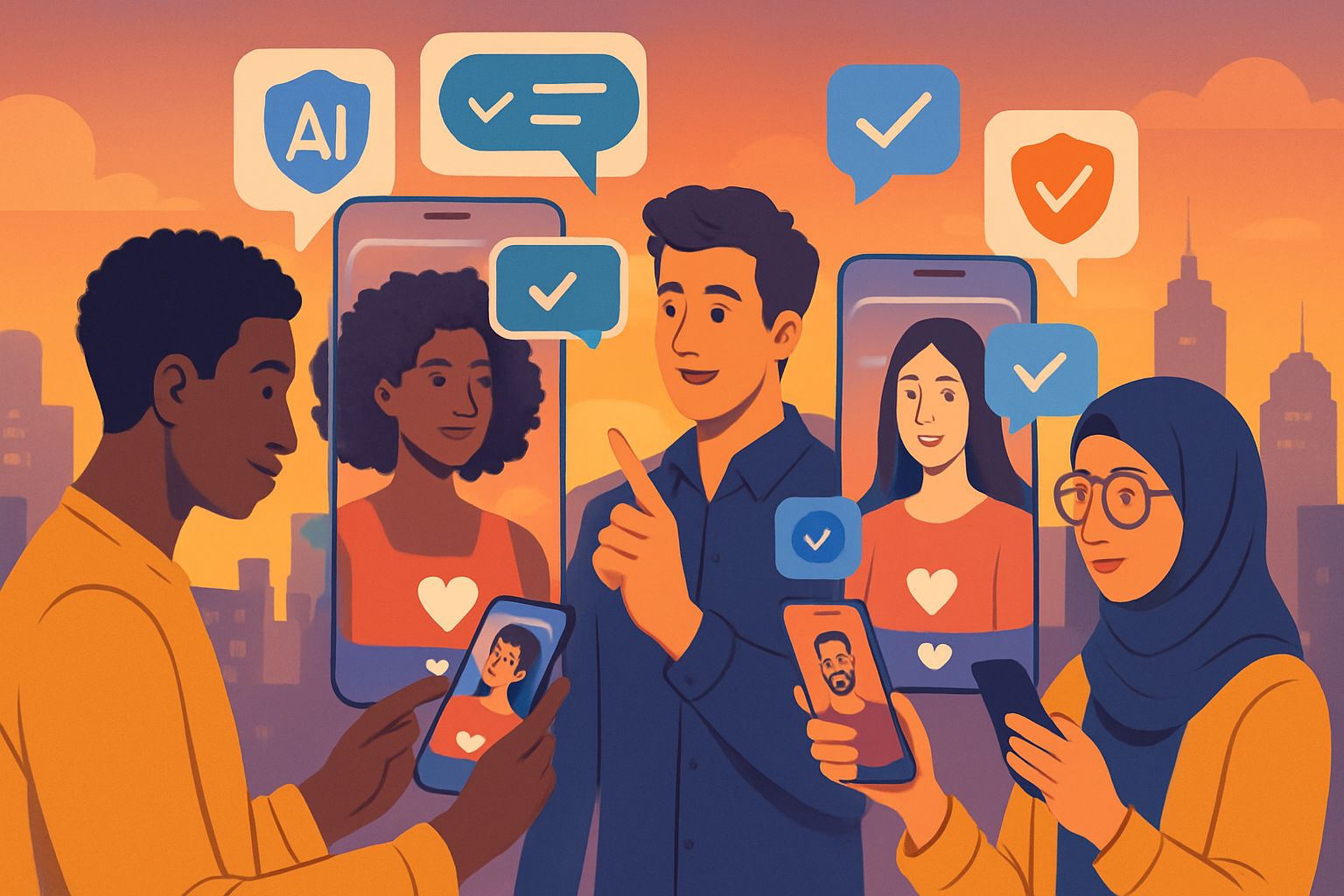
Romance scams cost users billions annually, according to the FTC. Therefore, Match Group launched Face Check, a biometric liveness test that blocks bot armies. Wired reports the rollout began in October 2025 for all new Tinder accounts. Additionally, machine vision flags deepfake avatars before they reach message inboxes. Face Check also generates a verified badge that boosts profile visibility, creating adoption incentives. Moreover, backend fraud models cross-reference device, language, and transaction signals for anomalies. Bumble applies similar filters but couples them with AI Abuse Detector tools for hostile language. Consequently, safety narratives dominate quarterly earnings calls and marketing campaigns. Successful verification reduces fake profiles and strengthens user trust. Nevertheless, these safeguards influence platform Social Dynamics at a foundational level. Those disputes lead directly into the sector’s unfolding consent battles.
Privacy Under Close Scrutiny
June 2025 brought a landmark GDPR complaint from NOYB against Bumble. In contrast, Grindr requested explicit opt-in for data training but still faced headlines. Moreover, European regulators now demand transparent “Do Not Train” toggles for personal information. Apps forwarding bios to external LLM APIs must document lawful bases or risk heavy fines. Security researchers note that some APIs log conversation snippets, extending the data surface. Consequently, engineering teams juggle encryption, minimization, and regional storage mandates. Legal analysts believe upcoming EU AI Act rules will tighten the screws further. These pressures make privacy compliance a differentiator in competitive Matchmaking. Privacy expectations now shape Social Dynamics within apps as much as engagement metrics. Next, we explore the Authenticity conversation influencing user sentiment.
Authenticity Versus Algorithmic Assistance
Hinge founder Justin McLeod says AI should “nudge users to be themselves, not impersonate them.” Nevertheless, surveys show many Gen Z participants let LLMs write entire Dating conversations. Clinicians warn that heavy reliance may erode social confidence and hinder long-term Relationships. Additionally, deepfake photos complicate Authenticity checks, forcing platforms to improve image forensics. Users also debate the Ethics of sending AI written apologies or break-up messages. Consequently, product managers add disclosure badges or AI-generated labels beside assisted content. Some apps offer style-transfer settings to preserve voice while providing grammar help. Those design compromises aim to balance convenience with genuine Social Dynamics in conversation. Balancing help and honesty remains a moving target. Meanwhile, a different category—AI companions—raises even deeper questions.
Rise Of AI Companions
Beyond mainstream apps, platforms like Replika or Character.AI market fully virtual partners. Business Insider profiled users who declared love for synthetic personalities during 2025. Moreover, some therapists recommend companion bots as rehearsal spaces for shy individuals. In contrast, other clinicians fear dependency risks and distorted Relationships expectations. Regulators have yet to define guardrails, though community standards prohibit explicit content for minors. Consequently, platform policies change abruptly, occasionally harming attachment bonds. Experts advise clearer disclosures so users understand the artificial nature of engagement. Meanwhile, venture funding flows toward avatar engines that promise hyper-real voice synthesis. Investors assume social loneliness will support a parallel economy of digital companionship. These debates foreshadow broader market and policy trajectories. Virtual companions reshape personal Social Dynamics, offering comfort yet complicating attachment. Therefore, industry stakeholders monitor revenue forecasts and rulemaking in parallel.
Future Market And Guidance
Industry revenue reached $6.18 billion in 2024 and continues climbing. Forecasts tie further growth to successful regulation of privacy, safety, and Ethics concerns. Moreover, stronger Authenticity tools could increase trust and subscription conversion. Product teams should adopt privacy-by-design frameworks and document transparent data practices now. They must also track EU AI Act timelines and state regulations in California. Consequently, cross-functional governance boards gain importance inside Matchmaking companies. Additionally, professionals can enhance expertise through the AI Prompt Engineer™ certification. Such credentials help teams translate emerging research into compliant, user-centric products.
- Map data flows and secure third-party APIs.
- Deploy consent dashboards with granular toggles.
- Audit models for bias and synthetic content handling.
Consequently, organizations that certify staff can negotiate audits confidently. Those advantages compound as regulators introduce annual reporting duties. Market success will favor builders who align profit with respectful Social Dynamics. Finally, ongoing monitoring ensures future releases strengthen, rather than exploit, human connection.
AI has moved beyond gimmick status inside the Dating industry. It now drives revenue, moderates risk, and recalibrates Social Dynamics at scale. However, privacy frameworks and ethical guardrails remain essential to sustainable growth. Platforms that respect user consent will likely outperform litigated rivals. Meanwhile, balanced AI assistance can strengthen Relationships without replacing genuine voice. Product leaders should embed consent toggles, disclosure labels, and safety analytics from the outset. Subsequently, cross-disciplinary audits help verify that models uphold declared Ethics commitments. Finally, ongoing education through certifications keeps teams fluent in fast-evolving regulatory expectations. Take decisive action today by enrolling in that program and guiding your organization toward responsible innovation.
Disclaimer: Some content may be AI-generated or assisted and is provided ‘as is’ for informational purposes only, without warranties of accuracy or completeness, and does not imply endorsement or affiliation.


