

AI CERTS
3 hours ago
Claude Cowork’s AI Coworker Platform Hits Web And Mobile
Analysts view the shift as Anthropic’s bid to court non-developers and mainstream offices. However, the launch also intensifies competition with Microsoft and OpenAI in enterprise spaces. This article unpacks features, governance controls, adoption data, and strategic implications. Furthermore, it highlights certification pathways for professionals steering enterprise workflows with AI. Expect actionable insights in the following sections.
Claude Cowork Goes Everywhere
Anthropic first released Cowork as a desktop-first tool in January. July’s web rollout broadens reach beyond power users and developers. Moreover, the mobile app update means tasks continue from pocket to desktop seamlessly.
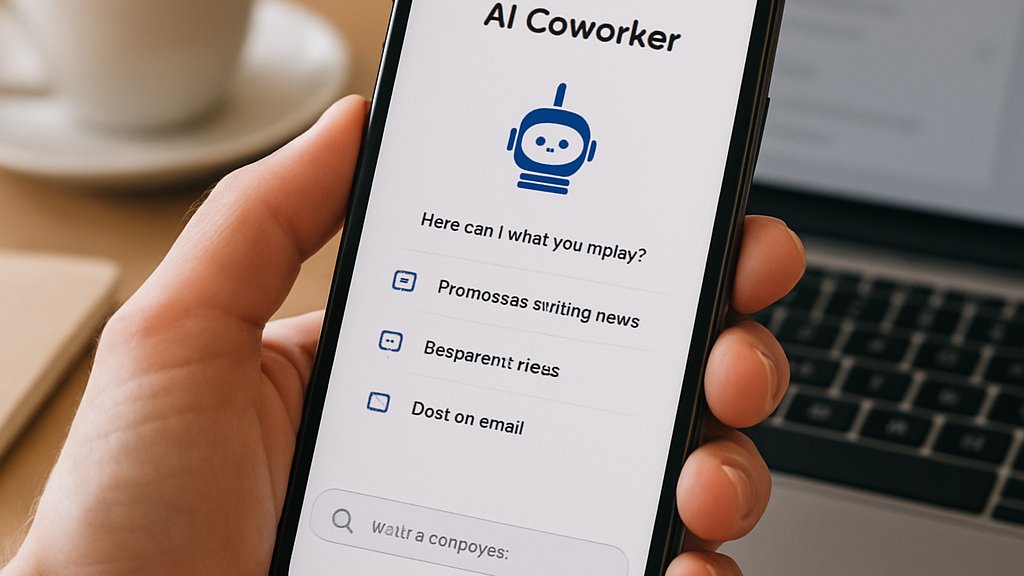
The company framed the shift with a simple promise. “Your work goes everywhere with you, and keeps going without you.” In practice, the AI Coworker Platform now offers synchronous chat plus background jobs across all devices.
Remote sessions execute in Anthropic’s cloud, circumventing battery or connectivity limits. Consequently, a marketing analyst can schedule data pulls overnight and approve summaries over breakfast.
These upgrades cement cross-device continuity for busy professionals. Nevertheless, feature parity still depends on the desktop client for deep system access. Next, we explore the specific capabilities available on every surface.
Features Across All Surfaces
Each surface shares core primitives: Projects, scheduled tasks, and approval checkpoints. However, differences emerge around file handling and connector depth.
- Cloud sessions run when personal devices are offline.
- Local-file handling remains desktop-exclusive for security.
- Browser and computer control require the Claude Desktop app.
- Connectors cover Gmail, Zoom, Drive, and MCP servers.
- Doubled usage limits apply until 5 August 2026.
Bearing those contrasts in mind, teams must align workflows to the strongest surface. Therefore, the AI Coworker Platform encourages hybrid usage rather than mobile-only reliance.
Feature matrices reveal mature chat parity yet diverging system privileges. In contrast, desktop presence remains essential for local database merges and browser automation. The next section examines how large firms can govern those privileges safely.
Enterprise Control And Governance
Anthropic added role-based access controls, spend caps, and analytics in April. Consequently, security teams monitor agent actions and costs inside familiar dashboards.
Audit logs capture every file touchpoint, preserving evidence for compliance reviews. Moreover, human-in-the-loop rules force approvals before Cowork sends emails or deletes records.
Such safeguards answer mounting concerns about autonomous agents editing critical enterprise workflows. Nevertheless, policy tuning still demands effort from administrators.
Executives see Cowork as a productivity assistant that aligns with strict governance regimes. Consequently, template policies ship for finance, legal, and healthcare enterprise workflows.
Professionals can enhance their expertise with the AI Agent Specialist™ certification. The course covers governance patterns specific to an AI Coworker Platform deployment.
Governance tooling lowers risk without crippling autonomy. Subsequently, competitive comparisons hinge on usability and oversight breadth. We now turn to real-world usage numbers.
Usage Data Insights
TechCrunch analyzed 1.2 million anonymized sessions from more than 600,000 organizations. Business-process operations dominated at 33.4%, overshadowing software development at 8.7%.
Furthermore, Anthropic noted that over 90% of work occurred outside coding contexts. The same dataset shows the productivity assistant pattern growing fastest among finance roles.
- 33.4% business operations tasks
- 16.4% content creation projects
- 8.7% software development flows
Consequently, copywriters, analysts, and project managers represent the fastest-growing cohorts. Usage metrics illustrate mainstream hunger for autonomous assistance. However, rivals are racing to capture that demand. The competitive picture comes into focus next.
Competitive Landscape And Stakes
Microsoft has previewed Copilot Cowork experiments that leverage similar agent frameworks. Meanwhile, OpenAI continues extending ChatGPT with plugins and workflow automation.
Moreover, partnerships with Zoom and AWS give Anthropic distribution leverage across collaboration suites. In contrast, pricing tiers may limit exposure compared with bundled Microsoft 365 offerings.
Industry observers frame the battle as an arms race for daily productivity assistant mindshare. Therefore, unique features like remote sessions and granular audit logs serve as differentiators.
Analysts note that the Anthropic product roadmap prioritizes open connectors and transparent safety disclosures. Such positioning contrasts with the proprietary posture of certain rivals.
Market watchers predict that whichever AI Coworker Platform integrates deepest will dominate. Competitive dynamics will sharpen as agent capabilities normalize. Nevertheless, user experience and trust could decide the winner. Potential obstacles deserve equal scrutiny.
Adoption Prospects And Risks
Early access is limited to the Max plan during the staged web rollout. Pricing and plan gating may deter smaller firms despite curiosity.
Additionally, local-file dependence could stall pure browser organizations. Enterprise workflows often restrict desktop installations for security reasons.
Agentic safety concerns remain top of mind for auditors. However, Anthropic emphasizes surfaced approvals to mitigate runaway actions.
Moreover, the mobile app requires thoughtful notification management to avoid alert fatigue. Stakeholders await forthcoming Anthropic product documentation detailing server-side audit trails.
Pilot participants already report that the AI Coworker Platform reduced manual reconciliations. Teams willing to pilot now benefit from doubled usage limits until 5 August. Therefore, many managers treat the window as a low-risk evaluation phase.
Adoption barriers revolve around cost, trust, and client software. Subsequently, measured rollouts with clear governance can ease hesitation. Implementation guidance follows in the next subsection.
Access Steps Explained
Users on web navigate to claude.ai and click Cowork in the sidebar. Mobile app users update to the latest build and repeat the sidebar action.
Desktop capabilities require installing Claude Desktop on Windows, macOS, or Linux. Consequently, local connectors like Google Drive activate only when the desktop agent runs.
Moreover, administrators can enable governance features from the team dashboard before broad release. Support pages update continuously to reflect each phase of the web rollout timeline.
These simple steps accelerate hands-on familiarity. In contrast, deeper customization depends on IT policy alignment. We conclude with strategic takeaways.
The AI Coworker Platform login honors existing subscriptions across devices. Consequently, activation feels familiar to most users.
Claude Cowork now threads through every screen and schedule. Moreover, cross-surface tasks, cloud sessions, and rich governance raise the adoption ceiling. Enterprises gain a versatile productivity assistant while retaining auditability. Nevertheless, cost tiers, desktop dependencies, and policy alignment still influence uptake. Professionals can future-proof their roles by mastering best practices and earning relevant certifications. Therefore, explore Cowork today and consider formal training to lead your organization’s next automation wave.
Disclaimer: Some content may be AI-generated or assisted and is provided ‘as is’ for informational purposes only, without warranties of accuracy or completeness, and does not imply endorsement or affiliation.


