

AI CERTS
3 hours ago
Zero Trust Strategies Elevate AI Cloud Security
However, bolting controls onto legacy stacks will not suffice. Cloud providers, regulators, and security vendors are instead merging Zero Trust principles with advanced AI tooling. This article examines how that integration is unfolding, why it matters, and what technical leaders must do next.
Market Forces Converge Fast
Microsoft, Google, and AWS have all released Zero Trust playbooks for generative workloads during 2026. Additionally, Zscaler and Netskope unveiled agent governance features that integrate with provider identity fabrics. These coordinated launches signal a maturing ecosystem ready to protect complex AI supply chains.
Analysts connect this momentum to exploding agent numbers and stricter regulations. In contrast, surveys reveal only single-digit percentages of firms reach full Zero Trust maturity today. Therefore, demand for turnkey controls dominates boardroom discussions about AI cloud security.
- Regulators framing AI misuse as critical infrastructure risk
- Providers embedding confidential computing by default
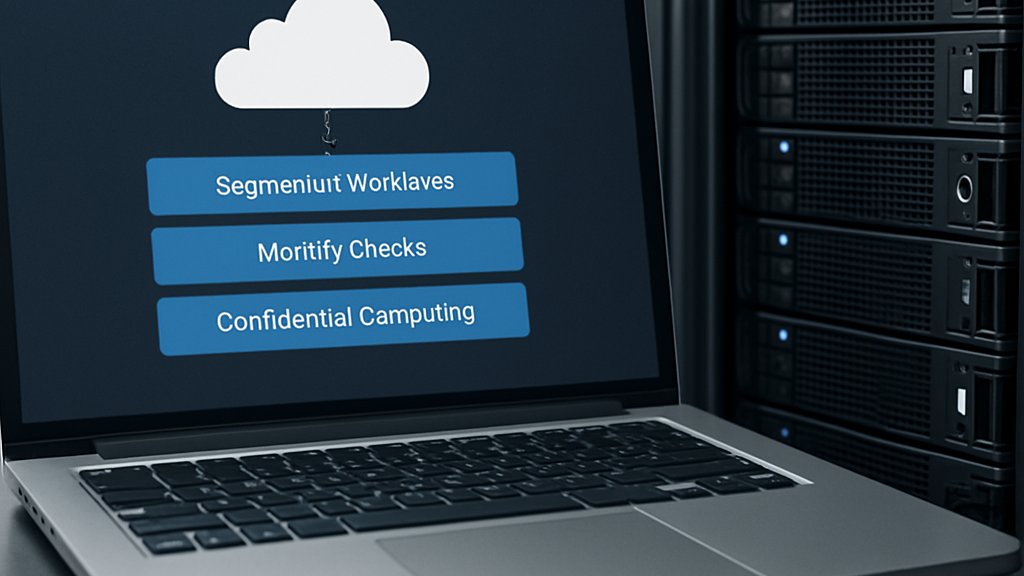
- Security vendors offering workload-aware segmentation
- Boards allocating budget for AI cloud security transformation
These forces create both urgency and alignment. Consequently, architects now require clear principles to guide investment.
Converging market, regulatory, and vendor pressure makes AI cloud security unavoidable. However, understanding Zero Trust fundamentals is the essential next step.
Zero Trust Fundamentals Explained
Zero Trust Architecture assumes no implicit trust across networks, identities, or workloads. Moreover, every request must pass least-privilege checks and continuous verification. NIST SP 800-207 remains the authoritative reference for these requirements.
For cloud architects, Zero Trust translates into identity centric design, microsegmentation, and strict access policies. These controls must cover users, services, and now AI agents, fulfilling cloud governance mandates.
Adopting these fundamentals strengthens AI cloud security without delaying innovation. Furthermore, the model sets the stage for selecting technical building blocks.
Zero Trust delivers verifiable least privilege for every entity. Nevertheless, architects still need concrete mechanisms to apply these principles.
Key Architectural Building Blocks
Confidential computing enclaves protect data-in-use with hardware isolation and remote attestation. Additionally, Google Cloud’s Confidential VM, AWS Nitro Enclaves, and Microsoft Azure confidential nodes all support verifiable proof of workload integrity.
Microsegmentation enforces fine-grained network boundaries around models, vector stores, and agent runtimes. In contrast, traditional perimeter firewalls cannot follow dynamic AI workflows that scale within seconds.
Identity driven access policies now extend to each agent. Moreover, IAM systems grant scoped tokens that expire quickly and log context for forensic review.
- Agent identity lifecycle services
- Confidential compute with attestation gates
- Telemetry pipelines for prompt logging
- Automated response playbooks for drift
Combining these elements forms a layered defense model called AI cloud security fabric by several vendors. Therefore, reference architectures outline how microsegmentation, access policies, and confidential computing converge to deliver holistic AI cloud security outcomes.
Hardware isolation, granular segmentation, and adaptive identity controls create a resilient stack. However, turning design into production brings new hurdles.
Implementation Challenges And Tradeoffs
Many enterprises carry legacy workloads that resist agent identity integration. Such fragmentation undermines cloud governance efforts.
Confidential computing adds cost and latency, while pervasive microsegmentation can complicate troubleshooting. Consequently, architects must weigh risk reduction against performance and developer experience.
Academic studies reveal differences in attestation depth between providers. Therefore, verifying each attestation chain remains critical before high-risk data enters production.
Failure to validate these nuances could erode AI cloud security gains and create blind spots attackers exploit.
Complexity, cost, and knowledge gaps hamper progress. Nevertheless, proven implementation patterns already exist for pragmatic teams.
Actionable Guidance For Architects
First, treat every agent as a unique identity with lifecycle hooks, secrets rotation, and least-privilege access policies. Moreover, bind each agent to tenant metadata for precise audit trails.
Second, deploy confidential computing for regulated datasets and intellectual property. Additionally, gate workload startup on remote attestation validation and compliance tags.
Third, integrate AI telemetry into existing SIEM and SOAR pipelines. Consequently, security operations can investigate prompt abuse, data leakage, and model drift using familiar playbooks.
Finally, continuously test defenses with red-team prompts and chaos engineering. This practice keeps AI cloud security aligned with evolving threats. Professionals can enhance their expertise with the AI Architect+ certification.
Following these steps delivers incremental wins and board level confidence. In contrast, ignoring structured guidance risks runaway complexity.
Strategic Roadmap And Outlook
Gartner expects half of enterprises to embed Zero Trust data controls by 2028. Moreover, providers will keep embedding confidential hardware into mainstream SKUs, shrinking adoption barriers.
Meanwhile, vendors race to automate microsegmentation and policy creation using generative assistants. Consequently, architects will shift focus from manual configuration to strategic oversight.
Regulatory pressure will further cement cloud governance mandates around auditability, explainability, and resilient AI pipelines.
The roadmap points toward continuous verification, measurable assurances, and automated controls. Therefore, early adopters can seize competitive advantage by planning now.
Zero Trust, confidential computing, and granular identity design are converging to safeguard modern AI workloads. Additionally, market dynamics, regulation, and vendor innovation are accelerating adoption. Cloud architects must master microsegmentation, access policies, and agent telemetry to close risk gaps. However, implementation demands thoughtful tradeoffs and skilled teams.
Following the actionable roadmap outlined here enables resilient, future-proof architectures. Consequently, organizations can innovate with confidence while satisfying auditors and boards. Take the next step today by exploring advanced credentials and share these insights with your engineering leadership.
Disclaimer: Some content may be AI-generated or assisted and is provided ‘as is’ for informational purposes only, without warranties of accuracy or completeness, and does not imply endorsement or affiliation.


