

AI CERTS
3 hours ago
How AWS and Nvidia Elevate AI Production Infrastructure at Scale
Readers will learn how the AWS partnership advances the inference stack while raising new planning questions. Additionally, we explore model ops tooling and FinOps tactics that keep budgets predictable. Finally, actionable guidance and certification resources support teams preparing for production rollout. In contrast, organizations ignoring emerging AI Production Infrastructure standards risk technical debt and slower releases.
GTC 2026 Stack Reveal
NVIDIA used GTC 2026 to showcase a cloud ready reference stack built jointly with AWS. Moreover, Adam Selipsky highlighted fifteen years of co-design work culminating in turnkey clusters. The headline pledge involves deploying over one million GPUs starting next year. Meanwhile, new EC2 families, including RTX PRO 4500 Blackwell Server Edition and GH200 NVL32, enter preview. The expanded AWS partnership also covers Nemotron distribution agreements.
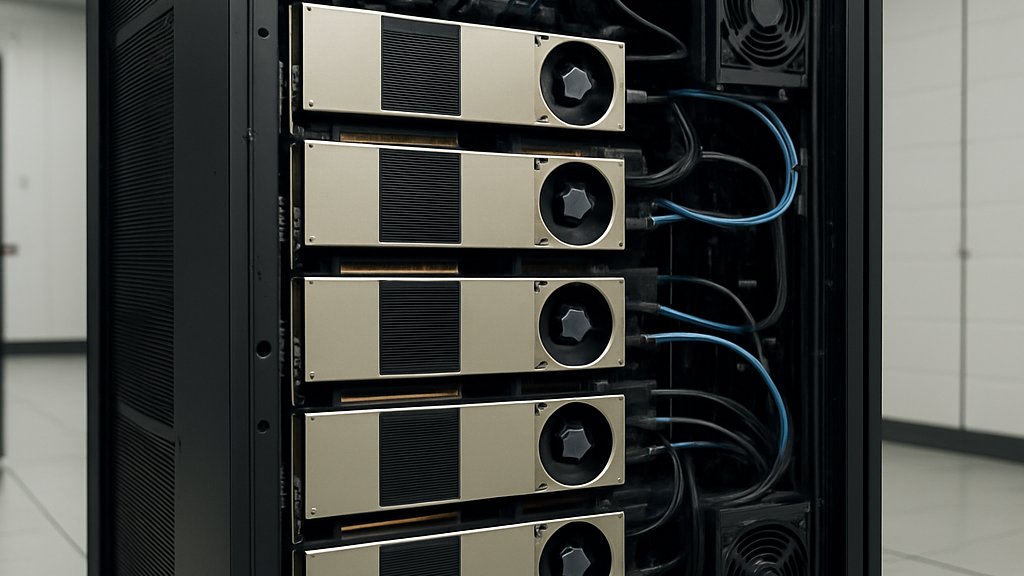
Consequently, architects gain access to shared memory instances offering 20 TB per node and 4.5 TB HBM3e. Jensen Huang stressed that the collaboration spans hardware, libraries, and generative services like Bedrock. This vertical integration accelerates proofs of concept and smooths enterprise deployment pipelines. As a result, the duo positions their AI Production Infrastructure as ready for immediate enterprise workloads.
The GTC reveal positions AWS as the flagship launchpad for NVIDIA’s newest silicon and software. However, bigger clusters alone do not resolve utilization or governance gaps.
Subsequently, we examine how Blackwell hardware scaling shapes workload economics.
Scaling With Blackwell Hardware
Blackwell GPUs introduce FP8 precision and fourth-generation Tensor Cores, boosting training throughput by 2×. Furthermore, NVIDIA Dynamo 1.0 claims up to 7× faster generative inference on the same chips. GH200 NVL32 instances link 32 Grace Hopper Superchips through NVLink and NVSwitch. Therefore, teams can keep trillion-parameter models in shared memory, eliminating slow data hops. Such enhancements sit at the heart of next-generation AI Production Infrastructure commitments.
In contrast, earlier H100 clusters relied on segmented memory and external KV-cache relocation. Project Ceiba demonstrates internal scale: 16,384 GH200 chips deliver about 65 exaflops for NVIDIA research. Enterprises expect similar density within AWS UltraClusters backed by EFA networking and Nitro isolation. Nevertheless, GPU overprovisioning risks idle capacity when inference traffic dips.
Blackwell platforms expand raw headroom and memory bandwidth for both training and inference stack workloads. Consequently, capacity planning becomes as critical as chip selection.
Next, we explore NVLink Fusion and its impact on cross-node performance.
NVLink Fusion Deepens Integration
NVLink Fusion extends NVIDIA’s proprietary interconnect from the board to the rack plane. Additionally, AWS will bake NVLink Fusion into custom racks, marketed as NVL72 factories. The fabric offers 1.8 TB/s aggregate bandwidth, slashing latency for multi-GPU workflows. Consequently, developers can shard attention blocks or agent memories without complex RPC choreography. This fabric cements the AI Production Infrastructure vision of shared memory at cloud scale.
EFA complements this design by offloading transport overhead, while NIXL handles KV-cache moves across nodes. Moreover, standardized cabling and MGX chassis simplify replacement and region replication. However, proprietary optics and switches may tighten vendor lock-in.
NVLink Fusion promises near-on-prem performance within managed clouds. Nevertheless, interoperability questions linger for multi-cloud strategies.
Therefore, software layers and model ops practices gain renewed importance.
Software And Model Ops
The stack ships with CUDA, cuDNN, TensorRT, and the new Dynamo runtime preconfigured. Furthermore, Nemotron 3 Super foundation models join Amazon Bedrock as managed endpoints. Teams can deploy chat agents through simple API calls, skipping container builds. Model ops engineers still handle version pinning, rollback, and prompt regression tests. Unified toolchains turn raw compute into coherent AI Production Infrastructure that ops teams can script.
Additionally, Lepton marketplace routing directs workloads to the cheapest compliant cluster, including partner clouds. Consequently, operations staff must monitor cross-provider latency and data-egress fees. Professionals may validate skills through the AI Engineer™ certification. Moreover, certified staff often accelerate compliance reviews and capacity requests.
Integrated runtimes quicken deployment, yet model ops discipline remains vital. Subsequently, we address cost control through FinOps practices.
Meanwhile, soaring inference demand pressures budgets across industries.
Managing FinOps Cost Pressures
State of FinOps 2026 found 98% of organizations now track AI spending. Moreover, inference stack charges dominate monthly invoices as usage leaves pilot scale. Blackwell chips improve efficiency, yet idle rates still average 20% in many logs. Therefore, teams deploy autoscaling, token-level metering, and micro-batch techniques to lift utilization. Cost observability must therefore become a native component of AI Production Infrastructure, not an afterthought.
Additionally, reserved capacity blocks secure discounts against on-demand surges. In contrast, spot GPU pools remain scarce due to rising demand. Numbered priorities often help leadership sequence investments:
- Quantize models to FP8 or Int4 where accuracy holds.
- Right-size context windows based on production telemetry.
- Route inference calls to the closest region with open NVL capacity.
Consequently, enterprises combine these levers with budget alerts and chargeback models. Reserved instances negotiated under the AWS partnership pricing tiers lower baseline rates. Close collaboration between model ops and finance yields realtime cost signals.
Disciplined FinOps unlocks Blackwell value without runaway bills. However, risk exposure extends beyond economics.
Next, we analyze strategic and operational risks.
Strategic Enterprise Deployment Roadmap
Enterprises should align application criticality with GPU reservation horizons. Furthermore, staged rollouts starting in dev sandboxes limit blast radius. Cross-region replication ensures continuity when supply shocks hit a single zone. Nevertheless, compliance officers require clarity on data residency under NVLink shared memory. Aligning roadmaps with vendor release cycles safeguards AI Production Infrastructure longevity.
Additionally, integration testing must validate Dynamo upgrades against latency SLOs. Vendor roadmaps show annual silicon refreshes; lock-in clauses may hinder migration. Therefore, contract teams should negotiate exit ramps and shared benchmarking rights. Review clauses within the AWS partnership documents for exit scenarios. Governance reviews should include model ops runbooks.
Careful sequencing and contractual foresight reduce future migration pain. Consequently, leaders stay agile amid rapid silicon cycles.
Finally, we weigh overarching risks and mitigations.
Key Risks And Mitigations
Supply constraints may delay Blackwell arrivals, especially under export controls. Moreover, vendor consolidation can narrow negotiating leverage. In contrast, an open inference stack keeps portability options alive. Therefore, adopting Kubernetes-based GPU operators and open weights hedges dependency. Maintaining portable AI Production Infrastructure also shields teams from sudden policy shifts.
Additionally, monitoring tools should audit utilization per model, not per cluster. Subsequently, right-sizing becomes data-driven rather than speculative. Nevertheless, culture change often eclipses technical hurdles.
Risk mitigation blends technical safeguards with procurement discipline. Meanwhile, playbooks evolve as standards mature.
We conclude with actionable next steps.
AWS and NVIDIA now offer an end-to-end stack that compresses time from prototype to production. Consequently, enterprises gain unmatched performance yet confront cost governance and lock-in dilemmas. However, proactive FinOps, contract levers, and open tooling balance these concerns. Moreover, adopting disciplined model ops ensures stable releases amid rapid runtime updates. Teams that master the emerging AI Production Infrastructure landscape secure competitive advantages. Therefore, invest in capacity planning, certification, and cross-platform benchmarking today. Explore additional resources and advance your career by pursuing the previously linked AI Engineer™ credential.
Disclaimer: Some content may be AI-generated or assisted and is provided ‘as is’ for informational purposes only, without warranties of accuracy or completeness, and does not imply endorsement or affiliation.


