

AI CERTS
5 hours ago
AutoJack Spurs Agent Exploit Risk Reality Check
Readers will grasp technical flow, ecosystem exposure, and strategic controls. Therefore, leadership can gauge real business impact and prioritize investments accordingly.
Origin Of Exploit Chain
AutoJack surfaced on community boards during 19 June 2026. Meanwhile, analysts quickly mapped the exploit onto a growing MCP lineage. The chain starts when AI agents browse an attacker page. Subsequently, client scripts connect to unsecured local MCP WebSocket endpoints. Those endpoints often expose privileged tool loading features. Consequently, uploaded descriptors trigger arbitrary code execution with user privileges. Therefore, organizations confront a tangible Agent Exploit Risk that supersedes theoretical debates.
Researchers liken the flow to HashJack, which abused URL fragments instead. Nevertheless, the single-page entry makes AutoJack disturbingly accessible. This accessibility amplifies Agent Exploit Risk across unsegmented desktops and servers. In contrast, earlier exploits demanded multi-step social engineering.
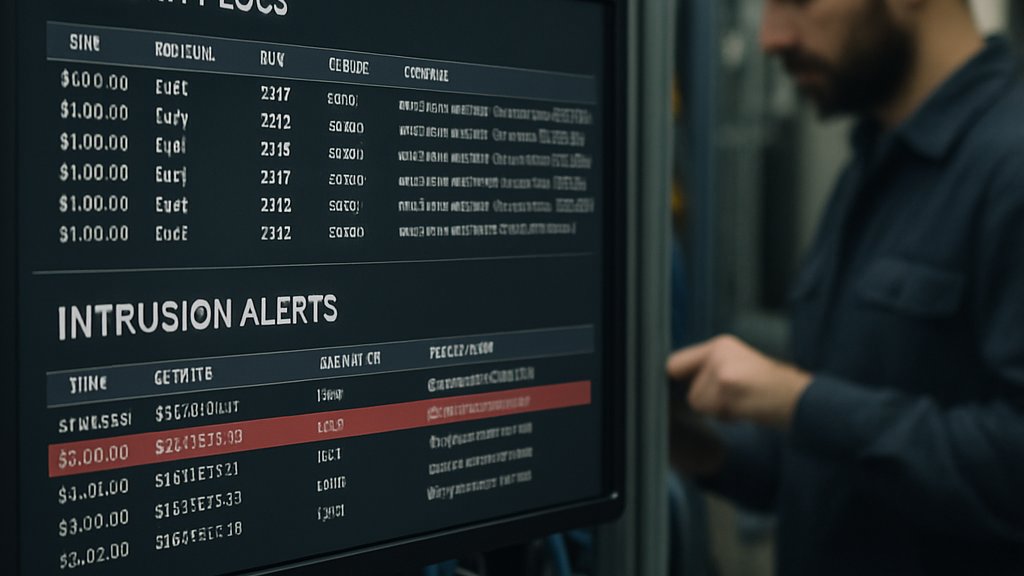
AutoJack inherits known weaknesses yet lowers the attacker cost sharply. However, to defend effectively teams must analyze the technical sequence next.
Technical Attack Sequence Details
Trigger To Impact Path
Attack modeling reveals four discrete stages from visit to compromise. Firstly, the malicious page embeds invisible iframes and websocket probes. Secondly, scripts brute-test localhost ports until an MCP WebSocket responds. Thirdly, crafted JSON registers a fake tool descriptor containing shell commands. Consequently, the agent loads that descriptor, assuming it is trusted. Fourthly, the agent invokes the tool, granting immediate code execution on the host.
- Stage 1: Browser visit triggers probes.
- Stage 2: Port scan finds MCP WebSocket.
- Stage 3: Malicious descriptor registers silently.
- Stage 4: Code execution follows tool call.
Moreover, no authentication blocks these requests on default setups. The ease of interaction intensifies Agent Exploit Risk for every integrated workstation. In contrast, hardened endpoints require tokens, breaking the chain early. These technical specifics clarify where controls should anchor.
AutoJack's four stages reveal multiple choke points. Therefore, scale and exposure metrics illustrate urgency.
Scale And Exposure Data
OCTSec scans place agent skill repositories at 58,000 items and counting. Furthermore, researchers identified 42,665 OpenClaw hosts online in February. Of these, 5,194 systems remained open to code execution on disclosure day. Consequently, adversaries enjoy a sizable attack surface without targeted reconnaissance. A short numerical recap underscores the breadth.
- 93% of surveyed OpenClaw nodes lacked authentication.
- 58,000+ community skills remain unverified.
- HashJack incidents grew 37% quarter-over-quarter.
Moreover, MCP WebSocket defaults stay unchanged across many forks. This consistency simplifies exploit automation using shared scripts. The figures position Agent Exploit Risk as a systemic business hazard, not niche hype. Nevertheless, numbers alone rarely convince executives. Therefore, expert commentary adds necessary context.
Wide exposure metrics validate alarm. Subsequently, we examine industry perspectives.
Industry Voices And Analysis
Snyk engineers stress that models cannot separate data from directives reliably. Consequently, prompt injections remain lethal despite filtering attempts. F5 Labs analysts describe URL-fragment exploits as launchpads for full code execution. In contrast, OCTSec champions defense-in-depth over single hotfixes. Moreover, their 2026 guide ranks Agent Exploit Risk above kernel side-channel threats. Researchers repeatedly highlight unguarded MCP WebSocket access as a root cause. Meanwhile, CISOs worry that tightening permissions could slow AI agents delivering value.
Nevertheless, experts argue that comprehensive risk registers reassure auditors and investors. Such registers classify every cyber vulnerability discovered during threat modeling. Therefore, balanced governance frameworks emerge as the consensus recommendation.
Expert insights confirm technology gaps. Consequently, mitigation guidance takes center stage next.
Mitigation Steps For Enterprises
Effective defenses start with isolation. Consequently, run AI agents within containers or virtual desktops featuring no shared mounts. Additionally, enforce strict egress filtering to block unplanned outbound traffic. Teams should harden every MCP endpoint using tokens, mutual TLS, and origin checks. Moreover, pin tool versions and disable automatic package installation. Supply-chain scanning mitigates latent cyber vulnerability exposures before production rollout.
- Runtime allowlists restrict unexpected binaries.
- Behavior-based EDR detects abnormal agent actions.
- Regular audits verify exposed ports.
- Tabletop drills improve incident muscle memory.
Professionals boost expertise via the AI Ethical Hacker™ certification. The credential aligns controls with emerging Agent Exploit Risk guidance. Nevertheless, technology alone cannot eliminate AutoJack style threats. Therefore, cross-functional rehearsals remain vital for resilience.
Layered mitigation reduces immediate blast radius. Subsequently, a strategic roadmap cements long-term posture.
Strategic Agent Security Roadmap
Roadmaps should balance speed and assurance. Firstly, classify AI agents based on privilege and business criticality. Secondly, map each agent's data flows and dependency touchpoints. Consequently, owners can apply proportionate controls rather than blanket bans. Thirdly, embed continuous threat modeling into agile sprints. Moreover, feed new cyber vulnerability findings directly into backlog grooming. Quarterly penetration tests should simulate AutoJack and HashJack scenarios. Meanwhile, metrics must track unresolved Agent Exploit Risk tickets to ensure visibility. Ultimately, the document guards against escalating Agent Exploit Risk across releases. Therefore, executives gain quantified insights for budget planning.
A living roadmap links tactical fixes to strategy. Consequently, closing thoughts will recap priorities.
Conclusion And Future Outlook
AutoJack exemplifies how minimal friction can topple mature defenses. However, the community response outlines clear containment tactics. Isolation, authentication, and vigilance together blunt most one-page assaults. Moreover, systematic roadmaps translate actions into sustained governance. Regulators will likely highlight Agent Exploit Risk in upcoming guidance. Consequently, early adopters of linked certifications gain boardroom credibility. Readers should review sandbox posture, audit MCP settings, and schedule a tabletop today. Explore further frameworks and gain credentials to stay ahead. Informed steps now secure tomorrow’s automated enterprises.
Disclaimer: Some content may be AI-generated or assisted and is provided ‘as is’ for informational purposes only, without warranties of accuracy or completeness, and does not imply endorsement or affiliation.


