

AI CERTS
4 hours ago
New U.S. AI Export Controls Reshape China Chip Sales
Furthermore, it dissects stakeholder views and offers compliance tactics for 2026 and beyond. Throughout, we highlight how Mythos narratives collide with operational facts. Readers will gain practical insight while meeting urgent national security demands.
Export Rules Shift Again
In contrast, the fresh BIS final rule effective 15 January 2026 softens the earlier hard line. The shift moves select accelerators into a nuanced license review instead of a presumption of denial. However, exporters must satisfy tight conditions before a shipment leaves any U.S. port. Applicants must prove domestic availability, prevent military diversion, and accept independent testing. Moreover, total processing performance shipped to China cannot exceed 50% of identical U.S. deployments. Export lawyers note that the numeric limits mirror earlier supercomputer rules. Observers expect other jurisdictions to mirror the framework within months.
Therefore, compliance teams now navigate performance caps of 21,000 TPP and 6,500 GB/s bandwidth. Industry observers label the design a classic Mythos of openness masking continued restriction. Nevertheless, many firms still celebrate the potential revenue unlocked by AI Export Controls. The section concludes now: rules have moved, yet complexity remains. Subsequently, technical thresholds decide which chips qualify for licenses.
Key Technical Thresholds Explained
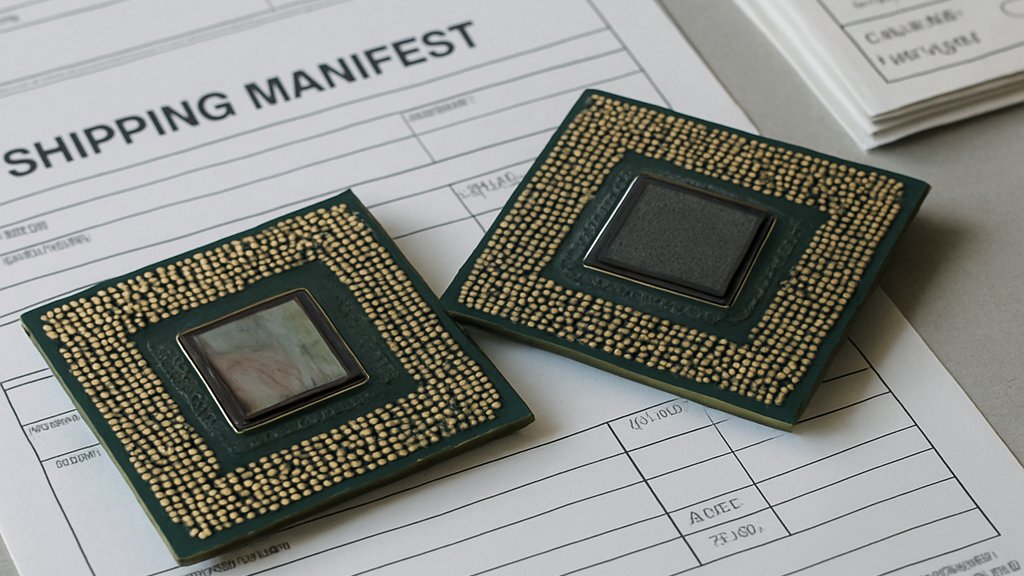
Every applicant must measure three metrics before filing paperwork. TPP under 21,000, DRAM bandwidth under 6,500 GB/s, and matching interconnect speed define eligibility. These limits sit at the core of AI Export Controls. Consequently, NVIDIA binned the H200 to meet these lines while AMD trimmed MI325X clocks. Such engineering gymnastics preserve product performance yet skirt outright prohibition. Additionally, the rule demands U.S. lab testing for each exported unit. Testing capacity has become a pinch point, with staffing at BIS reportedly down 20%. Queue times for testing slots already stretch to six weeks in Silicon Valley.
Vendors are rushing to certify alternate labs to spread workload. Mythos persists that cloud buyers can simply bypass software limits through cyber models rewriting firmware. In contrast, hardware fuses and KYC requirements counter that claim. Cross-border access remains conditional despite numeric clarity. Technical caps give lawyers clarity, although they introduce design inefficiency. However, reactions across government and industry remain far from uniform.
Stakeholder Reactions Diverge Widely
U.S. chipmakers cautiously welcomed the case-by-case approach. Stakeholders tie their forecasts to AI Export Controls timelines. NVIDIA’s CFO still reported zero H200 revenue from China during early 2026 earnings. Nevertheless, management said filings are pending and tariffs can be passed along. Chinese hyperscalers expressed frustration over opaque timelines and cross-border access hurdles. Moreover, Beijing hinted at retaliatory import paperwork that could stall approvals indefinitely. Think tanks at CNAS argued the policy balances commercial interest with national security concerns.
Former Commerce official Eric Hirschhorn countered that trading chips for revenue undercuts security. Policy backlash emerged on Capitol Hill, where lawmakers seek detailed license disclosures. Consequently, BIS faces pressure from both hawks and industry lobbyists. Investors analyze each hearing transcript for hints on license velocity. Meanwhile, Chinese media outlets downplay the policy, citing domestic accelerator progress. Reactions range from relief to alarm, showing no consensus. Next, we inspect the grinding realities of implementation.
Implementation Pain Points Emerge
Paper policy meets concrete bottlenecks inside warehouses and test labs. Independent laboratories must verify every shipment, adding weeks and extra fees. Meanwhile, BIS license staff shortages lengthen processing queues. Companies complain that approvals languish despite AI Export Controls promising flexibility. Furthermore, the 25% duty raises working capital needs for exporters awaiting customs clearance. Cyber models predicting demand now incorporate tariff exposure and storage costs. Smuggling risks also rise, according to investigative reports on black-market GPU flows.
Warehouse operators now schedule cranes around tentative export windows. Insurance premiums for in-transit cargo have nudged higher due to policy uncertainty. Nevertheless, exporters who comply hope backlogs shrink once staffing recovers. Managers track AI Export Controls metrics in enterprise systems. Logistics, staffing, and verification undermine theoretical market openings. Therefore, strategic debates over security advantages intensify.
Strategic Security Debate Intensifies
Supporters argue limited sales sustain U.S. influence over critical supply chains. In contrast, critics warn that accelerated Chinese research in cyber models erodes national security edges. Moreover, scholars fear cross-border access to top silicon boosts dual-use weapon systems. The Mythos of absolute technological lead, they note, dissolves once hardware ships abroad. Policy backlash inside Congress reflects these strategic rifts.
Consequently, oversight committees now demand quarterly license metrics and country end-use audits. BIS, however, must tread carefully to avoid trade retaliation. Debates over AI Export Controls dominate recent technology hearings. Future changes to AI Export Controls will likely follow geopolitical shifts. Both camps claim to protect security, yet propose opposite remedies. Compliance teams need actionable guidance amid this contested space.
Compliance Playbook Moving Forward
Exporters should map each sale against technical thresholds before price negotiations. Create an integrated dashboard that tracks TPP, DRAM, tariff cost, and license status. Document every board discussion to maintain an audit trail. Additionally, maintain third-party test appointments months in advance to avoid warehouse idling. Incorporate cyber models for demand forecasting, yet align them with real KYC controls. Implement strict physical and remote access logs to bolster national security assurances.
Moreover, prepare briefing packets for congressional queries to preempt policy backlash headlines. Professionals can enhance their expertise with the AI Legal Specialist™ certification. Consequently, trained staff can articulate how AI Export Controls support corporate governance. AI Export Controls also require continuous board oversight. Nevertheless, review this checklist before every customs filing. Structured workflows and skilled teams convert uncertainty into manageable risk. The article now concludes with final insights.
- 25% ad valorem duty on H200 and MI325X shipments.
- 50% TPP cap relative to U.S. installed base.
- 21,000 TPP and 6,500 GB/s DRAM thresholds.
- Zero recorded China revenue as of early 2026 filings.
AI Export Controls have re-entered global commerce with new nuance and higher stakes. The 2026 rule offers pathways for sales, yet embeds strict performance caps, tariffs, and testing. Meanwhile, Mythos and reality clash across boardrooms, labs, and legislative hearing rooms. Consequently, success depends on mastering thresholds, anticipating policy backlash, and guarding national security interests. Certified specialists armed with cyber models and governance frameworks will shape compliant growth. Therefore, act now: audit your pipeline, train your teams, and leverage the linked certification to stay ahead. Insightful leaders will benchmark internal metrics against approved licenses issued to peers. Finally, transparency and agility will separate market winners from frustrated bystanders.
Disclaimer: Some content may be AI-generated or assisted and is provided ‘as is’ for informational purposes only, without warranties of accuracy or completeness, and does not imply endorsement or affiliation.


