

AI CERTS
4 hours ago
Cumulo Advances Sovereign AI Security Operations
This article dissects Cumulo’s launch, market context, architecture, strengths, and unresolved questions. Readers will gain actionable insight into building resilient, compliant, zero-day defense strategies. Additionally, the piece highlights relevant certifications for deepening practitioner expertise. Understanding these dynamics is critical for any leader shaping future Sovereign AI Security roadmaps. In contrast, ignoring them risks strategic blind spots.
Market Forces Driving Demand
Global regulators increasingly insist on local data governance. Therefore, sovereign AI deployment has shifted from niche strategy to board priority. IDC reports 63% of enterprises plan sovereign cloud adoption within two years. Moreover, projected spending may hit $400 million by 2029, depending on scope definitions.
Simultaneously, offensive automation fuels sophisticated zero-day defense challenges for defenders. Consequently, traditional human-centric SOC workflows struggle with alert volume and response latency. GCHQ director Anne Keast-Butler recently demanded agentic AI at national scale to counter this acceleration. Her speech underscored the urgency facing UK cybersecurity teams.
Market momentum, regulatory pressure, and threat velocity jointly create fertile ground for Sovereign AI Security vendors. However, the pressure also exposes immature offerings that oversell sovereignty without operational depth. These drivers set the stage for Cumulo’s entrance.
Demand signals undeniably favor localized, AI-driven defence. However, rigorous validation will determine eventual winners. Let us examine Cumulo next.
Cumulo Platform Key Overview
Cumulo positions itself as a UK-owned, AI-first SOC platform with multi-tier service options. Standard tier delivers proactive monitoring, while Enterprise tier adds predictive analytics and unified IT/OT visibility. Furthermore, the vendor claims up to 80% log-ingestion cost savings through selective collection. Rob Demain, e2e-assure’s CEO, says the platform continuously builds understanding as data arrives, yet retains human judgement.
Additionally, Cumulo offers more than 50 integrations and digital twin modelling of each client estate. These capabilities aim to shorten mean time to detect and respond across security operations. Nevertheless, public launch materials lack independent benchmarks supporting such performance claims.
The product’s sovereign stance emerges through local large language models dedicated to each customer tenancy. Consequently, sensitive telemetry never traverses foreign jurisdictions. This commitment aligns squarely with Sovereign AI Security principles demanded by regulated sectors.
Cumulo outlines an ambitious, compliance-friendly feature set. However, deeper architectural scrutiny remains essential. Architecture details follow next.
Architecture Choices And Safeguards
Cumulo splits intelligence across three model layers. First, a local reasoning layer processes highly sensitive context using customer-owned keys. Second, a security-intelligence aggregator collates logs, threat feeds, and asset metadata. Third, a frontier model layer enriches non-sensitive content with external generative services. Moreover, cross-checking logic named Cumulo Analyst Helper performs anti-hallucination validation between models.
Therefore, analysts receive suggested responses only after multiple corroborating checks. In contrast, mainstream SIEM products usually rely on single deterministic correlation rules. Digital twins add an isolated simulation environment for patch impact tests and zero-day defense rehearsals.
- Local inference for sensitive data
- Multi-layer cross-validation to avoid hallucination
- Digital twins for safe testing
- Human analysts in final loop
These safeguards echo Cloud Security Alliance recommendations for transparent, auditable AI pipelines. However, Cumulo has yet to release red-team evidence proving false-positive reduction at scale. Consequently, potential buyers should request empirical validation before production deployment.
Cumulo’s layered architecture appears thoughtful. Nevertheless, independent proof will cement trust. Operational domains introduce further complexity.
Balancing IT OT Security
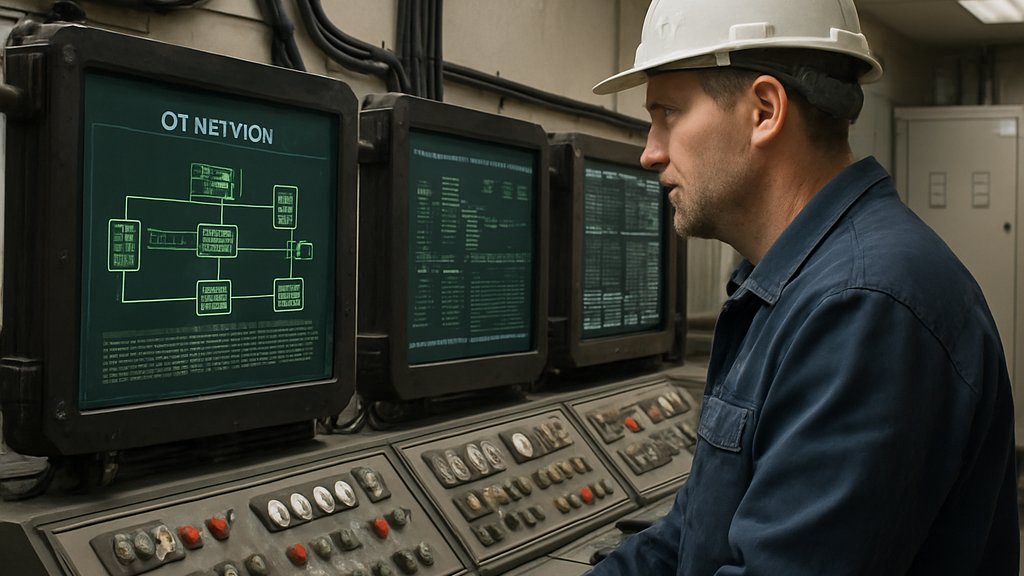
Industrial operators demand unified visibility across converging IT and OT networks. OT security incidents can halt production lines and jeopardize safety. Furthermore, many legacy controllers lack modern logging or patching capabilities. Cumulo’s Enterprise tier promises continuous digital twins of both realms, supporting safe attack simulations.
Additionally, SC-cleared analysts remain in the loop to interpret model suggestions against operational safety constraints. This human oversight addresses regulatory requirements inside UK cybersecurity frameworks governing critical infrastructure. However, real-world deployments must validate latency and determinism before touching plant environments.
Practitioners at recent conferences cautioned that sovereign AI alone will not fix identity governance gaps. In contrast, rigorous key management and role design still underpin reliable security operations. Therefore, OT security programmes integrating Cumulo should embed strict change-control workflows.
Integrated IT-OT monitoring offers compelling risk reduction. Yet cautious rollouts will protect safety. Risk discourse now shifts to analyst warnings.
Risks And Analyst Warnings
Independent experts highlight several unresolved issues surrounding Sovereign AI Security deployments. Firstly, sovereign models raise cost and hardware management burdens. Secondly, CSA warns of vendor dependency when customers rely on one foundation model provider. Consequently, multi-vendor portability and contract exit clauses become vital.
Moreover, sovereign AI hype sometimes masks the importance of identity hygiene and telemetry governance. CSO Online summarised it starkly: sovereign cloud buys jurisdiction; identity governance buys control. Meanwhile, practitioners demand transparent audit logs to verify anti-hallucination layers perform as advertised.
Budget holders must also reconcile promised 80% ingestion savings with integration labour costs. Therefore, proofs of concept and red-team exercises are indispensable before signing multi-year contracts. Practitioners can deepen expertise via the AI Security Specialist™ certification.
UK cybersecurity leaders must weigh these cautions before allocating scarce resilience budgets. Vendor promises look attractive but unverified. Consequently, due diligence remains paramount. Finally, we explore future trajectories.
Future Of Sovereign Operations
Regulators intend to bake machine-speed automation directly into national SOC missions. GCHQ’s blueprint sets an influential precedent for global security operations evolution. Consequently, vendors integrating Sovereign AI Security principles stand to capture early procurement waves. However, lasting success depends on measurable outcomes, open standards, and transparent risk reporting.
Industry watchers anticipate convergence between sovereign AI platforms and managed detection services. Moreover, hyperscalers may release embedded compliance attestation APIs, simplifying audits. Subsequently, competition could drive down the cost premium associated with local model hosting.
At the same time, zero-day defense requirements will intensify as autonomous threat tooling spreads. Therefore, partnership between human analysts and verifiable AI will remain non-negotiable. Vendors that provide robust OT security assurances along with cross-region portability will likely prevail.
The market appears poised for accelerated maturation. Nevertheless, evidence-based platforms will dominate procurement decisions. We close with actionable guidance.
Conclusions And Next Steps
Cumulo’s debut underscores rapid convergence between jurisdictional control and AI-accelerated defence. Throughout our analysis, platform strengths emerged around local models, digital twins, and integrated OT security. However, gaps in independent validation and cost transparency remain significant. Consequently, leaders should adopt phased evaluations, insisting on demonstrable metrics before committing.
Sovereign AI Security provides a compelling vision when matched by evidence and disciplined governance. Therefore, teams must embed identity controls, multi-vendor resilience, and observable audit trails. UK cybersecurity policy momentum will likely accelerate procurement, yet scrutiny should not relax. Moreover, blending human insight with verifiable automation keeps security operations adaptable and accountable.
Sovereign AI Security buyers therefore need structured testing checklists and contractual safeguards. Practitioners exploring Cumulo or rivals should benchmark detection speed, false positives, and zero-day defense readiness. Finally, professionals may future-proof careers by gaining certifications and sharing field data. Sovereign AI Security discussions will mature, and informed voices can shape responsible adoption pathways. Act now: review requirements, validate claims, and champion accountable Sovereign AI Security within your organisation.
Disclaimer: Some content may be AI-generated or assisted and is provided ‘as is’ for informational purposes only, without warranties of accuracy or completeness, and does not imply endorsement or affiliation.


