

AI CERTS
4 hours ago
IonQ Clavis XG Boosts Quantum Network Security on Metro Fiber
Therefore, operators avoid expensive dark-fiber builds and civil works. Additionally, the product arrives when 61% of firms fear harvest-now, decrypt-later attacks. Robust Quantum Network Security planning must therefore start now. This article unpacks the market drivers, technology details, and deployment implications. Moreover, readers gain practical next steps, including certification resources for deeper expertise. In contrast, many rivals still require dedicated links for secure photons. Subsequently, Clavis XG stands out as a compatibility play.
Quantum Market Drivers Today
Global spending on quantum communication reached almost one billion dollars in 2023. Furthermore, McKinsey projects the segment to hit up to 14.9 billion dollars by 2035, implying 23% CAGR. Consequently, boards now allocate budget for futureproof encryption layers.
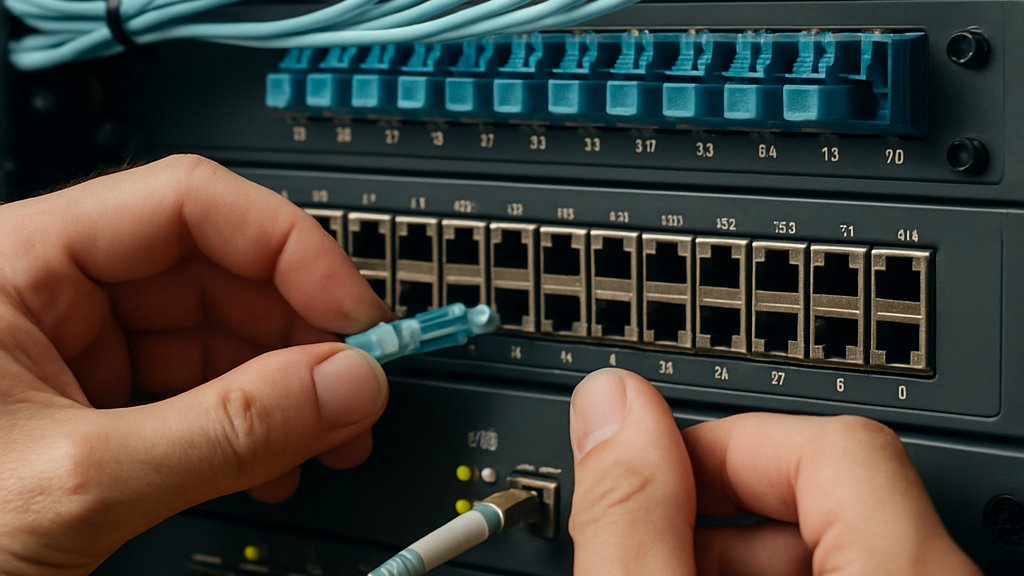
Key data points underline the urgency:
- 61% of organizations cite harvest-now, decrypt-later as a top worry (Thales 2026).
- Typical QKD key rates hover around 1–3 kbps across 100–200 km fiber spans.
- Market analysts expect QKD to command a major share of Quantum Network Security spending.
- Telecom and finance hubs are prioritizing metro networks for early pilots.
These figures reveal a fast-maturing market requiring scalable solutions. However, hardware costs and fiber compatibility concerns still hinder adoption. Therefore, Clavis XG merits closer examination.
Clavis XG Product Overview
IonQ integrated ID Quantique technology to build the new appliance. Additionally, Clavis XG Multiplex sends QKD keys and classical traffic over the same wavelength-division multiplexed strand. Consequently, operators can retrofit existing metro networks instead of provisioning dark fiber.
Unified Quantum-Safe Stack Insights
However, hardware alone is insufficient for operational rollouts. The company pairs Clavis with Clarion KX software to orchestrate keys for Quantum Network Security while addressing post-quantum risk. Moreover, the stack logs key health and automates failover, easing audits.
Clavis XG thus lowers deployment friction while preserving fiber compatibility. Meanwhile, technical hurdles remain when photons share crowded fiber. Consequently, the coexistence challenge deserves attention.
Fiber Coexistence Technical Challenges
QKD photons travel at near single-photon power levels. In contrast, classical channels blast milliwatts, generating Raman noise that drowns quantum states. Therefore, Clavis XG applies tight filtering, power leveling, and wavelength spacing to protect keys.
Nevertheless, lab studies show distance and rate penalties under heavy coexistence. McKinsey lists practical metro spans between 100 and 200 km with kilobit key rates. Subsequently, trusted nodes or quantum repeaters become necessary for larger regions.
Engineers face multiple constraints:
- Spontaneous Raman scattering increases noise floor above 1550 nm.
- Four-wave mixing in dense WDM systems produces inter-channel crosstalk.
- Amplified spontaneous emission from EDFAs complicates metro networks planning.
These factors cap throughput and challenge Quantum Network Security designers. However, concrete use cases still justify investment where data value is high. Next, we review those applications.
Metro Deployment Use Cases
Financial exchanges rely on sub-millisecond links across city trading cores. Moreover, regulators increasingly demand quantum-safe channels for settlement data. Clavis XG suits these metro networks because a single fiber already interconnects many cages.
Government agencies also protect citizen records for 75-year retention mandates. Furthermore, telecom operators like Colt and Turkcell have piloted earlier Clavis units on live rings. Therefore, field results suggest viable service offerings once commercial terms solidify.
High value, low distance links dominate early Quantum Network Security adoption. Consequently, rivals and investors monitor performance closely. Competitive positioning is shifting rapidly.
Competitive Landscape Outlook Ahead
IonQ competes with Toshiba, Qunnect, and several Chinese vendors for enterprise QKD deals. Additionally, many CISOs plan to deploy post-quantum cryptography first, layering quantum key distribution later. Therefore, hybrid strategies that blend both approaches strengthen Quantum Network Security narratives.
Meanwhile, the company’s acquisitions of ID Quantique, Skyloom, and Lightsynq build an end-to-end stack. In contrast, rivals rely on external partnerships, risking integration delays. Consequently, customers may favor a single throat to choke during metro rollouts.
Market momentum favors vendors that simplify Quantum Network Security operations and guarantee fiber compatibility. Nevertheless, buyers still demand clear pricing and metrics before scaling. Actionable guidance can accelerate that due diligence.
Practical Action Steps Now
CISOs should begin inventorying links carrying sensitive archives vulnerable to post-quantum risk. Subsequently, they must assess fiber compatibility and budget for inline filters. Furthermore, pilot projects with IonQ or trusted carriers validate operational procedures.
Additionally, teams need internal skills covering QKD physics, multiplexing, and classical cryptography. Professionals can enhance their expertise with the AI Quantum Specialist™ certification. Therefore, trained staff speed procurement and shorten deployment risk windows.
Early planning, testing, and training create measurable Quantum Network Security resilience. Consequently, organizations stay ahead of regulators and attackers alike. These steps pave the way for smoother pilots.
Conclusion
Quantum threats are no longer theoretical. Consequently, enterprises must adapt networks before adversaries weaponize large quantum computers. IonQ’s Clavis XG Multiplex demonstrates that QKD can ride existing metro networks today. However, coexistence demands careful engineering and disciplined key management. Moreover, layering algorithms that mitigate post-quantum risk fortifies the security stack. Professionals who master these domains will shape the next decade of Quantum Network Security. Therefore, explore the linked certification and start piloting quantum-safe links now.
Disclaimer: Some content may be AI-generated or assisted and is provided ‘as is’ for informational purposes only, without warranties of accuracy or completeness, and does not imply endorsement or affiliation.


