

AI CERTS
3 hours ago
Reachability Revolutionizes AI Threat Modeling Strategies
Therefore, modern programs blend graph analytics with AI threat modeling to spotlight reachable weaknesses. This article explores why reachability matters and how teams can adapt. Moreover, we highlight certifications supporting professionals who shape resilient enterprise defense strategies. Subsequently, readers gain practical steps to tame rising model risk before attackers act.
Discovery Speed Rapidly Accelerates
Frontier research reveals machine-speed discovery outpacing traditional patch cycles. For example, Anthropic’s Mythos preview scanned 1,000 repositories and surfaced 3,900 severe findings within days. Meanwhile, security teams needed weeks to triage similar backlogs last year. Consequently, exploit windows shrink as discovery tools improve. The LMDeploy SSRF incident showed attackers moving from advisory to compromise in 12.5 hours. Moreover, Trend Micro forecasts up to 3,600 AI-related CVEs during 2026, a 69% rise over 2025. These numbers overwhelm manual workflows and push AI Threat Modeling toward automated prioritization. However, sheer volume still hides the most dangerous issues. Therefore, filtering by reachability becomes the next decisive capability. The following data points underscore the acceleration:
- Mythos scan: 3,900 critical issues across 1,000 projects.
- First exploit of LMDeploy CVE occurred 12.5 hours after disclosure.
- Projected 31-69% jump in AI CVEs for 2026.
Collectively, these metrics illustrate discovery velocity far beyond human scale. Consequently, defenders must change focus, setting the stage for reachability analysis.
Why Reachability Matters Now
Reachability describes whether an attacker can traverse from entry to vulnerable code, identity, or host. In contrast, static severity scores ignore context and inflate noise. Furthermore, Endor Labs shows many transitive flaws remain unreachable, saving patch effort. Therefore, mapping reachable chains yields faster, risk-aligned remediation.
AI Threat Modeling that embeds reachability ranks threats by actual blast radius instead of counts. Moreover, graph engines reveal the chain, letting analysts break links with identity hardening or segmentation. Consequently, enterprise defense teams measure impact reduction, not ticket closure rates. Jared Atkinson summarizes, “What can they reach?”—the practical triage question. These insights shape budgets, maturity assessments, and compliance narratives. Reachability shifts thinking from theoretical vulnerabilities to exploitable realities. Next, we examine how attack paths analytics operationalize that shift.
Attack Path Revolution Shapes
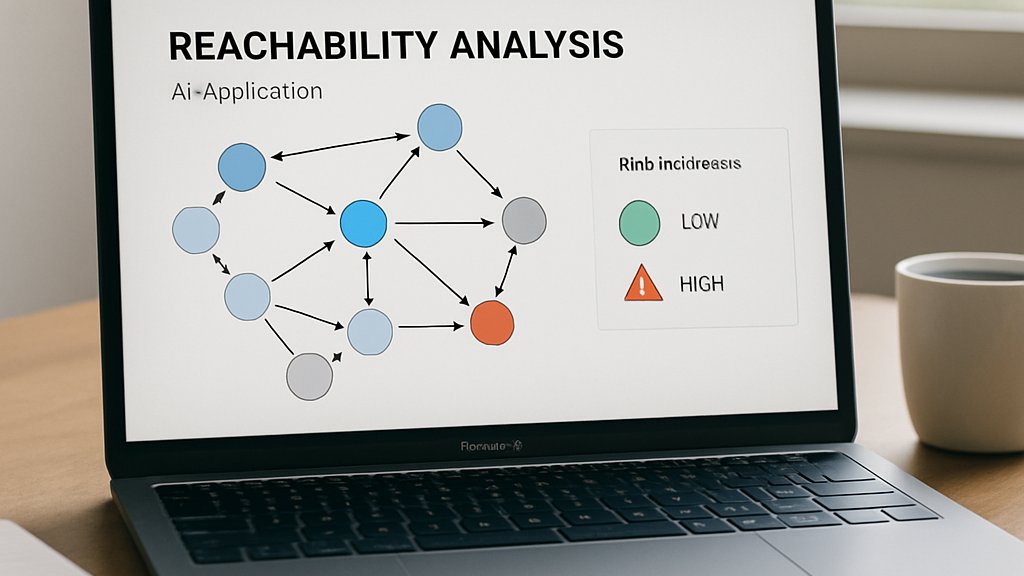
Attack graphs model every credential, host, and permission as nodes with directional edges. Additionally, platforms like XM-Cyber compute shortest routes to critical assets. Consequently, the method highlights compound exploits such as SSRF plus credential replay ending in root control. AI Threat Modeling integrates these graphs, updating views whenever code pushes new inference endpoints. Meanwhile, reachability scores flag which edges remain exposed inside production firewalls.
Identity attack paths gain prominence because LLM services often run under expansive service accounts. Moreover, SpecterOps research notes that Mythos can chain identity privileges faster than humans. Therefore, defenders monitor delegated rights as closely as software flaws.
Key benefits of graph-driven prioritization include:
- Visual clarity of exploitable chains.
- Continuous scoring as cloud topology changes.
- Quantifiable reduction in model risk when edges close.
- Alignment with regulatory expectations for evidence-based controls.
Attack path analytics convert abstract diagrams into actionable sprint backlogs. Consequently, teams align scarce resources with maximum risk reduction. Graphs make exploitation concrete. However, tooling quality determines accuracy, as the next section details.
Practical Enterprise Defense Moves
Security leaders now embed path analysis checks into daily CI/CD pipelines. Furthermore, URL-fetching components undergo strict allowlist reviews to limit SSRF vectors. Additionally, segmentation rules restrict inference pods from management planes. AI Threat Modeling dashboards surface only reachable critical defects, shrinking alert queues.
Consequently, patch velocity improves because engineers receive fewer, clearer tickets. In contrast, previous backlog approaches buried urgent issues beneath cosmetic fixes. Moreover, attack paths feed containment playbooks that isolate compromised identities within minutes. Organizations also invest in zero-trust controls, shrinking lateral movement radius. Professionals can enhance expertise with the AI Ethical Hacker™ certification. This credential deepens practical skills for detecting model risk in live deployments. Operational changes shorten mean time to remediation. Next, we explore supporting tools and measurement frameworks.
Tooling And Metrics Guide
Vendors now embed path-analysis engines inside SCA, CSPM, and CTEM suites. Endor Labs labels each function Reachable, Potential, or Unreachable to drive patch priority. Moreover, Safe Security and OX Security feed graph outputs into board dashboards. AI Threat Modeling efforts benefit when scanners export data into common graph schemas.
However, measurement gaps remain because vendors report noise reduction without standard baselines. Consequently, independent benchmarks must validate claims across varied cloud footprints. Meanwhile, academic projects propose open datasets mapping CVEs to function signatures for AI threat modeling research. Standardization would let enterprise defense leaders compare apples to apples.
Rik Ferguson warns that frontier models compress patch windows dramatically. Jared Atkinson stresses prioritizing by attack paths rather than issue counts. These perspectives reinforce the metric-driven approach highlighted earlier. Tools offer speed and structure. Nevertheless, limitations still challenge accuracy, as the next section explains.
Risks And Limitations Persist
Static analysis often misses runtime service calls across microservices. Consequently, false negatives lull teams into complacency. Furthermore, false positives waste engineer cycles. AI Threat Modeling must combine static graphs with runtime telemetry for confidence.
Vendor marketing sometimes exaggerates noise reduction percentages without peer review. In contrast, independent audits remain scarce. Therefore, governance frameworks should mandate transparent scoring methodologies. Offensive acceleration by Mythos means gaps carry steeper consequences. Moreover, export control debates illustrate the geopolitical sensitivity of automated exploitation. Limitations require ongoing scrutiny. The conclusion presents final guidance and next steps.
Conclusion And Next Actions
AI Threat Modeling now demands a reachability-first mindset that prioritizes exploitable reality over raw counts. Meanwhile, AI threat modeling workflows integrate graph analytics, identity hardening, and automated patch orchestration. Consequently, attack paths guide focused remediation, slashing model risk and bolstering enterprise defense outcomes. However, limitations persist until vendors publish standardized metrics and independent audits validate noise-reduction claims.
Furthermore, teams should pair static analysis with runtime telemetry to avoid blind spots. Professionals seeking deeper skills in AI Threat Modeling can pursue the previously mentioned AI Ethical Hacker™ certification. In contrast, delaying investment invites machine-speed exploitation from rapidly advancing frontier models. Therefore, take immediate steps to embed AI Threat Modeling controls, assess live exposure, and close observable gaps. Subsequently, revisit metrics quarterly to verify measurable risk reduction and regulatory alignment. Act now to stay ahead of the Mythos era threat curve.
Disclaimer: Some content may be AI-generated or assisted and is provided ‘as is’ for informational purposes only, without warranties of accuracy or completeness, and does not imply endorsement or affiliation.


