

AI CERTS
4 hours ago
Autonomous World Models Drive Next-Gen Simulation
Readers will see benefits, risks, and strategic steps toward practical adoption. Throughout, we map competitive dynamics and highlight essential certification resources. Meanwhile, every sentence stays crisp for professional scanning.
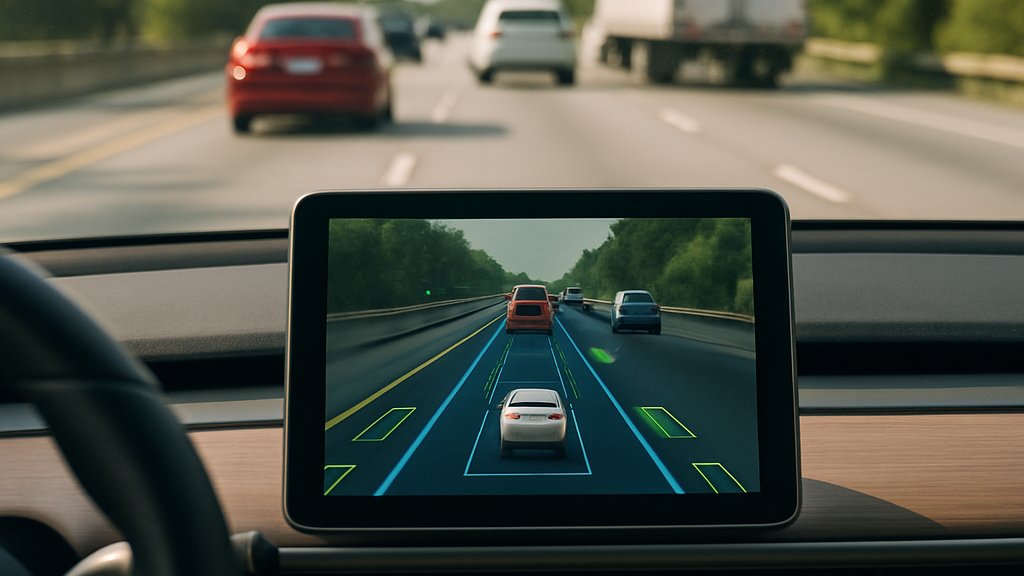
World Models Market Race
Global funding for Autonomous World Models surged past $1 billion during 2025-26. In contrast, traditional deterministic simulators attracted far smaller checks. Decart secured $300 million in May, lifting its war chest above $450 million. Waymo, World Labs, and several startups also accelerated spending. However, Oasis 3 claims the first production-grade, action-conditioned API.
Industry analysts note a shift from research prototypes toward developer platforms. Consequently, subscription pricing appears, mirroring earlier cloud GPU trends. Customers now evaluate latency, frame rate, and integration effort as core metrics. Moreover, edge-case coverage remains a differentiator among competing offerings. These patterns confirm a fiercely competitive market; still, technical depth decides winners.
Funding momentum validates commercial belief in Autonomous World Models. However, real capability, not hype, will shape adoption. Therefore, we next examine Oasis 3’s technical profile.
Oasis 3 Technical Profile
Oasis 3 generates multi-view, 512×768 frames at roughly 22 FPS. Latency reportedly stays below 200 milliseconds, even with continuous action feedback. Furthermore, the API accepts actions, enabling closed-loop training within Autonomous World Models. Developers can stream synchronized camera perspectives, mimicking sensor suites. Decart lists pricing at $0.02 per second, although enterprise deals vary.
Consequently, teams avoid building heavy rendering clusters. Photorealistic AI tricks, including diffusion upscaling, enhance texture fidelity. However, physical grounding still relies on learned priors rather than explicit physics engines. Independent reviewers have spotted occasional hallucinations like vehicles merging unrealistically. Nevertheless, early adopters praise fast iteration during reinforcement learning experiments.
Oasis 3 marries speed, cost efficiency, and high visual realism. Yet, certain physics inaccuracies demand caution during policy validation. Subsequently, we explore concrete benefits these traits deliver to AV teams.
Benefits For AV Teams
Closed-loop Autonomous World Models slash data collection budgets. Teams may synthesize thousands of rare crash scenarios without risking hardware. Moreover, long-tail perception events like tornados or deer crossings appear on demand. The company reports over 100,000 developers already creating such libraries. Consequently, validation cycles shrink from weeks to hours.
Driving simulation sessions can run continuously in cloud clusters, maximizing GPU utilization. Autonomous systems also benefit from faster reward shaping during reinforcement learning. Photorealistic AI outputs preserve sensor noise characteristics that pure CGI often misses. In contrast, earlier tools required proprietary engines and manual asset curation. Engineering leads cite quicker triage of corner cases as a productivity boost.
Reduced cost and broader scenario coverage headline the immediate gains. However, hidden risks necessitate balanced engineering diligence. Next, we outline those challenges in detail.
Ongoing Challenges Remain Stark
Physical fidelity lags behind visual quality in many Autonomous World Models. Hallucinated collisions or impossible accelerations could mislead reinforcement learning agents. Furthermore, benchmarking still lacks independent, peer-reviewed standards. Researchers warn that simulated safety does not guarantee real-world safety. Decart acknowledges these gaps and plans hybrid physics integration.
Nevertheless, regulators study provenance, privacy, and bias within synthetic data. In contrast, deterministic simulators offer traceable geometry but lower domain realism. Embodied AI projects also demand consistent tactile feedback, which video models ignore. Consequently, teams must cross-validate with track testing and statistical proofs.
Accuracy, ethics, and validation hurdles remain significant. Therefore, understanding the wider competitive field provides essential perspective. Accordingly, the next section surveys the leading players.
Competitive Landscape Overview Today
Waymo’s Genie 3 derivative powers the Waymo World Model for internal fleets. World Labs, led by Fei-Fei Li, markets Marble for editable 3D worlds. Meanwhile, NVIDIA backs Cosmos, a physics-aware generator targeting robotics. The startup differentiates through real-time streaming and accessible APIs. Moreover, Luma and Runway focus on general video generation rather than driving simulation.
Autonomous systems buyers evaluate edge-case breadth, cost, and policy transfer metrics. Independent surveys still show no unified leaderboard across these products. Consequently, enterprise pilots often test multiple engines in parallel. Embodied AI researchers monitor cross-domain transfer from indoor manipulation to road scenarios.
Competition pushes rapid iteration and price compression. Yet, clear winners will only emerge after standardized evaluations. We now examine funding flows and roadmaps shaping that outcome.
Investment And Future Roadmap
Investor interest in Autonomous World Models mirrors early cloud adoption waves. Sequoia, Radical Ventures, and Toyota Ventures back Decart’s aggressive hiring plans. Furthermore, hardware partnerships with NVIDIA may unlock better rendering efficiency. Waymo leverages Alphabet resources, while World Labs eyes academic collaborations. Photorealistic AI components will likely benefit from upcoming diffusion transformers.
Consequently, frame rates above 60 FPS could appear within two years. Embodied AI requirements may force tighter coupling with differentiable physics libraries. Meanwhile, pricing pressure could drop API costs below $0.01 a second. Professionals can enhance their expertise with the AI Robotics™ certification.
Capital influx ensures continuous technical leaps for Autonomous World Models and ecosystem growth. However, only disciplined roadmaps will convert investment into safe deployment. Finally, we share pragmatic steps for would-be adopters.
Practical Adoption Tips Now
Start with pilot projects that target narrow perception modules. Additionally, benchmark Autonomous World Models against recorded sensor loops for baseline alignment. Use mixed-fidelity driving simulation pipelines to validate emergent behaviors. Moreover, integrate domain randomization to stress test autonomous systems policies.
- Weekly latency audits
- Cross-validation with lidar logs
- Rare event frequency tracking
- Physics consistency scores
The Oasis API allows scripted scenario generators in Python or Rust. Nevertheless, maintain a real-vehicle test budget for regression checks. Embodied AI teams should monitor tactile and force gaps in video-only worlds. Finally, capture clear metrics like collision-free kilometers and perception precision.
Careful evaluation and mixed testing unlock true value from Autonomous World Models. Therefore, structured governance ensures safety and regulatory alignment. With principles established, a closing recap underscores strategic priorities.
Autonomous World Models are moving from labs to commercial roads. Oasis 3 exemplifies the push for accessible Autonomous World Models in photorealistic AI simulation. Meanwhile, rivals like Waymo and World Labs sharpen the competitive edge. Furthermore, vast funding and rapid research promise higher frame rates and stronger physics. Nevertheless, practitioners must combine synthetic and real data to secure safety. Consequently, governance frameworks and standard benchmarks will become decisive. Explore advanced certifications to lead this transformation and future-proof your career. Act now and drive innovation responsibly.
Disclaimer: Some content may be AI-generated or assisted and is provided ‘as is’ for informational purposes only, without warranties of accuracy or completeness, and does not imply endorsement or affiliation.


