

AI CERTS
2 hours ago
Warehouse Robotics AI Gets Conversational Upgrade
Critics see deeper automation risks, yet undeniable momentum fuels investment across every node. Moreover, Amazon now fields more than one million mobile and fixed robots worldwide. Therefore, supply-chain leaders must track these machines' voice, touch, and fleet intelligence capabilities.
Voice-Enabled Robots Rapidly Rise
Historically, robots followed tight scripts and stayed behind fenced zones. However, the latest Proteus roams open aisles while parsing voice commands from any worker. Additionally, embedded microphones and on-device inference modules convert natural language requests into task graphs in milliseconds. Therefore, the unit autonomously plans routes, priorities, and charging stops without supervisor coding.
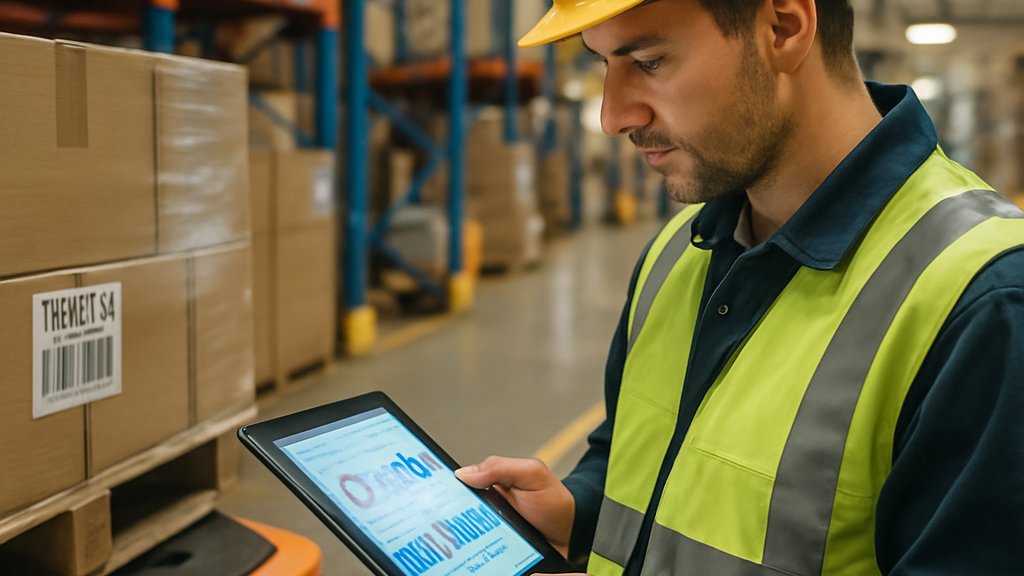
Amazon engineers credit Lab126’s agentic stack for this leap. In contrast, earlier Proteus generations accepted only handheld scanner prompts. Consequently, the new release supports over 400 daily unique utterances during trials. Warehouse Robotics AI now mirrors smart-speaker convenience on the industrial floor.
Voice interaction removes interface friction and expands robot accessibility. However, deeper adoption will depend on proven accuracy under relentless peak loads. Subsequently, coordination across a million devices becomes the next challenge.
DeepFleet Coordinates Millions Robots
DeepFleet acts as a central nervous system for dispersed mobile fleets. Moreover, the generative model evaluates traffic, shelf locations, and charging queues every second. It then dispatches optimized missions that reportedly cut travel time by nearly ten percent. Furthermore, these gains translate into faster picking cycles within busy fulfillment centers during promotions.
Amazon claims the model trained on two decades of item movement history. Nevertheless, independent benchmarks have not yet verified the fleet-level efficiency bump.
- 1,000,000+ robots deployed across 750 sites
- 10% average reduction in robot travel distance
- 25 European facilities scheduled for next-gen rollout by 2027
Consequently, Warehouse Robotics AI enables granular congestion prediction that manual planners could not match. However, experts request transparent data to validate claimed throughput lifts.
DeepFleet promises systemic harmony across mixed hardware lines. In contrast, unverified claims leave investors and workers seeking clearer evidence. Meanwhile, mechanical dexterity remains another frontier.
Tactile Picking With Vulcan
The Vulcan arm introduces pressure sensors that approximate human touch. Consequently, it manipulates soft packages, uneven surfaces, and small electronics without crushing. Additionally, camera-guided fingers collaborate with Warehouse Robotics AI to decide grip points. Proteus carts often deliver pods to Vulcan stations for precise item retrieval.
Amazon reports 15% faster single-SKU picking compared with legacy arms. Nevertheless, complex assortments still challenge robotic perception during seasonal spikes. Therefore, hybrid stations continue pairing humans with Vulcan for quality assurance.
Touch sensing broadens the SKU envelope and shrinks ergonomic strain. However, perfect autonomy in manipulation remains elusive. Consequently, the company is expanding its European testbeds.
European Expansion And Investment
The initiative includes more than €10 billion for European logistics hubs. Moreover, next-gen Proteus units will pilot inside Dartford before moving to France, Italy, and Spain. Furthermore, policymakers tout fresh 25,000 jobs alongside rising demand for technician roles. Nevertheless, labor groups remain cautious about net employment when automation scales.
Fauna Robotics’ humanoid platform may also complement rolling fleets on narrower mezzanines. In contrast, strict EU AI rules could slow deployments if transparency lapses.
Capital flows signal confidence in European smart-warehouse growth. However, regulatory guardrails will shape final rollout speed. Subsequently, job impacts demand closer study.
Labor Impact And Debate
Unions cite leaked planning that suggested hundreds of thousands fewer hires by 2030. Consequently, researchers like Daron Acemoglu warn Warehouse Robotics AI could skew income distribution. Furthermore, critics argue algorithmic monitoring may intensify as task times shorten. Nevertheless, the company highlights upskilling programs and new reliability roles.
Regulators in Brussels and Washington are now taking testimony from affected fulfillment centers staff. Meanwhile, early safety reports show fewer musculoskeletal injuries where lifting tasks shifted to machines. However, repetitive standing and pace expectations still cause concern.
Labor outcomes will depend on adoption pace, oversight, and skill pathways. Therefore, continuous auditing remains essential to balance productivity and wellbeing. Technical realities also temper hype.
Technical Limits And Validation
Field performance often diverges from lab demos. Moreover, slippery floors, blocked lanes, and network outages can derail carefully modeled flows. Consequently, engineers design fallback modes where human marshals reroute Warehouse Robotics AI squads. Natural language models still mishear rare dialects, requiring clarification loops.
Independent researchers seek anonymized telemetry to benchmark claimed ten percent travel savings. In contrast, corporate NDAs currently restrict deep analysis. Additionally, camera depth sensors struggle with reflective packaging under harsh lighting. Therefore, redundancy in perception stacks remains mandatory.
Validation will separate marketing narrative from real competitive edge. Subsequently, enterprises will refine procurement roadmaps based on credible data. Upskilling talent forms the final piece.
Preparing Future Robotics Talent
Warehouse leaders increasingly sponsor certificate courses alongside apprenticeships. Professionals now pursue specialized credentials. They can enhance expertise with the AI Supply Chain™ certification. Moreover, curricula now cover fleet analytics, safety auditing, and conversational agent design.
Automation mastery offers higher wages and broader career resilience. Nevertheless, continuous learning will be vital as Warehouse Robotics AI evolves yearly. Consequently, universities forge labs with industry to test multi-modal perception and tactile grippers.
Talent pipelines will determine how widely productivity gains diffuse. Therefore, early adoption of rigorous training can secure competitive advantage. We now circle back to strategic takeaways.
Voice, touch, and fleet cognition now define the competitive edge inside sprawling fulfillment centers. Consequently, those piloting Warehouse Robotics AI gain earlier insight into workload balancing and inventory agility. However, scaling success still hinges on precise natural language parsing and exhaustive safety validation. Moreover, transparent metrics will reassure staff that rising automation complements rather than replaces human skill.
Therefore, executives must pair hardware investment with continuous training, clear guardrails, and third-party audits. Warehouse Robotics AI offers transformative potential when ethics, engineering, and economics align. Start mastering Warehouse Robotics AI today by securing industry certifications and sharing operational insights.
Disclaimer: Some content may be AI-generated or assisted and is provided ‘as is’ for informational purposes only, without warranties of accuracy or completeness, and does not imply endorsement or affiliation.


