

AI CERTS
7 hours ago
Paris Bid Elevates Sovereign AI Infrastructure Ambitions
The outcome will shape digital sovereignty ambitions and influence Europe infrastructure investment for years. This article unpacks the bid, the funding programme, and the wider industrial context. Moreover, it examines risks and maps the road ahead for stakeholders. Readers will gain actionable insight into evolving policies, market signals, and capacity targets.
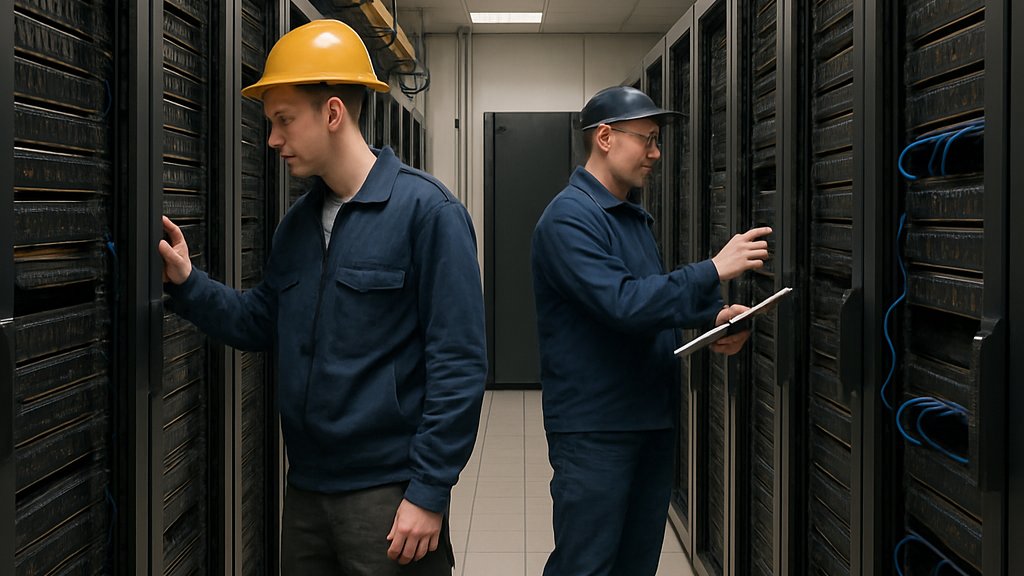
Paris Bid Gains Momentum
AION brings together Ardian, Scaleway, EDF, Capgemini, Bull, Orange, Artefact, and iliad. The group positions its Paris data center proposal as climate-friendly and grid-ready. Furthermore, proponents argue France's nuclear mix can deliver stable low-carbon electricity at competitive tariffs. For Paris, Sovereign AI Infrastructure would also reinforce strategic autonomy. AION also emphasises open governance, vendor neutrality, and strict security controls.
Ardian notes that hosting an AI gigafactory would create thousands of high-skill jobs locally. Moreover, regional councils have signalled readiness to fast-track permits and electrical upgrades. In contrast, earlier European hyperscale projects often stalled on land and power approvals. Consequently, analysts view the Paris data center plan as unusually mature for this stage.
The French bid currently aligns political support, land, and clean energy in one package. Next, the InvestAI funding mechanism determines which plans secure capital.
InvestAI Funding Programme Overview
InvestAI mobilises up to €200 billion for next-generation compute and research projects. €20 billion is earmarked specifically for each approved AI gigafactory. Therefore, between three and five colossal facilities are expected across Europe infrastructure. The European Commission compares the programme to CERN, signalling long-term scientific ambition.
Meanwhile, the European Investment Bank will provide guarantees and blended finance structures. Projects must show robust power sourcing, supply-chain resilience, and multitenant governance. Consequently, consortia such as Ardian’s AION highlight low-carbon energy and open APIs. EuroHPC will issue the formal call in summer 2026, launching a six-month evaluation. Sovereign AI Infrastructure qualifies for preferred lending terms under ongoing EU taxonomy rules.
InvestAI provides the financial backbone for pan-European compute expansion. Subsequently, real-world pilots like Mistral's build-out will test the model's practicality.
Mistral Scaling Case Example
Startup Mistral AI recently secured $830 million in debt from a seven-bank syndicate. Funds support a new Paris data center at Bruyères-le-Châtel housing 13,800 Nvidia GB300 GPUs. Moreover, the site will deliver roughly 44 MW of powered capacity. Consequently, Mistral expects to reach 200 MW across Europe infrastructure by 2027.
The deployment illustrates how private operators can complement public Sovereign AI Infrastructure projects. In contrast, several universities still rely on fragmented HPC clusters. Furthermore, Mistral’s commercial model offers anchor-tenant revenue that public facilities sometimes lack. Ardian investors highlight this example when pitching the AI gigafactory vision to legislators.
Mistral proves that patient capital can scale French compute quickly. However, batteries and energy supply create parallel sovereignty challenges.
Battery Roadmap Parallels Emerging
France has already applied the gigafactory concept to electric vehicle batteries. ACC’s Billy-Berclau plant launched the France Batterie initiative in March 2026. Verkor and ProLogium are building additional capacity in Dunkirk with major green loans. Consequently, policymakers link cell production to digital sovereignty and reindustrialisation.
The battery roadmap mirrors the rationale behind Sovereign AI Infrastructure. Both sectors need colossal capital, resilient supply chains, and reliable low-carbon power. Moreover, public-private consortia spread risk and accelerate skills development. Consortium leaders point to France Batterie as proof that coordinated planning can deliver results. In contrast, an AI gigafactory still awaits confirmed scientific and industrial tenants.
Battery progress demonstrates Europe can master industrial scale when incentives align. Therefore, AI backers push for identical urgency on compute facilities.
Risks And Project Constraints
Despite optimism, building large European compute campuses carries significant risks. Cost overruns threaten viability because advanced GPUs remain scarce and expensive. Moreover, export controls could choke deliveries, locking Europe infrastructure into older chips. Energy availability presents another constraint as multi-hundred-megawatt campuses strain regional grids.
Ardian modelers calculate that every 100,000 GPUs require roughly 200 MW of constant power. Nevertheless, grid connections often lag construction schedules by several years. Furthermore, critics warn of white-elephant complexes without clear anchor workloads. Digital sovereignty goals may falter if usage rates stay below 60 percent.
Consequently, stakeholders monitor four headline risks:
- Capital adequacy and cost escalation
- GPU supply volatility
- Power grid bottlenecks
- Tenant demand certainty
Proper planning converts massive assets into durable Sovereign AI Infrastructure. These hurdles underscore that funding alone cannot guarantee project success.
Effective mitigation will decide whether Sovereign AI Infrastructure meets strategic objectives. Subsequently, policymakers must refine governance before contracts close.
Strategic Policy Next Steps
European policymakers are drafting the final EuroHPC call and eligibility thresholds. Consequently, consortia must document environmental impact, governance, and vendor diversification. Professionals can enhance their expertise with the AI Policy Maker™ certification. The credential covers funding mechanisms, export-control law, and Sovereign AI Infrastructure governance.
Moreover, Paris data center designers are networking with battery engineers to share power-management lessons. In contrast, some Nordic regions pitch surplus hydroelectricity as an alternative site advantage. Digital sovereignty remains a core evaluation metric in every proposal. Therefore, transparency around data access and algorithm auditing must accompany hardware scale.
Clear governance, workforce skills, and clean power underpin successful Sovereign AI Infrastructure rollouts. Consequently, final awards will reflect more than simple capex pledges.
Conclusion
Paris has marshaled investors, policymakers, and utilities behind an ambitious compute vision. However, delivery depends on winning InvestAI backing and overcoming power bottlenecks. Mistral’s rapid build shows private capital can move first. Battery factories prove Europe can organise giga-scale supply chains when incentives align. Nevertheless, sustained governance will define whether Sovereign AI Infrastructure delivers long-term research and market value.
Professionals seeking to influence policy should consider specialised training. Therefore, enrolling in the AI Policy Maker™ programme provides timely expertise. Action today will shape Europe's digital sovereignty tomorrow.
Disclaimer: Some content may be AI-generated or assisted and is provided ‘as is’ for informational purposes only, without warranties of accuracy or completeness, and does not imply endorsement or affiliation.


