

AI CERTS
7 hours ago
AI Energy Demand Sparks Race to Power Next-Gen Data Centers
The following analysis unpacks the drivers, winners, and looming bottlenecks. Moreover, it offers strategic guidance for executives seeking resilient AI infrastructure. Readers will discover why energy strategy now ranks beside model selection in boardroom discussions. Every figure cited derives from verified 2024-2026 filings, reports, and on-record interviews. Therefore, decision makers can act with confidence.
Global Demand Forecasts Rise
IEA projects data centers will consume roughly 945 TWh in 2030 under its base scenario. That figure equals the current electricity demand of Japan and Norway combined. In contrast, global totals sat near 415 TWh during 2024. Consequently, growth exceeds historical telecom booms. EIA sees similar acceleration inside the United States. Its January 2026 outlook marks the strongest four-year domestic load expansion since 2000.
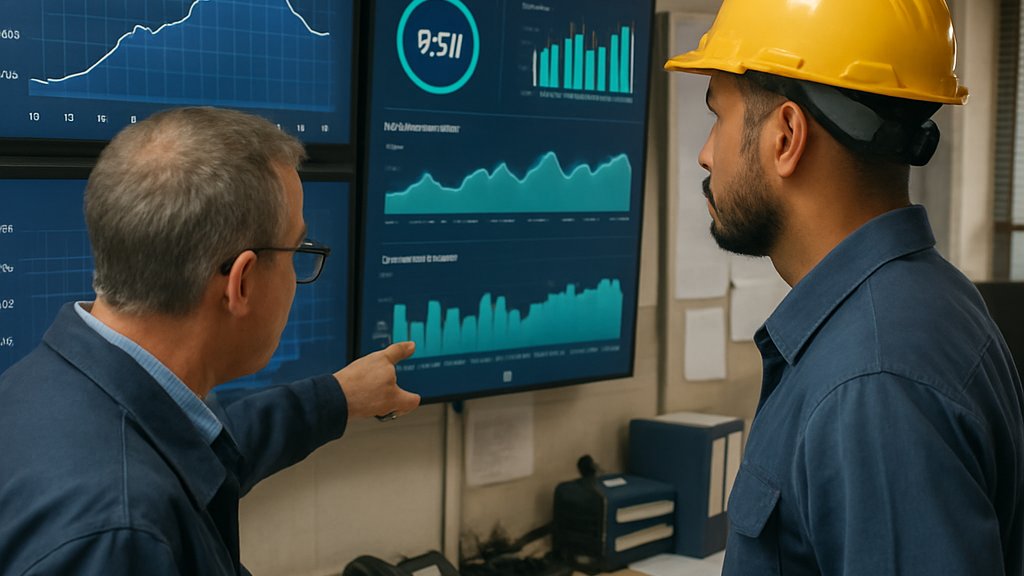
Hyperscale campuses dominate incremental megawatt requests. However, emerging AI-only clusters such as model-training farms now join the queue. Both segments concentrate load geographically, stressing local substations. IEA analysts warn that AI Energy Demand could triple if transformer supply and siting barriers ease.
- Global data centers consumed 415 TWh of power in 2024.
- IEA expects electricity demand from computing to hit 945 TWh by 2030.
- U.S. grid planners forecast the fastest load growth since 2000.
The numbers confirm a historic inflection. Nevertheless, supply chain reactions determine whether forecasts materialize. Those reactions now reshape power markets.
Market Forces Reshaping Supply
Capital has flooded every link of the grid equipment sector. GE Vernova booked $2.4 billion in data-center electrification orders during one recent quarter. Ford answered with Ford Energy, targeting 20 GWh of new battery lines for energy storage. Moreover, Fervo Energy raised public capital to scale geothermal reservoirs that run 24 hours. Consequently, long-duration options join solar and wind in corporate procurement menus.
Utilities scramble to model these atypical step changes. Some regions now offer discounted interconnection for projects supplying qualifying AI infrastructure. In contrast, others propose moratoria until capacity studies finish. Bloom Energy and microgrid vendors exploit delays by pitching on-site fuel cells and generators. Subsequently, hyperscalers evaluate “bring-your-own-power” models to cut queue times. Rising AI Energy Demand converts equipment backlogs into multiyear revenue visibility.
Money flows toward any asset that promises firm, low-carbon megawatts. Therefore, technology innovation accelerates alongside financing surges. The next section examines those technical breakthroughs.
Technology Innovations Accelerate Efficiency
Liquid and immersion cooling now move from pilot to default in GPU racks. This shift slashes water use and improves compute density. Additionally, AI agents tune fan speeds, workload placement, and chiller setpoints in real time. IEA estimates such controls could save 300 TWh globally by 2030. Every incremental teraflop intensifies AI Energy Demand at the facility level.
Battery chemistries also diversify. Sodium-ion modules promise lower cost energy storage for four-hour durations. Meanwhile, stationary fuel cells paired with heat recovery push round-trip efficiencies upward. Consequently, campus designers evaluate hybrids that balance capital expense and uptime requirements.
Technological progress offers relief from escalating AI Energy Demand. Nevertheless, innovation alone cannot quiet neighborhood protests. Those protests define the next challenge.
Risks And Community Pushback
Heatmap Pro reports record cancellations in the first quarter. Projects worth over $40 billion stalled after zoning hearings or water-use debates. Local leaders fear rising electricity demand will inflate household bills. Furthermore, critics question diesel backup and potential noise from new substations.
Utilities respond with proactive outreach and upgraded transmission studies. In contrast, some counties enact temporary pauses while environmental reviews expand. Consequently, lead times stretch beyond original financial models. Escalating AI Energy Demand amplifies public scrutiny.
Opposition injects meaningful uncertainty into capacity forecasts. Therefore, industry actors refine playbooks to win social license faster. Their strategies appear in the following section.
Strategic Responses From Industry
Microsoft now bundles renewable PPAs with contracted energy storage to guarantee hourly matching. AWS pursues small modular reactors for certain campuses under tentative memoranda. Moreover, Google funds low-water cooling pilots through Elemental Impact collaborations. Digital Realty deploys heat-recovery loops, selling waste warmth to municipal utilities.
Ford Energy offers batteries under multiyear contracts that align amortization with workload scaling. Additionally, GE Vernova pre-packages substations for rapid delivery, reducing interconnection delays. Meeting AI Energy Demand requires multidisciplinary talent. Professionals can deepen mastery through the AI Executive™ certification. Such credentials help negotiators bridge AI infrastructure needs with evolving energy regulations.
Corporate actions reveal a playbook centered on diversification, speed, and credibility. Nevertheless, executives still need forward-looking guidance. Key recommendations appear next.
Actionable Recommendations For Leaders
Model site selection on transformer lead times, not only land cost. Furthermore, secure multi-hour energy storage to hedge carbon and price volatility. Negotiate with utilities early, offering demand response to unlock faster queue placement. Meanwhile, embed community benefits like job training and heat reuse within planning proposals.
Track regulatory signals that may redirect AI infrastructure towards resilient regions. Consequently, portfolios can avoid stranded assets from abrupt moratoria. Finally, integrate AI Energy Demand metrics into corporate ESG disclosures.
These steps fortify competitiveness amid tightening power markets. Therefore, leaders can scale responsibly and profitably. The conclusion distills the core insights.
AI Energy Demand now dominates strategic planning across technology and power sectors. IEA and EIA numbers confirm unprecedented load growth tied to data centers and advanced AI infrastructure. However, equipment makers, utilities, and innovative developers are mobilizing capital to expand resilient energy storage and firm generation. Community resistance and regulatory uncertainty remain potent counterweights. Nevertheless, leaders who integrate grid realities early, invest in efficiency, and cultivate social license can capture outsized value. Moreover, professional growth matters. Executives should strengthen credentials through programs like the AI Executive™ certification. Because AI Energy Demand keeps rising, delay erodes competitiveness. Act now and lead the next energy transformation.
Disclaimer: Some content may be AI-generated or assisted and is provided ‘as is’ for informational purposes only, without warranties of accuracy or completeness, and does not imply endorsement or affiliation.


