

AI CERTS
1 month ago
AI Smart Glasses Transform Accessibility
AI Smart Glasses Market
Analysts forecast explosive growth for the segment through 2030. ABI Research projects shipments climbing from 850,000 in 2024 to 32 million by 2030. Moreover, Verified Market Research places the assistive devices market at USD 4.2 billion today. Consequently, investors view AI Smart Glasses as a dual consumer and medical opportunity.
- CAGR for consumer glasses estimated above 40 percent.
- Assistive tech revenues forecasted to reach USD 13.2 billion by 2032.
- Price for dedicated vision wearables still ranges between USD 3,500 and USD 4,500.
These numbers confirm rising demand and capital inflows. However, technology foundations determine whether expectations are met. Consequently, understanding the enabling stack becomes essential.
Enabling Tech Foundations Rise
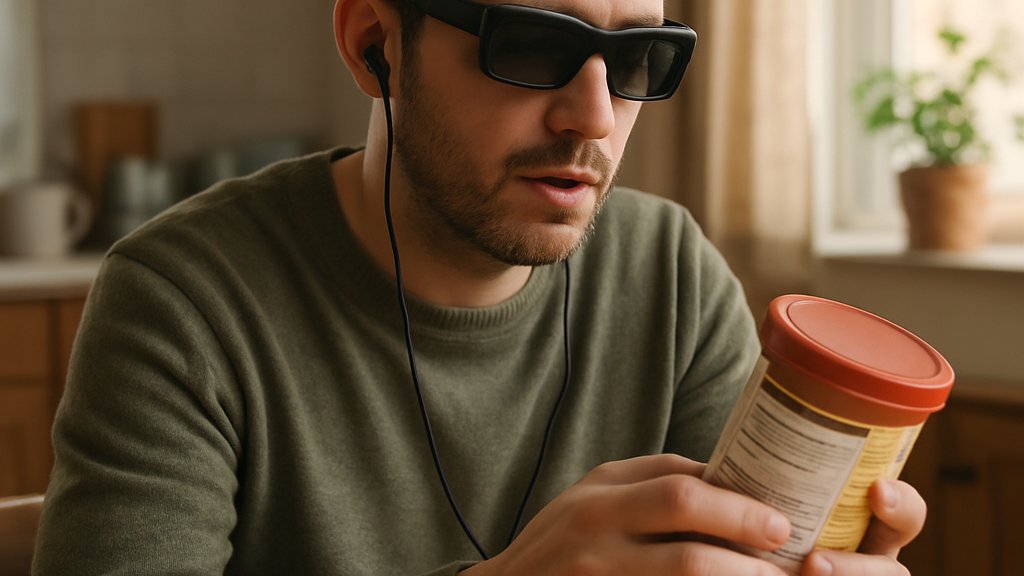
AI Smart Glasses rely on layered hardware and software pipelines. At the edge, custom processors run computer vision models for object detection. Furthermore, OCR modules convert text into speech for immediate reading. Vision-language models hosted in the cloud answer open questions about surroundings.
Additionally, AI Smart Glasses integrate the following components:
- Object detection localizes obstacles and landmarks within milliseconds.
- OCR with TTS reads menus, labels, and transit signs aloud.
- Low-latency connectivity switches processing between edge and cloud intelligently.
- Alternative inputs like EMG bands support fully hands-free control.
Nevertheless, each layer introduces power, cost, and privacy trade-offs. Developers juggle these constraints while pursuing continuous innovation. The SUPERGLASSES benchmark now provides standard latency and accuracy metrics for comparison. Robust foundations anchor future capabilities. Yet even strong foundations cannot erase every limitation. Therefore, assessing current weaknesses remains critical.
Tangible Benefits For Users
User stories reveal life-changing gains from AI Smart Glasses. For example, a visually impaired runner finished the 2026 London Marathon using real-time cues. Moreover, restaurant patrons report reading menus privately without asking staff. Donald Overton praised the glasses for enabling normal date nights.
The benefits cluster around autonomy, dignity, and social inclusion. Additionally, hands-free computer vision reduces cognitive load while traveling in busy cities. Integrated Aira and Be My Eyes links offer human backup when algorithms falter.
Early adopters also enjoy lighter kits versus multiple separate assistive devices. Meanwhile, mainstream styling helps users blend in rather than advertise disability. Consequently, the technology strengthens public acceptance of accessibility tech as fashionable wearable trends merge.
User outcomes demonstrate concrete value beyond novelty. However, limitations still constrain widespread deployment. Subsequently, we examine those constraints.
Persistent Limitations Remain Clear
Accuracy can plunge under low light, rain, or fast movement. In contrast, cloud offload introduces latency and network failures during large events. Furthermore, hallucinations from vision-language models can mislabel critical hazards. Expert Ben Hatton warns that reliability must reach near perfection for road crossings.
Battery life also suffers when continuous computer vision runs at full resolution. Moreover, premium pricing locks many visually impaired users out of early adoption. Insurance coverage remains patchy across regions, unlike traditional assistive devices.
Privacy advocates question constant camera feeds analyzing bystanders. Regulators may classify the glasses as high-risk biometric systems under emerging AI laws.
These hurdles slow mainstream penetration despite strong interest. Nevertheless, policy efforts and design changes are underway. Next, we explore the regulatory landscape.
Regulation Privacy Questions Emerge
Governments move to update standards for accessibility tech that handles biometric data. The EU AI Act proposes strict requirements for wearable cameras performing facial analysis. Meanwhile, US agencies evaluate whether medical device rules should apply. Consequently, vendors emphasize on-device processing to cut data retention risks.
Meta added opt-in modes disabling location logging unless navigation is active. Additionally, transparent LED indicators alert bystanders when recording occurs. Researchers call for independent audits verifying compliance claims and inclusion impacts.
Regulatory clarity will build public trust and investment confidence in AI Smart Glasses. Therefore, professionals must stay informed and skillful. That leads to the final roadmap section.
Roadmap Skills Development Path
Sustained progress depends on multidisciplinary talent. Engineers need expertise in edge inference, computer vision, ergonomics, and human factors. Furthermore, designers must collaborate with visually impaired testers throughout iteration cycles. Product leaders also navigate reimbursement, privacy, and quality standards for assistive devices.
Professionals can upskill through the AI+ UX Designer™ certification. Additionally, community hackathons accelerate open-source innovation around maps, haptics, and voice control.
The near-term roadmap features lighter batteries, better displays, and affordable subscription bundles. Moreover, partnerships with transit agencies promise richer contextual data for navigation voices.
Focused skills and collaboration will unlock wider accessibility tech adoption. Consequently, the horizon looks promising for AI Smart Glasses stakeholders. Finally, we summarize main insights.
AI Smart Glasses stand at the intersection of accessibility tech and mainstream wearables. Market forecasts, user stories, and academic benchmarks all signal sustained momentum. However, challenges around reliability, price, and privacy cannot be ignored. Consequently, cross-disciplinary innovation must continue to refine computer vision accuracy and battery efficiency. Meanwhile, regulators will shape expectations through evolving AI governance frameworks.
Nevertheless, growing inclusivity and lower costs could unlock mass adoption for visually impaired communities. Professionals should monitor developments and pursue certifications that strengthen inclusive design capability. Explore emerging projects, join pilots, and position yourself at the wearable forefront. Therefore, the next decade will test every assumption about human-machine mobility. Start designing for AI Smart Glasses today.
Disclaimer: Some content may be AI-generated or assisted and is provided ‘as is’ for informational purposes only, without warranties of accuracy or completeness, and does not imply endorsement or affiliation.


