

AI CERTS
1 hour ago
Power Acceleration Eases Infrastructure Budget Strains
Funding Signals Intensify Rapidly
Capital is flooding the new “Power Acceleration” category. Moreover, GridCARE secured a $64 million Series A led by Sutter Hill on 14 May 2026. C2i followed with $15 million to boost grid-to-GPU efficiency. Industry giants simultaneously raised forecasts, underscoring urgency.
- GridCARE closed a $64 million Series A on 14 May 2026.
- C2i secured $15 million in February 2026.
- OpenAI targets $110 billion for power-heavy growth.
- Meta lifted 2026 capex guidance to $145 billion.
Additionally, investors view Infrastructure Budget Strains as a monetizable pain point. These deals validate Power Acceleration as a critical layer. Consequently, founders gain leverage when pitching grid-focused solutions. These funding milestones highlight fast capital movement. However, unprecedented demand still looms.
Power Demand Outpaces Supply
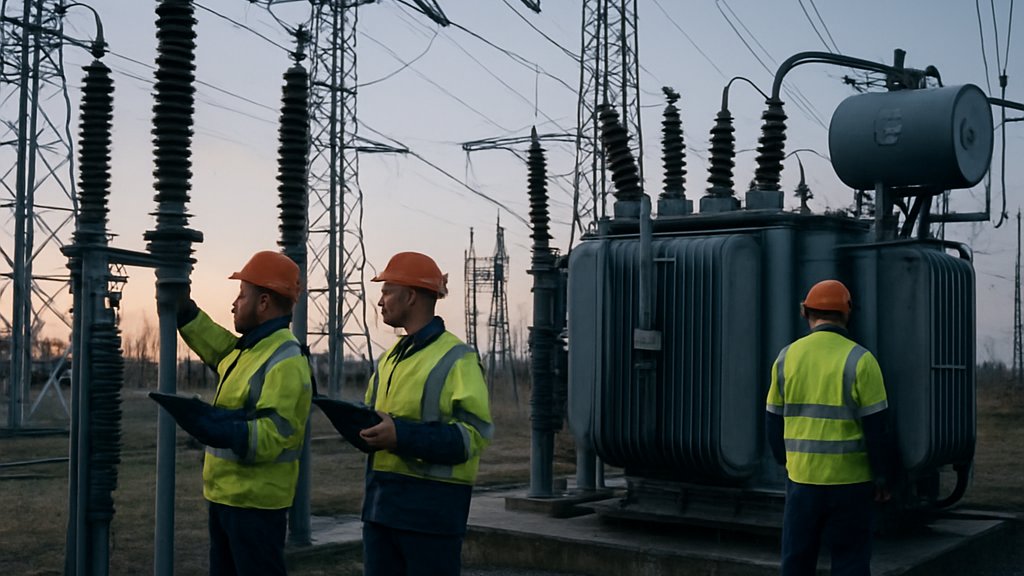
IEA projects data-center electricity could hit 945 TWh by 2030. Meanwhile, new AI Data Centers often require hundreds of megawatts each. Consequently, local utilities warn of multi-year interconnection queues. Furthermore, transformer shortages exacerbate delays.
Cooling loads intensify peaks, stressing regional systems. Moreover, legacy planning processes were never built for such rapid deployment. Therefore, Infrastructure Budget Strains worsen when AI projects stack within the same region. Operators are forced to pre-buy capacity or relocate campuses. These dynamics underline the power bottleneck.
Grid Activation Emerges Solution
GridCARE’s Energize™ platform uses physics-based AI to locate latent capacity. Consequently, the company claims it can compress interconnection timelines from years to months. A pilot with Portland General Electric identified 400 MW of unlockable headroom near Hillsboro.
Additionally, software-defined switching improves Energy Efficiency by routing electrons through under-used lines. In contrast, traditional upgrades require expensive hardware swaps. Startups argue this approach addresses Infrastructure Budget Strains by deferring fresh capital outlays. However, regulators must validate safety before wide adoption.
Investor Interest Shifts Infrastructure
Venture capital once chased chips; now it funds wires. Moreover, strategic investors like National Grid Partners back grid-activation ventures. Consequently, incumbents including Schneider and Eaton reassess product roadmaps.
Power Acceleration aligns with cloud capital cycles. Therefore, hyperscalers can meet launch targets without massive rate-base additions. Professionals can enhance their expertise with the AI Architect™ certification. Additionally, certified leaders can quantify Energy Efficiency gains for financial committees, easing Infrastructure Budget Strains.
Risks And Verification Hurdles
Nevertheless, several challenges persist. Reliability studies must confirm that tapped headroom will not trigger outages. Moreover, some markets genuinely lack spare capacity, especially during extreme weather. Cooling spikes further complicate load forecasting.
Regulators will demand transparent data before policy shifts. Therefore, startup claims need peer-reviewed validation. Independent audits could ease stakeholder concerns and protect investors from overruns. Consequently, addressing these gaps will determine market speed. Meanwhile, Infrastructure Budget Strains remain unresolved for pending projects.
Strategies For Sustainable Scale
Operators deploy multiple levers to hedge timelines and budgets. Furthermore, onsite batteries smooth peaks and support demand response. Advanced immersion Cooling enhances rack density while reducing power draw per tera-flop.
Additionally, workload scheduling boosts Energy Efficiency by shifting non-critical tasks to low-demand hours. Companies also lobby for streamlined interconnection rules. Consequently, these moves collectively ease Infrastructure Budget Strains while keeping AI throughput high.
Conclusion And Future Outlook
Power Acceleration has arrived as a core pillar of AI infrastructure. Moreover, rising capital flows, grid-AI platforms, and smarter Cooling converge to unlock capacity. Nevertheless, safety and verification hurdles must be cleared.
Consequently, firms that master these dimensions will control deployment velocity. Industry leaders should pursue certification and partnership opportunities now. Ultimately, overcoming Infrastructure Budget Strains will decide who dominates the next compute era.
Disclaimer: Some content may be AI-generated or assisted and is provided ‘as is’ for informational purposes only, without warranties of accuracy or completeness, and does not imply endorsement or affiliation.


