

AI CERTS
1 hour ago
AMA Tackles Medical Impersonation Fraud With New Deepfake Policy
This week, the AMA unveiled its most detailed policy blueprint yet against the menace. Meanwhile, California lawmakers advanced bills that could force ad disclosures for AI-generated medical endorsements. Radiologists and computer scientists also revealed worrying data showing detection tools still miss many synthetic images. Furthermore, only 22 percent of consumers believe they can spot a convincing deepfake online. Industry platforms now face mounting scrutiny for hosting fake physician ads that imperil Patient Safety.
The following analysis breaks down the threats, proposed safeguards, and strategic responses shaping this new frontier. Each section ends with concise takeaways, guiding readers toward actionable risk-management steps. Consequently, executives and clinicians will grasp why swift coordination matters before mischief turns deadly.
Deepfake Threats Escalate Rapidly
Deepfake Doctors advertisements increasingly hijack respected brand equity to push unvetted supplements and medical devices. In contrast, cloned audio hotlines lure seniors into disclosing insurance details for supposed telehealth consults. Consequently, Medical Impersonation Fraud operates at industrial scale with minimal production cost or geographical limits.
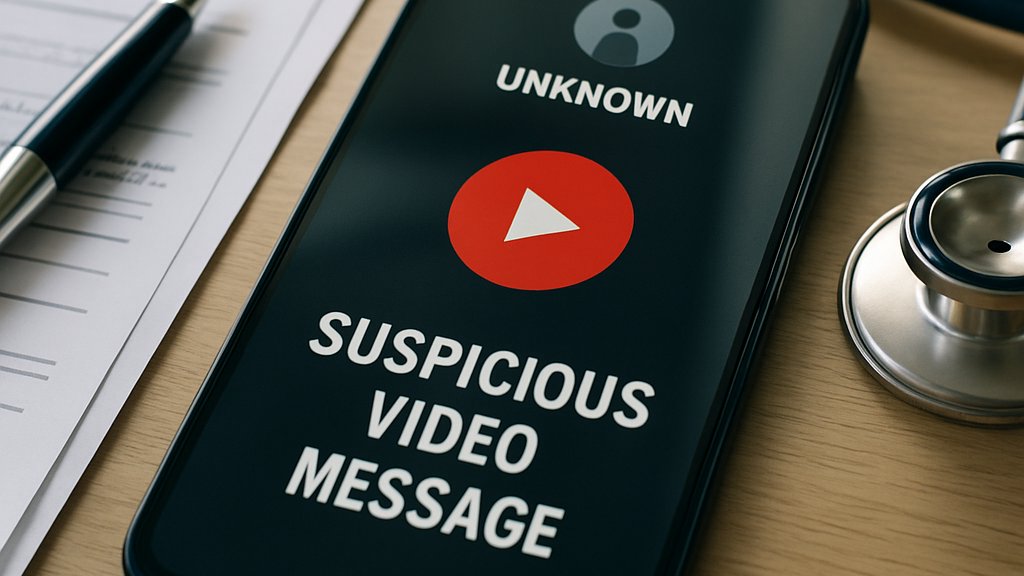
The scope becomes clearer through recent datasets summarised below.
- Radiologists misidentified 25% of GPT-4o synthetic radiographs.
- Only 41% of blinded specialists noticed any manipulation.
- Consumer confidence to detect deepfakes hovers near 22%.
- Large models outperform humans yet still miss 15% of fakes.
Moreover, scammers target popular cardiologists, neurologists, and TV correspondents because recognisable faces accelerate conversions. Journalists documented recent hoaxes featuring Sanjay Gupta falsely endorsing rapid weight-loss gummies. These incidents highlight the shifting economics: authenticity is scarce while synthesised authority remains cheap. Therefore, stakeholders recognise the urgency of coordinated defense. Deepfake proliferation undermines trust and inflates clinical misinformation risks. However, structured policy responses are now emerging, as the next section explains.
AMA Policy Framework Emerges
The AMA responded with a seven-principle framework released after its April Digital Health Council meeting. Subsequently, national outlets amplified the recommendations, pressuring platforms and lawmakers to cooperate. Principle one asserts that physician identity deserves explicit legal protection akin to biometric data. Moreover, creators must obtain informed, revocable consent before reproducing any likeness for commercial purposes.
Principles four and five mandate visible watermarks and shared liability among vendors, hospitals, and social networks. Consequently, clinicians would not shoulder enforcement burdens alone. The AMA also urges swift takedowns within set hours when credible impersonation claims surface.
Medical Impersonation Fraud receives explicit mention, framing it as a direct threat to evidence-based care. Nevertheless, free speech scholars predict courtroom battles over disclosure mandates and Section 230 carve-outs. These looming disputes underscore why a unified industry stance could pre-empt fragmented rules. The framework sketches an ambitious but negotiable roadmap for ethical synthetic media governance. Therefore, attention now shifts to legislatures drafting enforceable statutes.
Legislative Efforts Gain Momentum
California’s SB 1146 illustrates how state houses translate policy guidance into statutory language. Introduced by Senator Lena Gonzalez, the bill passed initial committees with bipartisan support. It requires conspicuous labels when synthetic performers promote health products, and authorises injunctive relief. Moreover, affected physicians may sue creators for damages tied to Medical Impersonation Fraud.
Other jurisdictions, including New York and Texas, are drafting similar Physician Impersonation bills. Consequently, a patchwork of disclosure terms could frustrate national platforms unless federal agencies intervene. The AMA backs harmonised standards but stresses urgency, citing Patient Safety imperatives and market confusion.
Meanwhile, legal scholars warn of First Amendment challenges, especially around truthful parody content. Nevertheless, precedent exists for deceptive commercial speech restrictions focused on health claims. Therefore, lawmakers may thread narrow language targeting demonstrable consumer harm. Legislatures are racing ahead, yet judicial scrutiny will shape final contours. Next, we examine technological defenses that must complement statutory action.
Technical Detection Still Falters
Detection science lags behind creation tools, according to March Radiology data. Researchers fed radiologists mixed sets of authentic and synthetic chest images generated by GPT-4o and RoentGen. Overall human accuracy never exceeded 75 percent, while some Deepfake Doctors images slipped past everyone. In contrast, leading language models reached 85 percent but still misclassified dangerous manipulations.
Consequently, hospital cybersecurity teams fear adversaries could alter diagnostic scans undetected, triggering improper surgeries. Medical Impersonation Fraud compounds that worry because attackers might pair false scans with forged voice consultations. Moreover, watermarking proposals remain optional, and open-source image generators rarely embed robust provenance.
Developers are testing cryptographic signatures and tamper-evident audit trails. Nevertheless, no universal standard has emerged across electronic health record vendors. Therefore, technical defenses alone cannot guarantee Patient Safety without parallel oversight. Detection gaps widen the attack surface for Physician Impersonation schemes. Subsequently, attention turns to platform and vendor accountability.
Industry Responsibilities And Risks
Major social networks sit at the distribution chokepoint for cloned physician content. However, executives argue that automated filters struggle to distinguish parody from harmful forgery. Ad-tech intermediaries also profit when Deepfake Doctors videos drive explosive click-through rates. Consequently, regulators propose shared liability clauses mirroring those for counterfeit pharmaceuticals.
This framework directly calls for vendor audits, transparent algorithms, and escrowed training datasets. Moreover, cloud providers might need attestations that Medical Impersonation Fraud detection endpoints remain enabled by default. Insurers are quietly adjusting cyber-liability premiums, citing increased Physician Impersonation frequency. Nevertheless, reliable actuarial data remains scarce, complicating risk pricing models.
Platforms insist that watermark verification and human review add latency inconsistent with monetisation targets. Therefore, voluntary commitments may falter without credible enforcement threats. Commercial incentives clearly misalign with Patient Safety imperatives today. Consequently, clinicians must prepare parallel defenses, explored in the following section.
Implications For Patient Safety
When forged physicians endorse unproven therapies, vulnerable patients may delay evidence-based treatment. Misinformation campaigns often target cancer or cardiac communities where fear amplifies urgency. Moreover, algorithms prioritising engagement push sensational deepfakes higher than sober clinical guidelines.
Medical Impersonation Fraud therefore represents a dual vector: financial exploitation and delayed care consequences. Deepfake Doctors stoke unrealistic expectations, eroding therapeutic alliances between real clinicians and sceptical patients. Consequently, malpractice carriers anticipate litigation accusing hospitals of negligent content monitoring.
Physician Impersonation incidents also burden board disciplinary hotlines, diverting staff from licensing duties. Nevertheless, proactive public education can improve consumer resilience until detection accuracy improves. Therefore, coordinated messaging across associations, platforms, and regulators is vital. Unchecked harms could erode decades of trust in evidence-based medicine. Subsequently, clinicians need actionable playbooks, discussed next.
Strategic Actions For Clinicians
Clinicians cannot wait for perfect laws before fortifying digital identities. First, claim verified profiles across major platforms and enable multi-factor authentication. Secondly, register likeness rights with brand-protection vendors that sweep ad exchanges daily.
Moreover, join institutional pilots evaluating watermarking and cryptographic signatures on recorded consults. The AMA encourages collaborative reporting hubs so physicians share threat intelligence in real time. Medical Impersonation Fraud alerts can integrate with EHR dashboards to trigger compliance workflows. Regular self-searches help catch Medical Impersonation Fraud before campaigns go viral.
Professionals can enhance resilience with the AI in Healthcare™ certification. Course modules cover deepfake forensics, legal duties, and incident response planning. Consequently, graduates can detect Deepfake Doctors content faster and advise peers on mitigation.
Implementing these steps reduces exposure while broader governance matures. However, sustained vigilance remains essential, as the concluding insights will demonstrate.
Medical Impersonation Fraud has shifted from fringe novelty to an urgent governance priority. We examined escalating deepfake capabilities, emerging AMA principles, and state legislative experiments. Furthermore, research proves detection remains imperfect, demanding multilayered safeguards. Industry incentives often conflict with clinical ethics, yet shared liability models offer leverage. Consequently, physicians should claim digital identities, monitor platforms, and pursue specialised training.
Professionals who master forensic techniques can disrupt scams before vulnerable users are harmed. Therefore, explore the linked certification to build resilient practice foundations. Decisive, coordinated action today ensures patients trust tomorrow’s digital healthcare ecosystem.
Disclaimer: Some content may be AI-generated or assisted and is provided ‘as is’ for informational purposes only, without warranties of accuracy or completeness, and does not imply endorsement or affiliation.


