

AI CERTS
11 hours ago
Workforce AI Activation Hits 60%: Deloitte Milestone Analysis
However, opportunity still outweighs risk when enterprises act deliberately. Deloitte State of AI researchers surveyed 3,235 director-to-C-suite leaders in late 2025. Respondents came from six major sectors and twenty-four countries. Findings reveal fast adoption, uneven value capture, and rising interest in agentic systems. Furthermore, fewer than sixty percent of enabled workers use AI regularly. Therefore, champions should focus on culture, workflow design, and skills.
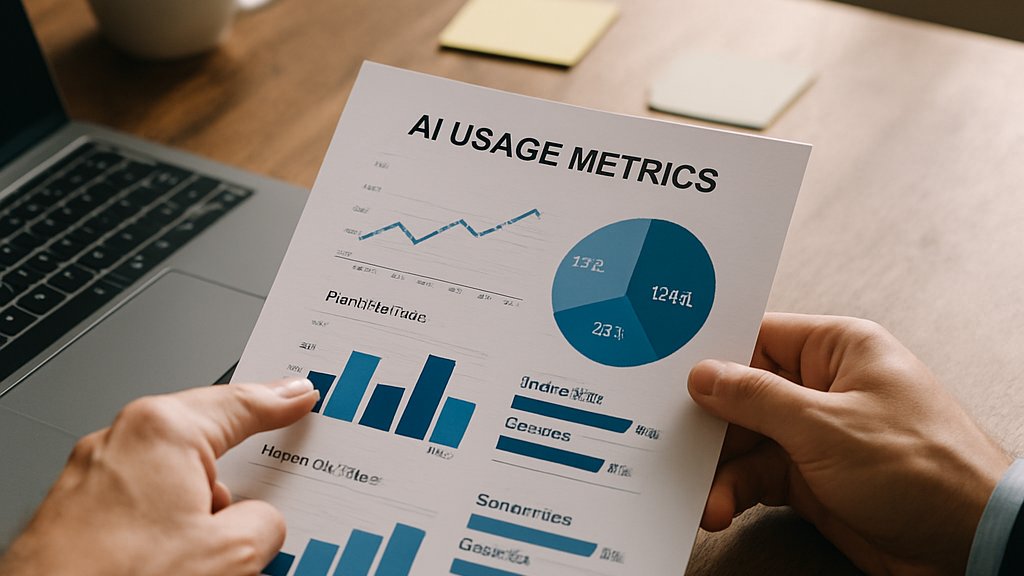
This article unpacks key numbers, critiques the execution gap, and offers next steps. Readers will discover how sanctioned tools, governance, and fluency programs interact. Each section ends with concise takeaways and a bridge forward, ensuring clear flow.
Workforce AI Activation Trend
Deloitte State of AI data confirms explosive distribution. Workforce AI Activation climbed roughly fifty percent year over year. Additionally, sanctioned tools now reach employees in every surveyed region. In contrast, unsanctioned consumer chatbots continue to circulate but at smaller scale. The jump signals stronger executive confidence and clearer budget priorities.
Nevertheless, activation lags ambition. Only a subset of users embed AI into daily processes. Consequently, productivity gains remain uneven across departments. Workforce AI Activation requires more than licenses; it needs redesigned roles and metrics.
These numbers illustrate strong adoption momentum. However, deeper engagement still demands structured enablement programs.
Access Growth Outpaces Usage
Access alone seldom guarantees value. Deloitte State of AI respondents admit fewer than sixty percent of entitled staff employ AI weekly. Moreover, thirty-seven percent describe their initiatives as surface level with minimal workflow change. Therefore, organizations face a conversion challenge.
Several barriers appear repeatedly:
- Lack of practical training and contextual examples
- Unclear performance incentives for AI-augmented tasks
- Incomplete integration with core business applications
Furthermore, unsolved ethical concerns can suppress confident use. Workforce AI Activation hinges on removing these obstacles and celebrating early wins.
The usage shortfall highlights a priority: move beyond provisioning toward behavioral adoption. Consequently, leaders must measure both login counts and outcome metrics.
Activation Gap Explained Clearly
Why does the activation gap persist? Analysts cite limited fluency among frontline employees. Additionally, change-management budgets often focus on technology rather than people. Workforce AI Activation falters when staff cannot match tool capabilities to job demands.
Moreover, self-reported readiness scores expose weak foundations. Strategy readiness hits forty percent, whereas talent readiness reaches only twenty. In contrast, technical infrastructure appears stronger at forty-three percent. Consequently, patchy capabilities stall scaled gains.
These insights make one fact obvious: culture and upskilling drive sustainable activation. However, many enterprises still treat enablement as an afterthought.
Scaling Beyond Pilot Phase
Quarter of surveyed firms have moved forty percent of pilots into production. Furthermore, fifty-four percent expect to achieve similar conversion within six months. Despite momentum, execution risks loom.
Consequently, organizations must formalize repeatable deployment pipelines. Detailed process mapping, continuous monitoring, and iterative improvement keep projects on track. Workforce AI Activation depends on such disciplined scaling methods.
Pilot success rates point toward achievable growth. Nevertheless, enterprises must maintain governance rigor while accelerating rollouts.
Governance And Talent Readiness
Mature oversight remains scarce. Only twenty-one percent claim robust governance for agentic AI. Additionally, compliance teams worry about decision accountability and data privacy. Therefore, strong policies should accompany each deployment wave.
Building Workforce AI Fluency
Fluency programs address both governance and adoption barriers. Formal curricula teach risk frameworks, prompt engineering, and domain ethics. Moreover, professionals can enhance expertise with the AI Human Resources™ certification. Hands-on labs help teams translate policy into practice, boosting confidence with sanctioned tools.
Consequently, enterprises that invest in fluency report faster time-to-value. Deloitte State of AI respondents who prioritize training cite higher productivity gains.
Robust governance paired with fluency accelerates safe innovation. However, leaders must allocate sustained budget and executive sponsorship.
Agentic AI Ambition Surges
Seventy-five percent intend to deploy agentic AI within two years. These systems act autonomously, raising both excitement and concern. Furthermore, only a minority possess suitable operating models today. Workforce AI Activation will soon include orchestration of agents across workflows.
Consequently, organizations should pilot constrained agents before embracing broad autonomy. Stress testing, scenario planning, and ethics reviews build institutional muscle. Moreover, interdisciplinary teams can refine policy continuously.
Agentic momentum underscores the urgency of readiness. Nevertheless, disciplined experimentation will separate leaders from laggards.
Recommendations For Enterprise Leaders
Deloitte and independent analysts converge on five priority actions:
- Define outcome-based activation metrics, not just access counts.
- Expand fluency programs across roles and seniority levels.
- Embed AI usage goals in performance reviews and incentives.
- Institutionalize governance committees for agentic and physical AI.
- Iterate pilot pipelines with continuous feedback and retraining.
Furthermore, leaders should benchmark progress quarterly against peers in the Deloitte State of AI dataset. Consequently, transparent reporting will maintain momentum and guide investment.
These actions translate data driven insights into practice. However, consistent executive sponsorship remains the linchpin of sustained Workforce AI Activation.
In summary, sanctioned tools now reach a majority of employees, yet genuine Workforce AI Activation still lags. However, enterprises that prioritize governance, fluency, and clear value metrics can close the gap.
Disclaimer: Some content may be AI-generated or assisted and is provided ‘as is’ for informational purposes only, without warranties of accuracy or completeness, and does not imply endorsement or affiliation.


