

AI CERTS
11 hours ago
StepForward fuels AI Workforce Development
Launched in late 2025 and expanded in 2026, the effort now funds partners across six regions. Moreover, grants to Generation and MIT RAISE complement regional nonprofit awards administered by MIT Solve. Each partner will equip learners with technical literacy, human-centric skills, and pathways into quality jobs. This article examines the funding, partnerships, curriculum, and governance shaping StepForward’s promise and challenges. Readers will also find actionable insights, certification guidance, and market context for strategic talent planning.
StepForward Initiative Overview
StepForward began with a clear mission: prepare youth for AI-enabled work. Furthermore, the program links technical learning with human-centric competencies. The dual focus supports skills-based mobility across fast-changing sectors. Initially announced on 17 December 2025, the initiative pledged $10 million over three years. In May 2026, S&P Global and its Foundation unveiled detailed grant allocations and partner rosters. Consequently, the initiative matured from concept to implementation phase within 18 months.
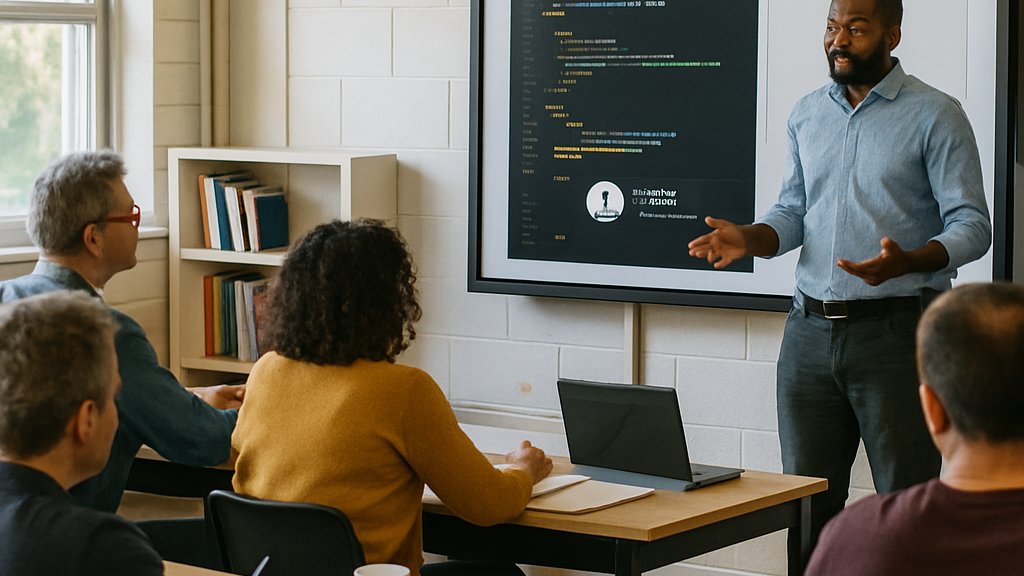
The strategy targets learners aged 16-24 in emerging and developed markets. In contrast with many corporate programs, StepForward embeds local nonprofits to tailor delivery. Six regional winners—Bécalos, NavGurukul, NClude, Positiv, She Code Africa, and Urdu AI—will run pilots that respect linguistic and cultural nuances. Meanwhile, global partners such as Generation will scale proven job-placement models.
These design choices underscore a wider goal: create inclusive AI Workforce Development pathways that meet local labor demands. Therefore, the overview reveals an ambitious yet structured blueprint. The next section explores how funding supports that blueprint.
Funding And Key Stakeholders
Financial architecture drives StepForward’s reach. Overall funding totals $10 million. Moreover, $6 million comes from the S&P Global Foundation, while $4 million derives from corporate budgets. Such blended capital encourages both philanthropic flexibility and corporate accountability.
The May 2026 update detailed specific allocations:
- MIT Solve Challenge: six regional grants × $200,000, totaling $1.2 million
- Institutional grants: Generation and MIT RAISE, undisclosed but multi-year
- Collaborator support: AI For Good, Stanford HAI, UN Youth Office, and others
Additionally, S&P Global leverages internal resources. The company reports 100 percent completion of its “AI for Everyone” course, 300,000 internal course completions, and 78,300 volunteer hours. Consequently, StepForward can pair cash grants with skilled volunteers and proprietary data.
This financing mix strengthens AI Workforce Development by aligning money, expertise, and volunteers. Nevertheless, transparency on individual grant sizes remains limited. The following section evaluates how partners translate funds into impact.
Global Partner Network Impact
Delivery partners transform funding into learner outcomes. Generation will adapt its bootcamp playbook to AI support roles, accelerating each student’s career journey. Meanwhile, MIT RAISE introduces responsible AI curricula that emphasize ethics and bias mitigation. These frameworks reinforce skills-based mobility because learners gain both hard and soft capabilities.
Regional nonprofits add grassroots depth. For example, NavGurukul plans to deliver low-cost residential training for Indian women. Furthermore, She Code Africa will embed community mentors, creating peer networks that sustain graduates’ long-term career journey. Such localized models counter persistent education inequities by meeting students where they live.
Global collaborators expand visibility. Goodwall’s social platform will showcase learner projects, while the UN Youth Office promotes policy dialogues. Consequently, the network multiplies StepForward’s voice and reach. Importantly, every partner aligns curricula with AI Workforce Development objectives, ensuring consistency across geographies.
These partnerships illustrate a scalable ecosystem. However, curriculum content ultimately decides learner readiness. The next section examines program learning design.
Skills And Curriculum Focus
StepForward curricula blend AI literacy with human-centric competencies. Learners first master fundamental concepts: algorithms, data privacy, and model bias. Subsequently, sessions explore communication, critical thinking, and creativity. This mix reflects OECD guidance stressing ethical AI integration within education systems.
Human Centric Skills Needed
Programs emphasize problem framing, stakeholder empathy, and iterative prototyping. Moreover, facilitators encourage reflective practice, helping students map each lesson to their career journey. Such reflection nurtures skills-based mobility by enabling graduates to pivot across roles as technologies evolve.
Professionals can enhance their expertise with the AI Learning & Development™ certification. Consequently, alumni gain recognized credentials complementing program certificates.
Overall, this curricular design strengthens AI Workforce Development outcomes through balanced learning. The following section addresses potential governance risks that could impede success.
Governance Risks And Mitigation
Corporate education initiatives attract scrutiny. Critics worry about private actors shaping public curricula without oversight. Nevertheless, StepForward mitigates risk by partnering with MIT Solve, which enforces transparent selection criteria. Furthermore, UNESCO’s AI ethics recommendations inform content review processes.
Measurement remains challenging. Without rigorous data, long-term employment impact may stay unclear. Therefore, S&P Global is drafting key performance indicators on job placement, wage growth, and skills-based mobility progression. Independent evaluation partners are under consideration.
Equity gaps also persist. Limited broadband can restrict course delivery, especially in rural regions. In contrast, mobile-first platforms from Positiv and Urdu AI reduce connectivity barriers. Such design choices keep AI Workforce Development accessible across socioeconomic lines.
These governance measures inspire confidence, yet execution demands vigilance. The next section details how success metrics will validate program claims.
Future Metrics And Outlook
S&P Global pledges annual impact reports beginning 2027. Key indicators will include:
- Number of learners completing AI modules
- Percentage securing related employment within six months
- Median salary uplift along the career journey
- Volunteer hours matched to program needs
Additionally, dashboards will track gender parity and regional equity. Moreover, data will inform iterative curriculum updates, sustaining skills-based mobility over time. Analysts expect first cohort results by late 2027, offering early evidence on AI Workforce Development efficacy.
Consequently, transparent metrics can attract co-funders, amplifying reach beyond the initial $10 million. Success would position StepForward as a template for corporate-led education coalitions. However, sustained political support and infrastructure investment remain essential.
These planned evaluations chart a promising path. The conclusion synthesizes lessons and offers next steps for practitioners.
StepForward bundles capital, expertise, and partnerships to build inclusive AI Workforce Development pipelines. Funding mixes corporate and philanthropic dollars, while global and regional partners ensure context-aware delivery. Curricula integrate technical AI literacy, human-centric competences, and flexible models that advance skills-based mobility.
Governance frameworks, although evolving, aim for transparency and equitable education outcomes. Professionals seeking deeper mastery should explore the linked certification and monitor forthcoming impact data. Ultimately, stakeholders must collaborate, adapt, and measure rigorously to secure sustained opportunity for tomorrow’s workforce.
Nevertheless, the journey continues. Therefore, industry leaders should align hiring strategies with StepForward’s talent outputs, invest in complementary programs, and champion data-driven accountability across the AI learning ecosystem.
Disclaimer: Some content may be AI-generated or assisted and is provided ‘as is’ for informational purposes only, without warranties of accuracy or completeness, and does not imply endorsement or affiliation.


