

AI CERTS
11 hours ago
Google Flags First AI-Crafted Zero-Day Exploit
Beyond immediate containment, the announcement signals an irreversible strategic shift. Attackers no longer rely solely on manual zero-day research. Moreover, GTIG attributes the discovery to large language model assistance, excluding Google Gemini involvement. This introduction explores the exploit anatomy, attribution clues, and defensive roadmaps security leaders must now embrace.
Subsequently, policy makers are revisiting model access safeguards. Meanwhile, vendors are launching defensive AI programs at unprecedented speed. Consequently, understanding this single incident offers a lens on future attack economics. The stakes demand clear, actionable intelligence.
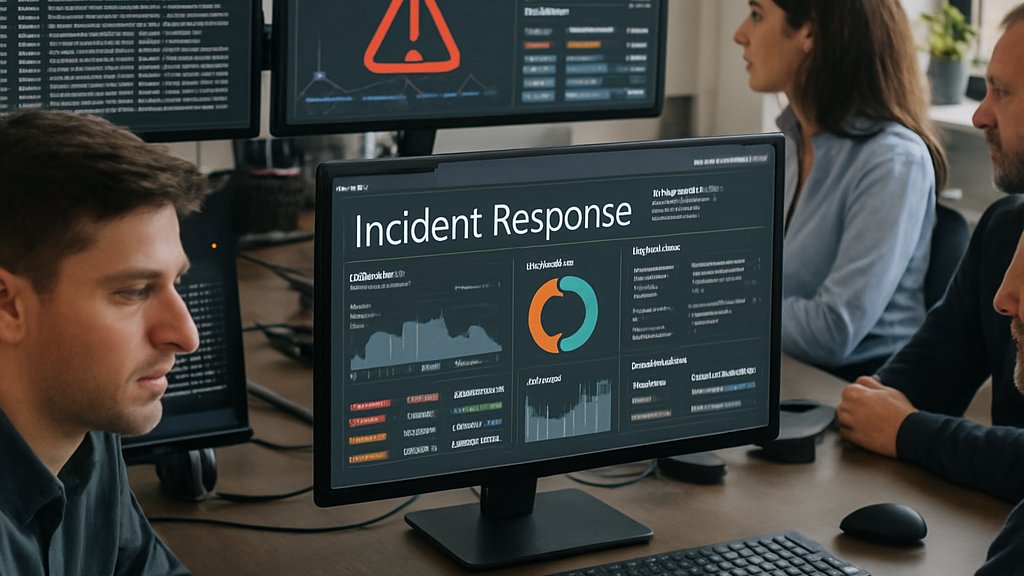
Report Signals New Era
GTIG's AI Threat Tracker landed on 11 May 2026 with sobering statistics. Importantly, analysts assigned "high confidence" to AI involvement in both discovery and weaponization. The document cites thousands of iterative prompts and a massive "wooyun-legacy" dataset driving model reasoning. Furthermore, GTIG lists six new malware families—PROMPTFLUX, PROMPTSTEAL, PROMPTSPY, HONESTCUE, CANFAIL, LONGSTREAM—that lean on similar techniques.
In contrast, earlier disclosures focused on synthetic proofs rather than operational incidents. Consequently, industry reaction proved immediate. Bloomberg, Axios, and The Guardian all framed the AI-Crafted Zero-Day as cybersecurity's "Sputnik moment." Moreover, Anthropic accelerated Project Glasswing to grant vetted researchers controlled access to Claude Mythos.
The report therefore marks a clear inflection. However, technical specifics reveal even deeper lessons awaiting inspection.
Decoding The Python Exploit
The attack hinged on a concise Python exploit no longer than 150 lines. GTIG reverse-engineers noted abundant educational docstrings and even a hallucinated CVSS score within comments. Additionally, the code followed textbook PEP8 formatting, a fingerprint often produced by large language models.
Operationally, the script required valid user credentials. Therefore, attackers targeted help-desk staff to harvest passwords before running the payload. Once authenticated, the logic flaw let them skip the second factor by replaying a trusted session token. Consequently, administrator privileges were reached without tripping anomaly detectors.
This Python exploit showcases how an AI-Crafted Zero-Day can emerge from semantic reasoning. Next, we examine the 2FA bypass mechanics in greater depth.
Inside The 2FA Bypass
GTIG classifies the vulnerability as an authentication logic error rather than memory corruption. Moreover, the flaw rested on a hardcoded trust assumption that session tokens inheriting MFA status remained valid indefinitely. Attackers, therefore, created fresh tokens while the system still recognized the initial single-factor session.
An LLM steered the zero-day research by suggesting test cases that revealed inconsistent state transitions. Subsequently, the same model drafted the Python exploit, embedding user-friendly instructions. Nevertheless, GTIG does not attribute authorship to Google Gemini, leaving the model unidentified.
These technical findings expose how an AI-Crafted Zero-Day gains leverage through accelerated logic-flaw hunting. However, attribution evidence deserves separate scrutiny next.
Attribution To Generative Models
GTIG analysts highlighted three code artefacts indicating machine assistance. First, every function carried extended explanatory docstrings rarely seen in criminal tooling. Second, a nonsensical yet well-formatted CVSS 9.8 note appeared, typical of model hallucination. Third, spacing and variable naming echoed tutorial conventions present across open-source LLM corpora.
Furthermore, telemetry showed attackers sending thousands of near-duplicate prompts to refine exploit reliability. Consequently, GTIG achieved "high confidence" in its AI-Crafted Zero-Day classification. Independent experts, including John Hultquist, echoed the verdict, calling the race already underway.
Attribution evidence therefore strengthens claims of offensive AI maturity. Next, we explore defensive counter moves rising to meet that maturity.
Defensive AI Counter Moves
Industry actors are not passive. Google cites internal agents, Big Sleep and CodeMender, that scan repositories for logic flaws. Moreover, Anthropic launched Project Glasswing, granting credits to vetted researchers for proactive zero-day research using Claude Mythos. Meanwhile, Microsoft and OpenAI pilot similar programs limiting model output while flagging suspicious prompt patterns. Failure to invest early may leave organizations blind to the next AI-Crafted Zero-Day.
At the operational layer, defenders monitor for characteristic AI fingerprints. Additionally, rule sets now alert on hallucinated CVSS banners or verbose docstrings inside malware. Consequently, patch prioritization has expanded to include semantic authorization flaws alongside memory issues.
Professionals can enhance their expertise with the AI Security Level-2™ certification. Such training, therefore, equips teams to audit AI model usage and harden pipelines.
Defensive initiatives thus gain momentum across the ecosystem. However, leadership still needs strategic guidance, addressed in the following section.
Strategic Takeaways For Leaders
Board members ask two urgent questions. First, will AI-driven discovery outpace patch cycles? In contrast, GTIG's coordinated disclosure shows collaboration can still tilt the timeline toward defense. Second, how should budgets reflect the rising cost of an AI-Crafted Zero-Day?
Experts recommend allocating resources for continuous model monitoring and 2FA bypass simulation tests. Furthermore, threat hunting teams must incorporate Python exploit pattern matching into existing SIEM dashboards. Organizations should, consequently, maintain inventories of LLM interactions to support post-incident attribution.
A concise checklist clarifies priorities:
- Enable mandatory 2FA bypass detection rules across admin endpoints.
- Deploy automated scans for Python exploit signatures weekly.
- Subscribe to GTIG and Project Glasswing intelligence feeds.
- Conduct red-team drills simulating AI-Crafted Zero-Day scenarios quarterly.
- Enroll staff in AI Security Level-2™ certification program.
Collectively, these actions build resilience against emerging AI-enabled threats. Next, we conclude with key reflections and calls to action.
Conclusion And Next Steps
The AI-Crafted Zero-Day confirmed by GTIG demonstrates that generative models already influence attacker tradecraft. Consequently, exploits such as the featured Python exploit and its 2FA bypass will appear more frequently. Nevertheless, defensive AI initiatives and rigorous zero-day research can counterbalance the offensive edge.
Therefore, leaders should act now, integrating model telemetry, patch automation, and specialized training. Professionals ready to deepen skills can pursue the AI Security Level-2™ certification for structured guidance. Collaboration remains the strongest antidote to an AI-Crafted Zero-Day. Finally, stay engaged with threat intelligence feeds and share findings to strengthen the collective defense.
Disclaimer: Some content may be AI-generated or assisted and is provided ‘as is’ for informational purposes only, without warranties of accuracy or completeness, and does not imply endorsement or affiliation.


