

AI CERTS
3 hours ago
ST Logistics Drives Warehouse Automation Reskilling
Observers see the site as a regional testbed for sustainable warehouse automation. Meanwhile, analysts warn that technology alone cannot guarantee value without thoughtful jobs redesign. This article unpacks the strategy, technology, workforce measures, and early results shaping the transformation. Readers will gain data-driven insights and actionable lessons for their own modernisation journeys.
Drivers Of STL Shift
E-commerce surged 15% annually across Southeast Asia, straining traditional warehouses. Therefore, ST Logistics confronted space and throughput limits at its legacy facilities. In contrast, customers demanded faster, error-free deliveries and real-time visibility. Labor scarcity, especially for midnight shifts, intensified operational bottlenecks. Consequently, leaders approved the Warehouse Automation Reskilling roadmap in 2021. They framed automation as augmentation, not displacement, to align with union expectations.
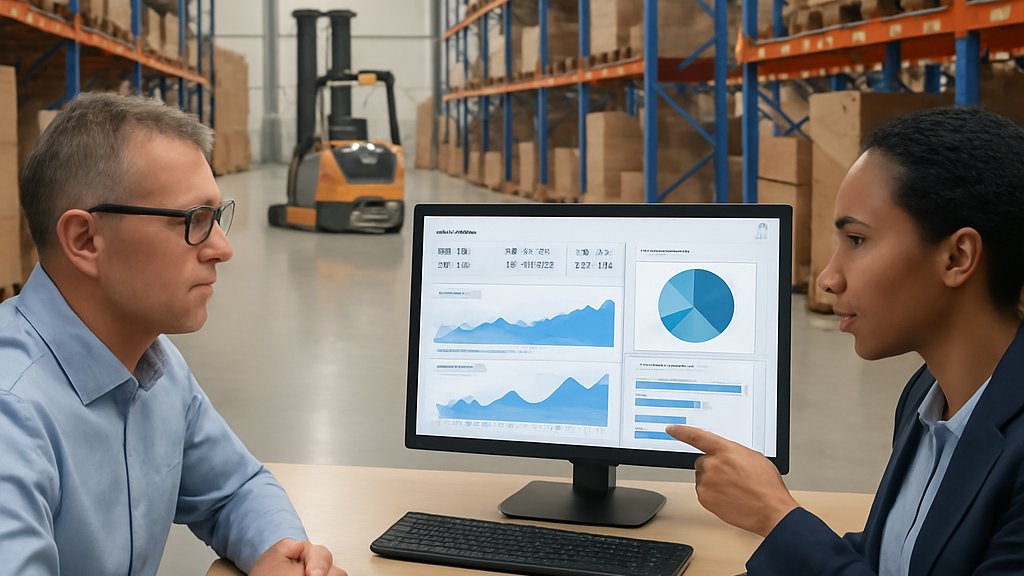
These market pressures justified bold investment. Next, we examine the deployed technology stack shaping that investment.
Technology Stack Being Deployed
STL’s Clementi facility now hosts Automated Storage and Retrieval Systems on 28-metre racks. Additionally, 40 Autonomous Mobile Robots ferry pallets between zones without fixed conveyors. Computer vision directs mixed-case picking, while AI optimises path planning.
- ASRS increases racking density by about 20 percent.
- AMRs lift pallet throughput from 10 to 70 units hourly.
- Pick-to-light stations cut order cycle time to five minutes.
- Warehouse Management System integrates IoT sensors for real-time dashboards.
Moreover, STL operates a CoLab to prototype eMedCab and other niche solutions with SCDF partners. Industry analysts classify this configuration as advanced warehouse automation stage two. However, hardware is only half the equation, as staff must master new digital workflows.
Technology delivered impressive speed and visibility. Yet comprehensive upskilling still determines sustained returns, as the next section shows.
Approach To Workforce Upskilling
STL pairs every automation rollout with structured learning journeys. Furthermore, its Career Conversion Programme funds 166 training hours per employee on average. The Company Training Committee designs curricula and tracks certification completion. Meanwhile, the Skills Allowance Scheme offsets wage losses during classroom periods.
Each redesigned role emphasises analytics, robot supervision, and exception management. Consequently, 90 workers moved from picking to control-room posts through jobs redesign efforts. Instructors leverage micro-learning, peer coaching, and vendor shadowing for retention. Professionals can deepen their technical fluency through the AI Learning Development™ certification. This external badge complements internal programmes and signals commitment to lifelong learning. Overall, the Warehouse Automation Reskilling culture strengthens engagement and reduces attrition to three percent.
Training investments underpin cultural change. The following section explains how government incentives accelerate these plans.
Funding And Policy Levers
The CTC grant reimburses up to 70 percent of eligible reskilling costs. Moreover, Workforce Singapore subsidises salary support under related schemes. SkillsFuture Queen Bee status positions STL as an industry mentor and unlocks further vouchers. In contrast, many regional competitors lack comparable public funding, delaying upgrades.
Union participation secures trust because workers see transparent redeployment roadmaps. Frederick Wong stressed that humans still control robots, reinforcing psychological safety. Policy alignment therefore anchors the Warehouse Automation Reskilling initiative within a national transformation agenda.
Fiscal incentives lower financial barriers. Next, we review the hard numbers emerging from the shop floor.
Operational Gains Delivered Today
Performance metrics already suggest robust payback. Order fulfilment time for a ten-line order fell from thirty minutes to five. Additionally, monthly savings equal roughly 600 man-days, freeing capacity for growth projects. Storage density climbed 15 percent while pallet throughput reached 70 per hour.
A smaller packing team now processes 300 daily orders without overtime. Consequently, supervisor Marnihidahyuni Tohani reports lower fatigue and higher teamwork. Warehouse Automation Reskilling further boosted retention among younger technicians.
- Attrition dropped to three percent company-wide.
- 97 percent workforce tapped the Skills Allowance Scheme.
- Quality defects declined by 35 percent, according to internal audits.
Operational data confirm significant efficiency gains. However, leaders acknowledge residual risks and lessons, addressed in the next section.
Risks And Lessons Learned
Capital intensity remains the dominant hurdle, especially during volatile freight cycles. Nevertheless, staggered deployments and leasing options can smooth cash flow. Integration complexity also challenges legacy IT architectures. Therefore, STL created a cross-functional CoLab to debug interfaces before sitewide release.
Jobs redesign success depends on continuous feedback loops and safe failure spaces. Moreover, analysts warn that uneven reskilling access can entrench inequality. Warehouse Automation Reskilling mitigates this risk through mandatory baseline courses for all roles. In contrast, firms that automate without training often face morale decline and turnover spikes.
Risks are manageable with disciplined governance. Finally, we explore forthcoming milestones and strategic guidance.
Future Outlook And Recommendations
Market researchers estimate the global warehouse automation sector will hit 30 billion dollars by 2026. Consequently, late adopters may struggle to keep service levels competitive. STL intends to expand ASRS coverage and adopt predictive maintenance powered by generative AI. Additionally, management plans to recycle lessons across satellite depots through a Queen Bee mentoring network.
Practitioners considering similar moves should follow five evidence-based steps.
- Benchmark volumes and pain points objectively.
- Secure union alignment using transparent jobs redesign maps.
- Layer automation gradually, validating each sprint.
- Ring-fence reskilling budgets with a CTC grant or equivalent.
- Track metrics weekly and iterate processes continuously.
Moreover, professionals can future-proof careers through the linked AI Learning Development™ certification. Therefore, companies and employees share accountability for sustainable innovation. Strategic alignment keeps the Warehouse Automation Reskilling narrative positive for all stakeholders.
The outlook remains bullish yet contingent on continuous learning. A concise conclusion now synthesises these insights.
Conclusion
ST Logistics proves that Warehouse Automation Reskilling can lift productivity while uplifting people. Consequently, the model offers a repeatable pathway for regional operators. Robust metrics, generous CTC grant support, and collaborative jobs redesign processes undergird success. Moreover, transparent communication maintained workforce trust during every automation sprint. Further expansion of Warehouse Automation Reskilling across satellite sites appears likely by 2027.
However, leaders must preserve skills momentum through continuous learning plans and regular pulse surveys. Professionals can aid that journey by earning the earlier AI Learning Development™ badge and mentoring peers. Therefore, consistent data reviews will keep Warehouse Automation Reskilling aligned with evolving customer demands. Additionally, additional CTC grant tranches could finance predictive analytics modules. Explore more case studies and certification paths to stay ahead in the high-speed logistics landscape.
Disclaimer: Some content may be AI-generated or assisted and is provided ‘as is’ for informational purposes only, without warranties of accuracy or completeness, and does not imply endorsement or affiliation.


