

AI CERTS
2 hours ago
Isaac Robotics Simulation: Cadence, NVIDIA Power Agentic AI
Reuters, Nasdaq filings and keynote remarks reveal ambitious performance claims. However, independent validation still lags marketing hype. This article unpacks technical details, market context and practical implications for engineering leaders. Readers will also discover training resources to future-proof their robotics skill sets. Meanwhile, industry analysts see GPU-accelerated digital twins reshaping verification budgets. In contrast, some customers warn about integration overheads and energy costs. Therefore, a balanced view remains essential before committing capital and talent.
Partnership Signals New Era
Cadence announced the extended pact at CadenceLIVE Silicon Valley 2026. Jensen Huang and Anirudh Devgan shared the stage to describe an inflection in engineering. Isaac Robotics Simulation therefore becomes a showcase for the joint roadmap. Additionally, the companies committed to multi-year co-development of agentic AI stacks. The roadmap covers semiconductors, robots and AI factories under one converged workflow.
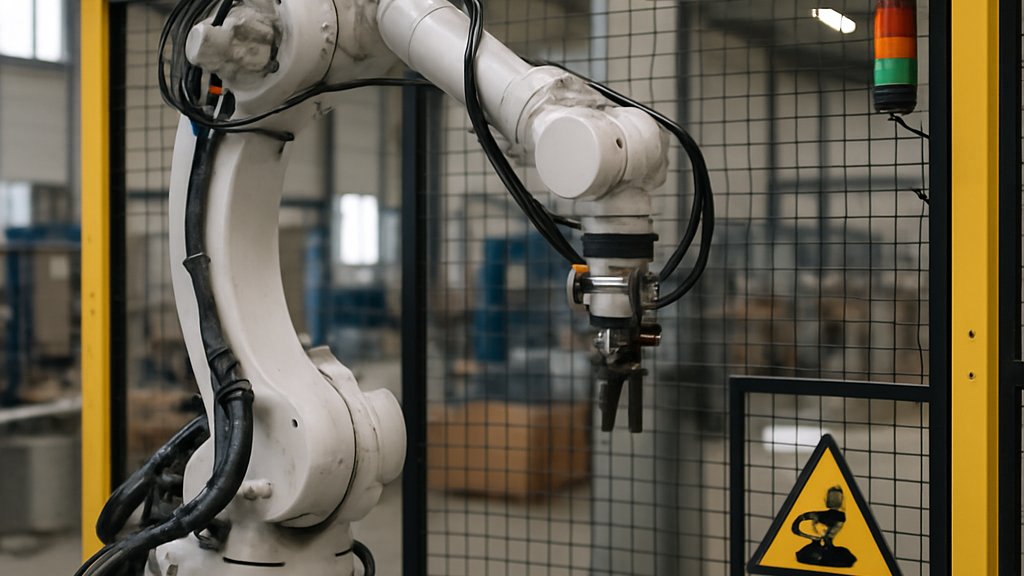
At its core, Cadence will embed CUDA-accelerated solvers into Omniverse and Isaac libraries. Meanwhile, NVIDIA will optimise new Blackwell GPUs for Cadence’s ChipStack and Clarity engines. Consequently, early demos reported up to 100× speedups for electromagnetic analysis.
Futurum analysts say the agreement validates a wider trend toward domain-specific supercomputing. Nevertheless, they urge real customer benchmarks before assuming similar gains in production. These context clues highlight strategic intent; however, execution will decide ultimate impact.
In summary, the partnership merges complementary strengths and targets sweeping productivity gains.
Next, we examine how agentic AI changes daily engineering routines.
Driving Agentic AI Adoption
Agentic AI orchestrates autonomous agents that plan, act and learn across complex workflows. Moreover, Cadence’s new AgentStack coordinates simulation, verification and data management tasks automatically. NVIDIA contributes Cosmos world models that feed synthetic scenarios to these agents. Consequently, design iterations compress from days to hours, according to company data.
Cadence cites a ten-fold productivity boost at over ten pilot customers. Subsequently, engineers reallocate effort from manual scripting to higher-level system decisions. In contrast, critics note that agent orchestration still demands robust governance.
Furthermore, the framework supports reinforcement learning loops inside Isaac Robotics Simulation. These loops rely on accurate physics simulation and scalable compute clusters. Such alignment between AI planning and physical truth is critical, as the next section shows.
Agentic AI promises radical efficiency yet raises governance questions.
However, performance metrics offer concrete evidence, which we address now.
Boosting Simulation Speed Metrics
Speed dominates technical evaluations because compile-time often blocks downstream teams. Cadence demonstrated its Clarity 3D solver on a Millennium M2000 GPU server. Moreover, the run completed five times faster than a CPU baseline at four times lower cost.
Similarly, electromagnetic, thermal and fluid solvers achieved double-digit improvements on newer CUDA kernels. Physics simulation benefits from dense tensor cores and AI-powered error correction techniques. Consequently, verification, sign-off and robotics policy training can proceed in parallel.
Isaac Robotics Simulation also receives a direct uplift because the same GPUs host virtual robots. Furthermore, Cadence models predict 17% more tokens per watt when using reduced-power modes. A separate scenario, combining MaxQ settings with warmer coolant, showed 32% efficiency gains.
- 100× solver speed in electromagnetic analysis
- 5× runtime cut on Clarity 3D demo
- 17-32% tokens per watt gains in AI factory models
These statistics build a compelling case, yet raw speed alone cannot close the sim-to-real gap.
Performance results appear impressive across diverse workloads.
Nevertheless, fidelity challenges demand equal attention, leading to the following analysis.
Isaac Robotics Simulation Impact
The flagship toolkit underpins Cadence and NVIDIA’s robotics vision. Inside the platform, domain randomisation, contact physics and sensor noise emulate messy realities. Moreover, Cosmos world models extend the diversity of synthetic scenes available for policy learning. Isaac Robotics Simulation integrates Cadence’s finite-element solvers to increase collision accuracy.
Meanwhile, reinforcement learning agents iterate over millions of varied episodes without risking hardware damage. Consequently, developers train grasping, navigation and inspection behaviours more safely. Reuters reports that executives expect faster deployment in automotive and consumer electronics plants.
Nevertheless, Cadence admits that the sim-to-real gap persists when sensor latency or unmodelled friction emerges. Therefore, hybrid data pipelines merge simulated and limited real trajectories to improve robustness. These practices illustrate an evolving strategy that still relies on continued validation.
Isaac Robotics Simulation adds precision while maintaining scalable throughput.
Next, we analyse techniques that directly tackle the remaining sim-to-real gap.
Tackling The Sim-to-Real Gap
Closing the sim-to-real gap demands multi-layered innovation. Firstly, high-order physics simulation must capture subtle dynamics like micro-slip and cable flex. Secondly, world models require continuous updates from real sensor logs.
Cadence engineers feed production data back into Cosmos to tune procedural generators. Additionally, domain adaptation algorithms adjust textures, lighting and actuator noise in near real-time. Consequently, policy gradients converge with fewer unexpected failures on physical robots.
NVIDIA also introduced GR00T transfer modules that predict trajectory feasibility across environments. Isaac Robotics Simulation feeds GR00T with dense synthetic trajectories for transfer studies. Meanwhile, Cadence’s differential solvers supply gradients that accelerate those modules.
Independent analysts still caution that every deployment needs field calibration to verify gains. These mitigating steps gradually narrow divergence, yet users must maintain validation loops.
Technique layering steadily reduces performance drift between simulation and reality.
However, broader market forces will influence adoption speeds, as the next section explores.
Market And Ecosystem Outlook
Precedence Research values the robot-simulator market at roughly USD 820 million for 2025. Moreover, forecasts suggest high-teens to forty percent compound growth this decade. GPU vendors, EDA houses and platform startups therefore race to dominate standards.
Cadence and NVIDIA benefit from large installed bases in design and robotics respectively. In contrast, Synopsys, Siemens and Dassault push rival workflows by linking to Omniverse too. Meanwhile, open-source projects like ROS 2 and MoveIt foster interoperability pressure.
Ecosystem momentum also depends on developer skills and certification pipelines. Engineers can validate skills through the AI Robotics certification. Such credentials help employers assess readiness for large-scale simulation deployments. Consequently, workforce capacity growth aligns with accelerating market demand.
Market projections indicate sustained growth and competitive churn.
Next, we address potential risks that decision makers must consider.
Strategic Risks And Caveats
Every transformative stack introduces operational complexity and governance challenges. Integration across multiple vendors increases toolchain brittleness and licensing cost. Moreover, GPU fleets consume significant power, despite tokens-per-watt optimisation.
Commercial teams therefore must perform detailed total cost of ownership studies. Additionally, intellectual property policies should cover synthetic datasets and world models sharing. Security reviews are also crucial because agentic AI may trigger unintended actions.
Nevertheless, transparent benchmarking and phased rollouts mitigate many uncertainties. Reuters sources confirm several automotive firms already follow that playbook. These cautionary notes refine decision frameworks while preserving momentum. The final section outlines practical next steps for stakeholders.
Risks exist but appear manageable through disciplined engineering and governance.
Therefore, leaders should map actionable pathways, discussed below.
Skills Path And Next
Technical leaders should first benchmark current workflows against new GPU-accelerated baselines. Subsequently, teams can pilot Isaac Robotics Simulation on noncritical cells to validate throughput. Moreover, investing in physics simulation expertise will improve model debugging speed.
Continuous feedback from line operators helps reveal lingering sim-to-real gap symptoms. Engineers ought to document lessons and update digital twin parameters accordingly. Finally, individual contributors can pursue the earlier mentioned AI Robotics certification for career growth.
A staged adoption roadmap balances innovation urgency with operational safety.
Consequently, organisations position themselves to exploit the partnership’s future advances.
Key Takeaways And Outlook
Cadence and NVIDIA aim to compress design, training and deployment timelines across robotics. Their strategy hinges on Isaac Robotics Simulation, physics simulation breakthroughs and expansive world models integration. Moreover, early metrics signal compelling speed and efficiency wins.
Nevertheless, governance, energy cost and the persistent sim-to-real gap necessitate prudent rollout plans. Therefore, leaders should combine phased pilots, disciplined benchmarking and targeted upskilling. Professionals ready to lead this evolution can start by securing the AI Robotics credential.
Isaac Robotics Simulation stands ready to anchor next-generation engineering pipelines. Explore emerging benchmarks, follow ecosystem roadmaps and revisit strategy frequently. Act now to turn simulation speed into competitive advantage.
Disclaimer: Some content may be AI-generated or assisted and is provided ‘as is’ for informational purposes only, without warranties of accuracy or completeness, and does not imply endorsement or affiliation.


