

AI CERTS
2 hours ago
Alibaba’s AI Transformation Signals Why Businesses Need AI Training More Than Ever
Recent developments show Alibaba aggressively investing in cloud computing, AI infrastructure, intelligent agents, and enterprise AI services as competition intensifies across China’s technology ecosystem. The company’s cloud revenue has surged significantly due to rising demand for AI services, while its AI ecosystem is increasingly integrated across e-commerce, logistics, productivity tools, and customer experiences.
This transformation is not just about technology. It is about workforce readiness, strategic leadership, and the growing urgency for AI training.
China’s AI Race Is Redefining Business Models
Alibaba’s evolution reflects how AI is changing the core structure of modern business models. The company is moving beyond transactional commerce toward AI-powered ecosystems that can automate processes, personalize customer experiences, and improve operational intelligence.
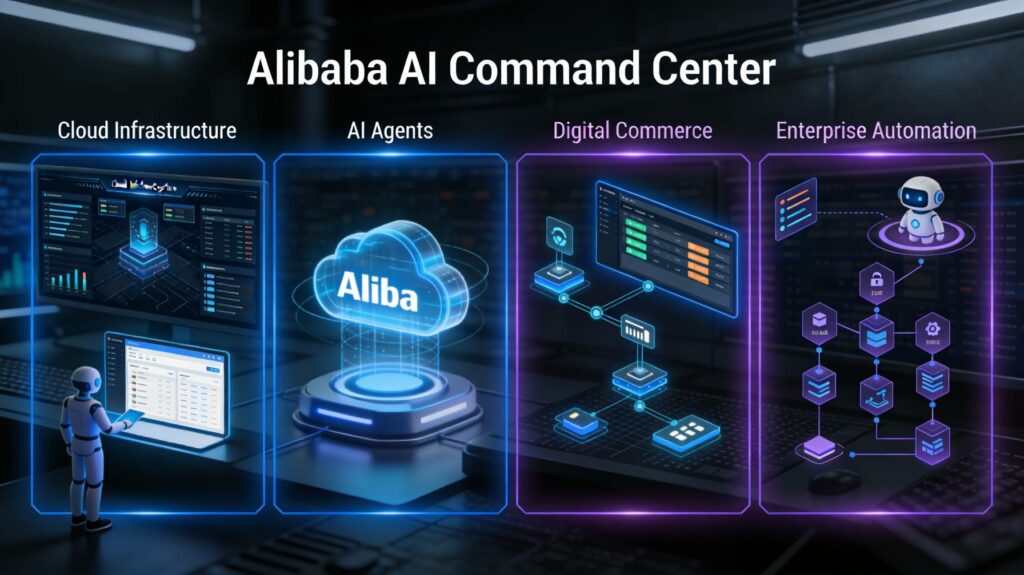
Its AI chatbot Qwen has already been integrated into Taobao and other Alibaba platforms to create conversational shopping experiences and intelligent task execution. Businesses are increasingly competing not only on products or pricing, but on how intelligently they can use AI to deliver faster, smarter, and more personalized services.
At the same time, Alibaba is heavily investing in AI cloud infrastructure and “agentic AI” technologies capable of performing actions autonomously. This indicates that the future of business will revolve around AI-enabled decision-making and automation.
As organizations globally observe these shifts, one challenge becomes increasingly clear: technology adoption without skilled professionals creates a dangerous gap.
The Growing AI Skills Gap Businesses Cannot Ignore
While companies rush to integrate AI into operations, many employees and leaders still lack practical AI knowledge. This skills gap is becoming one of the biggest barriers to successful AI transformation.
Alibaba’s strategy demonstrates that AI is no longer limited to research labs or IT departments. AI now influences customer service, logistics, cloud computing, data analytics, cybersecurity, automation, and enterprise operations.
This means professionals across every department must understand how AI works, how to use AI responsibly, and how to integrate AI into business workflows.
Organizations without trained teams may struggle with:
- Poor AI implementation decisions
- Inefficient AI investments
- Security and compliance risks
- Ethical and governance challenges
- Reduced competitiveness in AI-driven markets
The rapid pace of China’s AI ecosystem also highlights how quickly global competition is intensifying. Studies show China’s AI ecosystem is accelerating due to large-scale adoption, talent competition, infrastructure investment, and strong innovation ecosystems.
For businesses worldwide, AI literacy is becoming a strategic necessity rather than an optional technical skill.
AI Leadership Requires Human Expertise
One of the most important lessons from Alibaba’s transformation is that AI success depends on people as much as technology.
Alibaba is investing billions into AI infrastructure, but behind that infrastructure are trained professionals who understand AI systems, governance, cloud computing, and strategic deployment.
As AI becomes embedded into business strategy, organizations need leaders who can:
- Understand AI opportunities and risks
- Make informed AI investment decisions
- Build AI-driven innovation strategies
- Navigate ethical and governance concerns
- Lead teams through digital transformation
Research also suggests that AI-driven business transformation significantly impacts innovation, entrepreneurship, and long-term business sustainability. Without proper AI education, businesses risk adopting tools they do not fully understand.
This is where structured AI training becomes critical.
Why AI Training Is Becoming a Competitive Advantage
The AI race is no longer only between technology companies. It is now a competition between organizations that can successfully upskill their workforce and those that cannot.
As AI systems become more integrated into cloud services, operations, and customer experiences, professionals with verified AI expertise will become increasingly valuable across industries.
Companies need employees who can confidently work with AI technologies, interpret AI-driven insights, and contribute to responsible AI innovation.
This demand is creating a major opportunity for organizations and professionals to pursue industry-recognized AI certifications and practical AI education programs.
Businesses that invest in AI training today are more likely to:
- Accelerate innovation
- Improve operational efficiency
- Build stronger AI governance frameworks
- Increase workforce adaptability
- Strengthen long-term competitiveness
The Alibaba case proves that AI transformation is not slowing down. It is accelerating globally.
The Future Belongs to AI-Ready Organizations
Alibaba’s transformation from an e-commerce leader into an AI-driven enterprise reflects the future direction of global business. AI is becoming deeply embedded into cloud infrastructure, automation, customer engagement, and strategic decision-making.
Organizations that want to remain competitive must prepare their workforce for this shift.
This is where AI CERTs Authorized Training Partner Program can help bridge the gap. Through industry-focused AI training and globally recognized certifications, ATPs help businesses and professionals develop practical AI skills needed to succeed in the rapidly evolving AI economy.
FAQs
1. Why is Alibaba investing heavily in AI?
Alibaba is investing in AI to strengthen its cloud business, improve customer experiences, automate operations, and compete aggressively in China’s rapidly growing AI market.
2. What is driving the global demand for AI training?
The increasing adoption of AI across industries has created a major demand for professionals who understand AI implementation, governance, automation, and business integration.
3. How does AI impact traditional business models?
AI helps businesses automate processes, personalize services, improve decision-making, reduce operational costs, and create new revenue opportunities.
4. Why is AI certification important for professionals?
AI certifications help professionals validate their AI knowledge, improve career opportunities, and gain practical skills relevant to modern business environments.
5. How can businesses prepare for AI transformation?
Businesses can prepare by investing in AI education, upskilling employees, adopting responsible AI strategies, and partnering with trusted AI training providers.
Disclaimer: Some content may be AI-generated or assisted and is provided ‘as is’ for informational purposes only, without warranties of accuracy or completeness, and does not imply endorsement or affiliation.


