

AI CERTS
2 hours ago
AGIBOT’s Embodied Intelligence Competition Benchmark at ICRA 2026
Organizers provided open datasets, baselines, and Genie Sim 3.0 for fair comparison. Meanwhile, the dual tracks spotlighted Reasoning skills and robust World Models for robotics. This article unpacks the numbers, methods, and implications for industry leaders. Furthermore, readers will discover how forthcoming finals could redefine evaluation standards. Finally, we highlight certification paths that help professionals join the embodied AI wave.
Global Competition Field Expands
AGIBOT announced online results on April 30 with transparent leaderboard publication. Moreover, 526 teams registered between February and April following aggressive outreach campaigns. In contrast, last year’s pilot Embodied Intelligence Competition attracted just 200 groups worldwide.
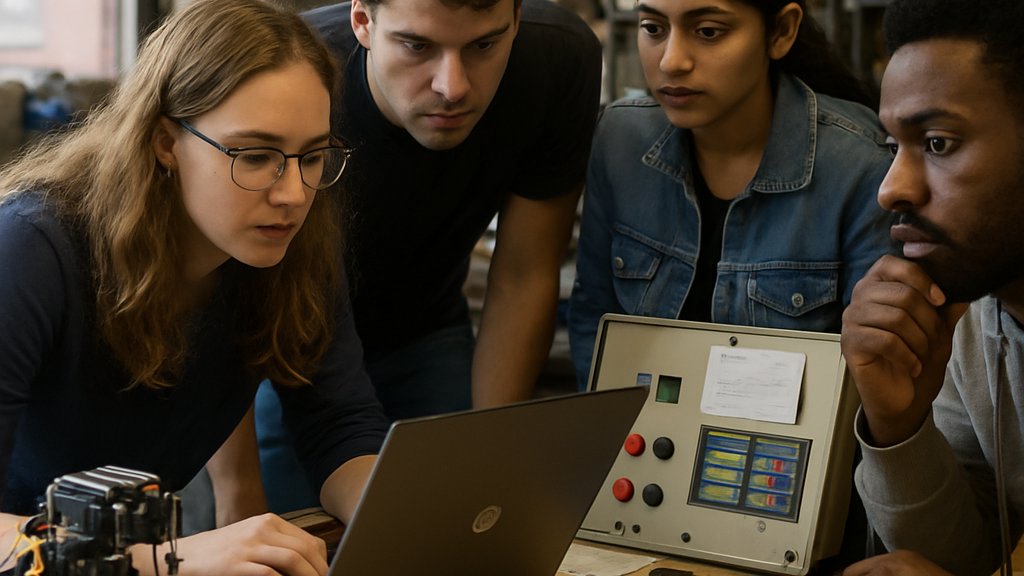
Participants represented 27 nations spanning Asia, Europe, North America, and Oceania. Consequently, analysts call the Embodied Intelligence Competition a nascent World Cup for robotics. Leading universities, industry labs, startups, and even solo developers secured top-ten slots.
Notably, online leaders will meet onsite in Shenzhen during ICRA 2026 for finals. However, only the best 12 teams per track can access physical robots. These figures prove swelling global interest. Subsequently, the design of the two tracks warrants closer examination.
Dual Tracks Explained Clearly
The Challenge splits into Reasoning-to-Action and World Model paths. Each path evaluates distinct yet complementary capabilities. Moreover, scores combine task success, efficiency, and robustness metrics.
The Reasoning track asks models to decompose natural language instructions into low-level actions. Furthermore, ACoT-VLA baseline sets a reproducible performance floor for newcomers. In contrast, the World Model track measures predictive fidelity across thousands of future frames. EVAC currently leads open benchmarks but trails finalist innovations.
Organizers argue this dual setup narrows the notorious sim-to-real gap. Consequently, the Embodied Intelligence Competition promotes holistic assessment rather than leaderboard gaming. These structural choices influence tooling decisions, explored next.
Benchmarking Tools And Stack
Genie Sim 3.0 underpins the online phase of the Embodied Intelligence Competition with photorealistic scenes and LLM-driven agents. Moreover, EWMBench computes standardized scores across varied manipulation tasks. Baseline repositories sit on GitHub, while datasets live on Hugging Face and ModelScope.
The World Models dataset alone includes 30,000 real trajectories. Additionally, each downstream task provides hundreds of expert demonstrations for fine-tuning. Therefore, researchers can reproduce results without proprietary hardware.
However, critics warn that exclusive reliance on AGIBOT robots risks vendor lock-in. Independent labs note that Competition metrics may ignore long-tail safety failures. Consequently, Competition entry barriers for academia drop significantly. Nevertheless, transparent scoring scripts mitigate some bias fears.
The stack delivers rare openness for industrial robotics. Subsequently, winning team strategies illustrate current frontiers.
Standout Team Strategies Analyzed
GreenVLA from Brain and Sber Robotics topped the Reasoning leaderboard. Their system fused large language models with vision-language alignment modules. Moreover, curriculum learning helped scale from simulated blocks to cluttered kitchens.
NeoVerse-ABot triumphed in the World Model path using hybrid diffusion-transformer backbones. In contrast, SynapX emphasized lightweight inference for edge deployment. Teams reported compute budgets between 200 and 800 GPU hours.
Additionally, many finalists exploited AGIBOT baselines yet injected custom reward shaping. Experts suggest these tweaks drove consistent gains in the Embodied Intelligence Competition across unseen tasks. These case studies reveal practical optimisation levers.
Successful recipes blend open baselines with novel architectures. Consequently, industry observers look beyond scores toward commercial impact.
Industry Context And Implications
Analysts see the Challenge aligning with China’s broader embodied-AI industrial policy. MERICS reports highlight rapid factory rollouts and draft national standards. Moreover, AGIBOT already ships service robots to retailers and warehouses.
Consequently, the Embodied Intelligence Competition acts as both showcase and talent funnel. However, governance frameworks lag behind technical progress. International bodies debate safety, labor, and data transparency requirements.
Meanwhile, investors track leaderboards as early traction indicators. The $530,000 prize is modest compared with market stakes. In contrast, visibility at ICRA 2026 offers unmatched peer review.
These dynamics underline high commercial expectations. Subsequently, weighing benefits against concerns becomes essential.
Benefits And Remaining Concerns
Standardization tops the list of positives. Moreover, unified datasets accelerate benchmarking cycles across labs within the Embodied Intelligence Competition. Researchers also value shared baselines that cut ramp-up time.
However, dependence on a single vendor concentrates influence. Competition critics warn of skewed incentives favouring AGIBOT hardware. Additionally, current metrics rarely capture human-robot interaction risks.
Governance scholars request external audits of scoring scripts and submission logs. Consequently, AGIBOT promises to publish full leaderboards with code by year-end.
Key advantages include:
- Reproducible datasets and baselines
- Sim-to-real evaluation pathway
- Open leaderboards fostering transparency
Nevertheless, unresolved issues remain:
- Potential vendor lock-in bias
- Limited safety failure coverage
- Sparse independent English reporting
These pros and cons shape strategic decisions. Subsequently, the community focuses on upcoming finals.
Final Thoughts Moving Ahead
Offline finals at ICRA 2026 will test models on physical robots. Moreover, performance gaps between simulation and reality will face public scrutiny. Success would validate the Embodied Intelligence Competition as a long-term benchmark.
Professionals can upskill through the AI Robotics Specialist™ certification. Additionally, AGIBOT’s open resources let newcomers replicate cutting-edge pipelines. However, transparent audits and broader hardware diversity remain urgent priorities.
Consequently, stakeholders should follow June results and planned code releases. Meanwhile, investors may treat leaderboard momentum as an early signal. Finally, engineers should join forums, replicate submissions, and report reproducibility findings. Take action now by studying baselines, joining the next Embodied Intelligence Competition, and securing certification credentials.
Disclaimer: Some content may be AI-generated or assisted and is provided ‘as is’ for informational purposes only, without warranties of accuracy or completeness, and does not imply endorsement or affiliation.


