

AI CERTS
2 months ago
Trump Draft Reshapes US AI Policy Landscape
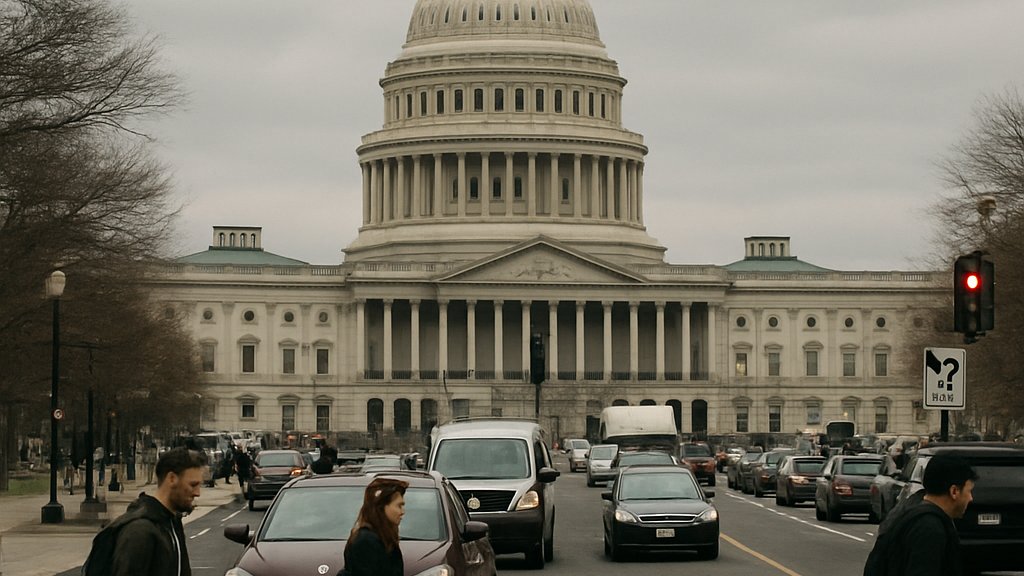
This article dissects the draft, examines competing viewpoints, and highlights next steps for industry leaders.
Furthermore, we map political dynamics shaping the bill’s path through Congress.
Professionals will gain clarity on compliance exposures and strategic opportunities.
Meanwhile, optional credentials like the AI Policy Maker™ certification can strengthen governance programs.
Read on for a concise yet comprehensive analysis.
US AI Policy Landscape
Hundreds of state proposals now crowd legislative calendars, creating a dizzying compliance maze for multistate operators.
Therefore, the White House argues that a single federal regulation is essential to sustain innovation and competitiveness.
Trackers count 1,561 AI-related bills across forty-five states as of March 2026.
Consequently, uniform rules rank high on boardroom risk registers and investor slides.
Any durable US AI Policy must reconcile state experimentation with commercial demand for certainty.
These dynamics set the stage for Blackburn’s intervention.
However, states like California and Illinois still advance sector-specific mandates, complicating the debate.
This tension foreshadows lively committee hearings ahead.
Draft Origins And Context
President Trump’s executive order, issued 11 December 2025, directed agencies to challenge conflicting state laws.
Moreover, it established a DOJ AI Litigation Task Force and required Commerce to catalogue state measures within ninety days.
Subsequently, the Administration released a National AI Legislative Framework in March 2026.
Blackburn’s discussion draft mirrors that framework while adding child-safety and IP transparency provisions.
The document’s unwieldy acronym underscores its political branding strategy.
In contrast, policy analysts focus on enforceable text, not slogans.
The bill would displace overlapping state regimes, asserting clear federal preemption authority.
Nevertheless, constitutional scholars warn courts may resist aggressive executive nullification.
That legal uncertainty shadows the entire negotiation process.
Core Policy Pillars Overview
The draft bundles sweeping obligations into six principal pillars:
- Duty of care requirements imposing forward-looking risk assessments and FTC enforcement.
- Federal preemption establishing one rulebook and overriding duplicate state standards.
- Section 230 sunset, expanding platform liability for AI-generated harms.
- Child-safety mandates, including age verification and algorithmic opt-outs for minors.
- Advanced AI evaluations conducted by DOE before deployment of frontier systems.
- IP safeguards mandating training-data disclosures and derivative work presumptions.
Each pillar reshapes the compliance calculus for developers and deployers.
Preemption Debate Intensifies Now
Supporters praise nationwide consistency that lowers multi-state audit costs.
Critics instead fear innovation could stall under rigid federal regulation.
Consequently, lobbyists on both sides flood lawmakers with impact models and economic forecasts.
The coming markup will test how far Congress pushes centralized control over emerging technologies.
These arguments highlight ideological divides.
However, bipartisan concern for child protection may anchor compromise.
Impact On AI Developers
Risk assessments, disclosure tables, and DOE gatekeeping expand operational overhead for frontier labs.
Start-ups face fresh liability exposure once Section 230 shields recede.
Moreover, duty-of-care language invites plaintiff attorneys to probe algorithmic negligence.
IP reporting obligations demand monthly training-dataset logs for some live models.
Therefore, chief legal officers must align release cadences with documentation workflows.
Professionals can deepen expertise through the AI Policy Maker™ program, ensuring internal controls meet anticipated audits.
These provisions elevate governance maturity expectations.
Consequently, board committees will prioritize policy fluency alongside technical robustness.
Strategic Industry Responses Grow
Anthropic pledged $20 million to Public First Action, backing candidates favoring stronger AI safeguards.
Meanwhile, creator-rights coalitions applaud IP transparency clauses protecting songwriters.
In contrast, the Center for Data Innovation labels the draft overbroad and anti-competitive.
Major platforms—OpenAI, Google, Microsoft—signal cautious engagement while commissioning legal memos on liability scenarios.
Consequently, lobbying expenditures will escalate as midterm races approach.
Market observers anticipate competing PACs amplifying contrasting narratives about US AI Policy.
These maneuvers illustrate high economic stakes.
Key Takeaways And Actions
The TRUMP AMERICA AI Act would centralize rulemaking, redefine liability, and impose deep IP transparency duties.
Uniform standards could streamline nationwide deployments, yet tight controls may burden smaller innovators.
Consequently, executives should monitor committee markups, agency reports, and PAC spending patterns.
Recommended immediate actions include:
- Audit models against draft duty-of-care benchmarks.
- Map state obligations potentially preempted by the bill.
- Develop Section 230 contingency plans for expanded liability.
- Create training-data inventories supporting future IP disclosures.
These steps fortify readiness should Congress enact sweeping federal regulation.
Nevertheless, ongoing court challenges could delay implementation.
Therefore, adaptive governance remains paramount.
US AI Policy debates will continue shaping investment flows and talent strategies.
Leaders should engage proactively, leverage emerging standards, and cultivate certified expertise.
Commit to continuous monitoring, and prepare to recalibrate once final statutes solidify.
Disclaimer: Some content may be AI-generated or assisted and is provided ‘as is’ for informational purposes only, without warranties of accuracy or completeness, and does not imply endorsement or affiliation.


