

AI CERTS
8 hours ago
TSMC’s $56B Bet On AI Infrastructure
However, Chief Executive C.C. Wei cautioned that missteps could become “a big disaster.” The stakes could not be higher for the world’s largest dedicated foundry.
TSMC spent US$40.90 billion on capital projects in 2025. Therefore, the 2026 target represents an increase of about 35 percent. Industry analysts call it the largest single-year commitment in modern semiconductors. Consequently, questions loom about timing, execution, and demand durability for hyperscale AI Infrastructure. Nevertheless, the company argues that tight capacity for advanced nodes and CoWoS packaging leaves no alternative.
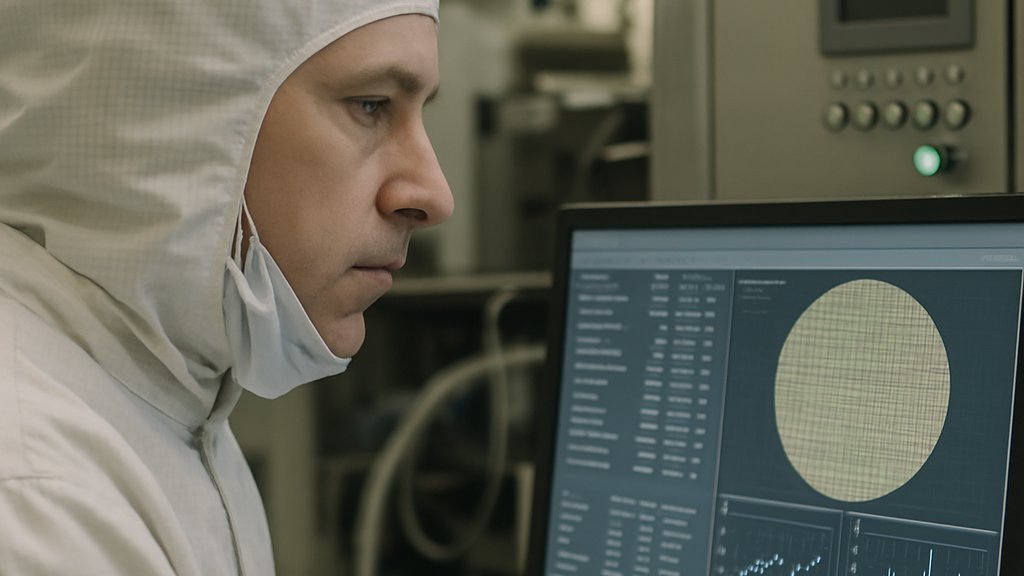
TSMC Capex Plan Overview
January earnings revealed the headline figure, while a February board vote approved US$44.962 billion of that amount. Additionally, executives signaled spending will land near the top of the guided range. About 70–80 percent will fund 3 nm, 2 nm, and other advanced-node tools. In contrast, 10–20 percent targets advanced packaging, including CoWoS packaging lines essential for HBM integration. The remaining 10 percent supports specialty processes.
- 2026 CapEx guidance: US$52–56 billion
- 2025 CapEx actual: US$40.90 billion
- Board appropriation: US$44.962 billion (Feb 2026)
- 3 nm share of Q4 2025 wafer revenue: 28 percent
These numbers dwarf peer investments. Moreover, they signal faith that AI Infrastructure demand will not plateau soon. This section underscores the unprecedented scale. Meanwhile, the next section explores the forces driving the splurge.
AI Demand Surge Drivers
Hyperscalers face ballooning inference workloads. Consequently, clients such as NVIDIA, Apple, and cloud giants have locked in multi-year wafer reservations. TSMC validated orders with “customers’ customers,” ensuring downstream application demand. Furthermore, high-bandwidth memory, or HBM, shortages restrict shipment volumes today. Therefore, expanding CoWoS packaging capacity becomes as critical as new wafer fabs.
Advanced nodes amplify performance per watt. In contrast, mature processes cannot support cutting-edge AI accelerators. The foundry thus races to deploy more EUV lithography tools. Additionally, national security incentives, including the U.S. CHIPS Act, sweeten overseas build-outs. However, offshore fabs raise cost structures.
These market forces justify the record budget. Nevertheless, allocation details reveal where capital will concentrate next.
Allocation Across Core Technologies
Management divides the purse into three buckets. Firstly, front-end wafer fabrication receives the bulk. EUV scanners, immersion steppers, and metrology gear dominate purchase orders, benefiting ASML, Applied Materials, and KLA. Secondly, advanced CoWoS packaging receives double-digit billions. The packaging step pairs silicon with HBM stacks, unlocking memory bandwidth vital for AI Infrastructure.
Thirdly, specialty and mature nodes share roughly ten percent. These lines support automotive and IoT chips, diversifying revenue streams. Moreover, internal forecasts show advanced technologies generating seventy-seven percent of Q4 2025 wafer sales. Subsequently, management expects that mix to climb above eighty percent by 2027.
This balanced yet aggressive split aims to relieve the most painful bottlenecks. However, suppliers must scale alongside TSMC, as explained next.
Supply Chain Ripple Effects
Massive orders create tailwinds for the broader semiconductors ecosystem. Consequently, ASML’s EUV backlog stretches past 2028, while substrate vendors race to expand capacity. Furthermore, equipment lead times lengthen, challenging project schedules. Nevertheless, long-term visibility allows suppliers to finance new plants confidently.
Downstream, server builders redesign boards to accommodate bigger AI accelerators, thicker power planes, and additional HBM stacks. In contrast, data-center operators brace for soaring energy draw. Additionally, governments in Arizona, Japan, and Europe negotiate incentives to secure local nodes. Therefore, geopolitics intertwines with fabrication economics.
- Tool makers gain multi-year order security
- Substrate and chemical suppliers scale output
- Energy grids plan for heavier AI loads
These effects reinforce TSMC’s central role in global AI Infrastructure. Yet they also magnify downside exposure, addressed in the following section.
Key Risks And Uncertainties
Demand visibility remains the largest variable. However, management admits nervousness about overbuild. If AI hype cools, excess capacity could compress margins. Additionally, fabs require years before hitting optimal yields, delaying returns. Meanwhile, U.S. projects face higher labor costs than Taiwanese sites.
Supply-chain fragility persists. Consequently, a single lithography delay could cascade across the schedule. Geopolitical tension in the Taiwan Strait adds another external risk. Moreover, concentrated spending may pressure free cash flow, limiting future flexibility.
These uncertainties urge cautious optimism. Nevertheless, proactive talent development can mitigate some exposure, as the next outlook explains.
Strategic Outlook Years Ahead
Industry consensus views AI Infrastructure as a decade-long growth engine. Therefore, TSMC’s bet appears rational despite risks. Furthermore, customers increasingly co-design chips and packaging, deepening switching costs. The company also explores backside power delivery and 1.4 nm nodes, extending its technology moat.
Professionals can enhance their expertise with the AI Architect certification. Consequently, engineers versed in foundry process flows, CoWoS packaging, and HBM stack design will command premium salaries. Additionally, production managers trained on statistical process control remain indispensable as fab counts grow.
This strategic trajectory positions TSMC at the heart of next-generation compute. However, leadership must execute flawlessly to capture projected returns.
Final Thoughts And Actions
TSMC’s US$56 billion war chest underscores unprecedented confidence in AI Infrastructure. Moreover, the allocation prioritizes advanced nodes, CoWoS packaging, and HBM supply, reinforcing the company’s technological lead. Suppliers, governments, and hyperscalers will feel the effects through 2030. Nevertheless, execution risks and geopolitical variables demand vigilance.
Industry professionals should track quarterly CapEx pacing, equipment order books, and customer mix disclosures. Additionally, upskilling through specialized programs such as the linked AI Architect certification can future-proof careers in semiconductors and foundry operations. Act now to leverage this historic expansion wave.
Disclaimer: Some content may be AI-generated or assisted and is provided ‘as is’ for informational purposes only, without warranties of accuracy or completeness, and does not imply endorsement or affiliation.


